
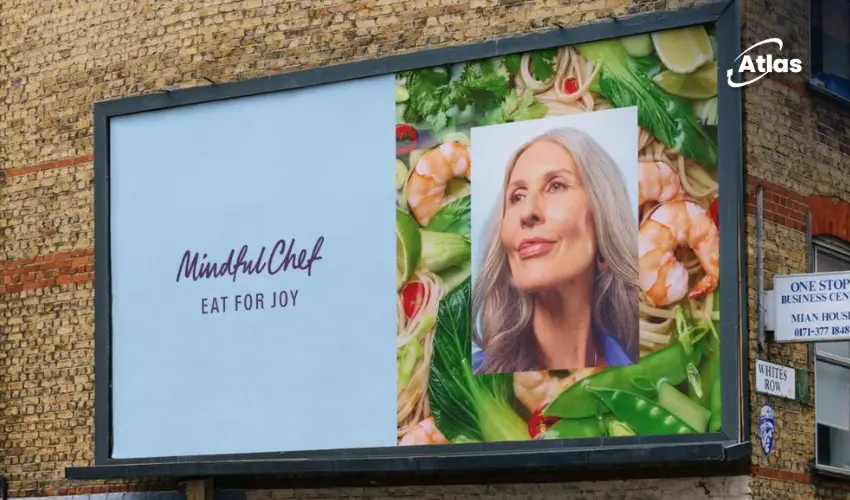
Mindful Chef Launches 'Eat for Joy' OOH Campaign with McCann London
Mindful Chef is entering a new chapter with its Eat for Joy campaign, a fresh brand platform designed to make healthy, whole-food eating feel positive, emotional, and life-enhancing across OOH and digital media.
Created by McCann London, the campaign moves the conversation beyond convenience and meal delivery. Instead of presenting Mindful Chef simply as a recipe box company, the work positions the brand as a health partner that helps people feel more confident, connected and energised through real whole foods.
That shift is important in a category where many brands compete around speed, variety, price and ease. Mindful Chef is choosing a more emotional territory: the idea that food is not only something people consume, but something that can shape how they feel, how they live and how they show up in the world.
The campaign spans film, radio, out-of-home and social, giving the new platform a broad media presence while reinforcing one clear idea: healthy eating should not be about restriction. It should be about joy.
A Healthier Brand Message for a Crowded Recipe Box Market
The recipe box and meal kit category has become increasingly competitive.
Many brands focus on convenience, recipe choice, delivery benefits or time-saving claims. Those messages are useful, but they can also start to feel interchangeable when every brand is promising an easier way to cook dinner.
Eat for Joy gives Mindful Chef a more distinctive role.
Rather than only talking about what arrives in the box, the campaign talks about what those meals can unlock in life. The creative celebrates the benefits that can come from eating real whole foods: greater confidence, deeper connections and uplifting energy.
This makes the platform feel bigger than a product promise. It becomes an organising idea for the brand, one that can live across advertising, customer experience, packaging, influencer content and the redesigned website.
Why the Audience Insight Matters
The campaign is rooted in consumer research into the lives, attitudes and motivations of Mindful Chef's core audience: women aged 40 to 60.
This is a strategically important choice because this audience is highly engaged with healthy living, but is often less visible in category communications. Food and wellness campaigns frequently over-index on younger audiences, trend-led nutrition language or aspirational lifestyle codes that do not always reflect the reality of women in this life stage.
Mindful Chef takes a different approach.
The campaign champions women over 40 with confidence, vibrancy and authenticity. It does not frame health as correction or limitation. It frames healthy food as something that supports a richer and fuller life.
That editorial direction gives the campaign emotional strength. It is not just saying that whole foods are good for you. It is showing how eating well can connect to identity, confidence and possibility.
How Mindful Chef Uses OOH as a Public Signal of Joy
Out-of-home plays an important role in making the new brand platform visible in everyday life.
For a campaign about whole foods, energy and living fully, OOH creates a public expression of the idea. It places the message outside the kitchen and into the real world, where people are making choices, moving through routines and thinking about how they want to feel throughout the day.
This is especially useful for a wellness-led food brand because healthy eating is often personal, but the motivation behind it is public and social. People eat well because they want more energy at work, more confidence in their bodies, more connection with family or more enjoyment in daily life.
OOH helps translate that private motivation into a visible brand statement.
Instead of treating food as a functional delivery service, the campaign makes Mindful Chef feel like part of a broader lifestyle decision.
From Recipe Box to Health Partner
One of the strongest strategic moves in the campaign is the shift from product category to brand role.
Mindful Chef is not only saying, “We deliver meals.” It is saying, “We help you get more out of life through better food.”
That is a much larger and more flexible position.
It allows the brand to talk about real ingredients, nourishment, confidence, relationships and energy without becoming trapped in a purely transactional recipe box message. It also helps the brand stand apart in a market saturated with diet culture, nutrition trends and conflicting advice about what people should or should not eat.
Eat for Joy rejects the idea that healthy eating must be defined by cutting things out. Instead, it focuses on what eating well can add: pleasure, strength, connection and vitality.
Why the Campaign Works Across Channels
The campaign works because the idea is broad enough to stretch across multiple touchpoints without losing clarity.
In film, the platform can show the emotional and human benefits of eating well. On radio, it can use voice and rhythm to create warmth and energy. In social, it can connect with everyday food moments, influencer stories and customer experiences. In OOH, it can simplify the idea into a public-facing message that is easy to understand at speed.
The platform also extends beyond media. A redesigned website and refreshed recipe-box designs help carry the same philosophy into the customer experience, which is important because the brand promise does not end when someone sees the ad.
For a recipe box company, the package that arrives at home is part of the media ecosystem. If the campaign promises joy, the product experience needs to continue that feeling.
Why the Creative Direction Feels Timely
The campaign arrives at a time when food and wellness messaging can feel overwhelming.
Consumers are surrounded by diet trends, conflicting nutritional advice, restriction-based claims and quick-fix health promises. That can make healthy eating feel complicated or even stressful.
Mindful Chef offers a more generous alternative.
By centering joy, the brand makes healthy eating feel less like a rulebook and more like a source of energy for life. This gives the campaign a warmer and more empowering tone than many category messages.
It also gives the brand a clearer emotional reason to exist.
Mindful Chef is not just helping people decide what to cook. It is helping them reconnect with why eating well matters in the first place.
Why the Campaign Works
- It creates a bigger brand role: Mindful Chef moves beyond recipe boxes and positions itself as a health partner.
- It reframes healthy eating positively: The campaign focuses on joy, energy and life benefits instead of restriction or sacrifice.
- It speaks to an underrepresented audience: Women aged 40 to 60 are placed at the center of the campaign with confidence and vibrancy.
- It is based on a clear consumer insight: The platform comes from research into the audience's lives, attitudes and motivations.
- It works across media: Film, radio, OOH and social can all express different sides of the same idea.
- It extends into the customer journey: The redesigned website and refreshed recipe-box designs help make Eat for Joy part of the full brand experience.
- It stands out in a crowded market: The campaign gives Mindful Chef a more emotional and distinctive position than convenience alone.
What Marketers Can Learn
The most important lesson from Eat for Joy is that a strong brand platform should do more than create ads.
It should shape how the brand speaks, how the customer experience feels and how the product is understood. McCann London's work for Mindful Chef does this by creating a platform that can live across communications and beyond them.
The campaign also shows the value of moving away from generic category benefits. In meal kits, convenience is expected. Healthy ingredients are important, but they are not always enough to create emotional distinction. Joy gives the brand a more ownable territory.
For marketers, this is a reminder that the best platforms are often built around human outcomes, not just product features.
People do not only want recipes. They want to feel better, live more fully, connect with others and enjoy the food they eat. Mindful Chef's campaign understands that difference.
The OOH Lesson
OOH is especially valuable when a brand wants to make a new platform feel established quickly.
By appearing in public spaces, Mindful Chef can give Eat for Joy the scale and confidence of a bigger brand idea. Outdoor media turns the platform into something people can encounter during daily routines, not only when they are actively shopping for a recipe box.
This matters because recipe box consideration can happen long before someone visits a website. A person may see the message during a commute, while running errands or while thinking about how to make healthier choices. The campaign can plant a simple association: Mindful Chef equals eating well with joy.
That is a powerful role for OOH. It creates mental availability before the customer is ready to buy.
Bottom Line
Mindful Chef's Eat for Joy campaign is a thoughtful example of how food and wellness brands can build stronger emotional meaning around healthy eating.
By focusing on real whole foods, confidence, connection and energy, the brand moves beyond the functional promise of a recipe box and into a more meaningful role as a health partner.
The campaign works because it challenges the category's obsession with shortcuts, diets and restriction. Instead, it offers a more positive idea: eating well should help people live fuller, happier lives.
For Mindful Chef, joy is not just a campaign line. It is the new way the brand wants to be understood.
Frequently asked questions
What is Mindful Chef's Eat for Joy campaign?
Eat for Joy is Mindful Chef's new brand platform, created by McCann London, that explores how eating real whole foods can support confidence, energy, connection and a fuller life.
Who created the campaign?
The campaign was created by McCann London following the agency's competitive pitch win for Mindful Chef.
How does the campaign use OOH?
The integrated campaign spans film, radio, out-of-home and social content, using OOH to make the Eat for Joy platform visible in everyday public spaces.
Who is the campaign speaking to?
The campaign is rooted in research around women aged 40 to 60, an audience highly engaged with healthy living but often underrepresented in category communications.
Why does Eat for Joy work as a brand platform?
It reframes healthy eating away from restriction, diets and shortcuts, and instead focuses on the positive life benefits that come from eating well.
Sources
- Mindful Chef Champions Eating for Joy - Creative Salon (2026-09-07)
Plan your OOH campaign
Get recommendations for markets, formats and availability based on your campaign goals.
Request a media plan



Comments
Share your take. Keep it constructive and specific.