
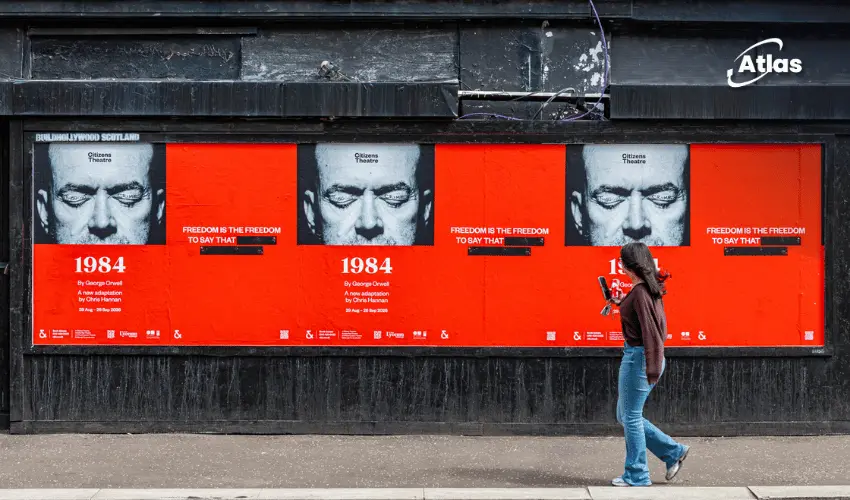
1984 Takes Over Glasgow With a Bold Redacted OOH Campaign
Some stories come with their own advertising language.
1984 is one of them.
George Orwell's dystopian classic has been adapted for the stage by Chris Hannan in a new co-production from Citizens Theatre, Dundee Rep Theatre and Royal Lyceum Theatre Edinburgh.
Ahead of its Glasgow run, JACK ARTS Scotland brought the production into public space through a bold campaign built around one of the novel's most recognizable ideas: information being controlled, erased and rewritten.
Redaction as a Creative System in OOH Advertising
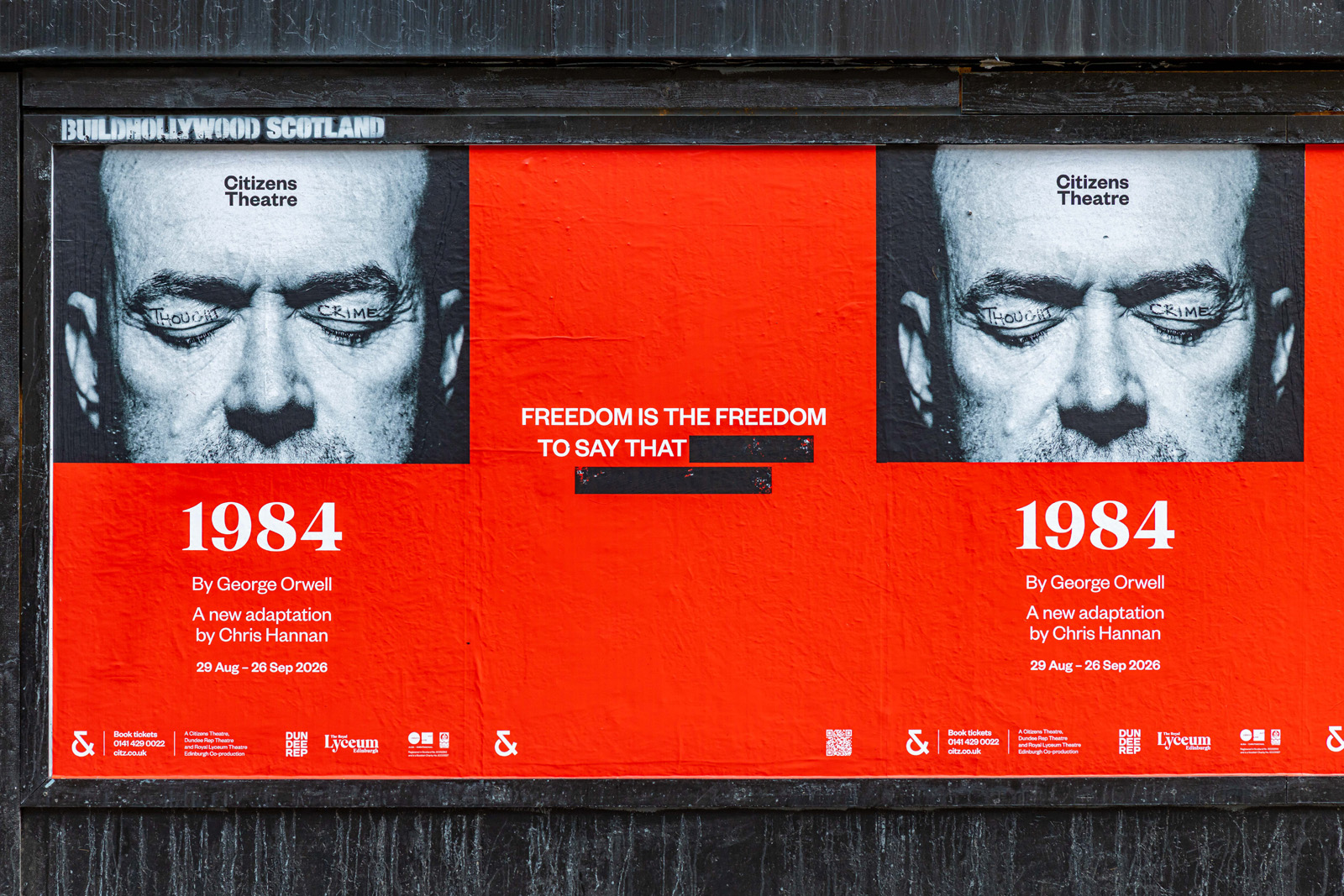
The campaign uses redacted text as its central visual language.
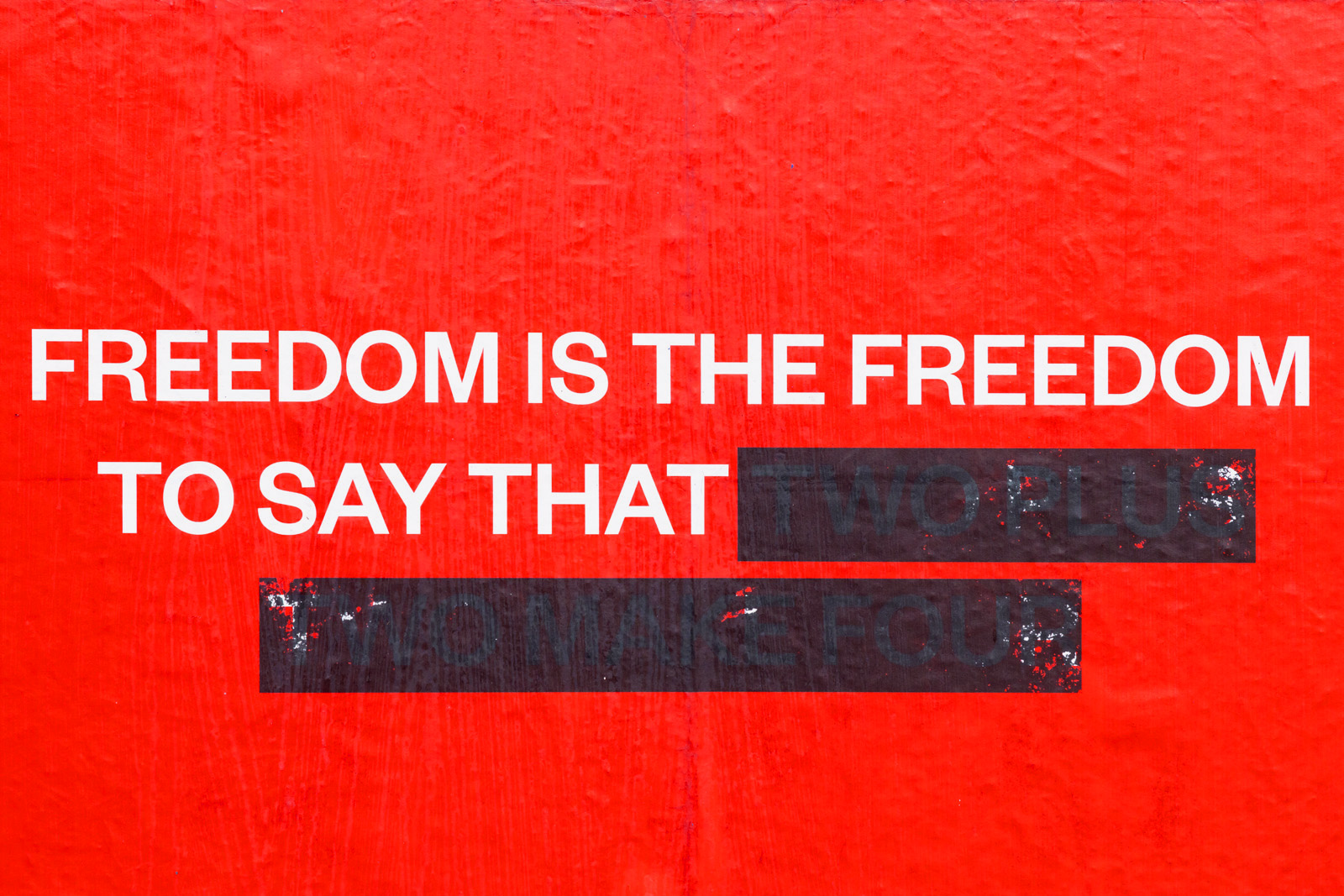
Words are obscured and information appears withheld, forcing the audience to experience information suppression directly through a creative street poster campaign. By using OOH advertising censorship as a narrative tool, the outdoor format becomes an active extension of Orwell's dystopian world.
The ad behaves like the regime it depicts
The campaign does not simply show imagery from 1984.
It behaves according to the logic of 1984.
The audience experiences information suppression directly through the ad.
Why Censorship & Subversion Drive Engagement in Outdoor Media
Outdoor advertising normally tries to make information as clear as possible.
This campaign does the opposite. It withholds.
Outdoor advertising normally strives to make information instantly readable. This campaign does the opposite by leveraging censorship and subversion to withhold key details. That intentional reversal creates immediate psychological tension and drives curiosity across busy urban streets.
The audience completes what is missing
Redacted copy also invites participation.
The viewer instinctively tries to imagine what has been covered up.
The missing information becomes part of the storytelling.
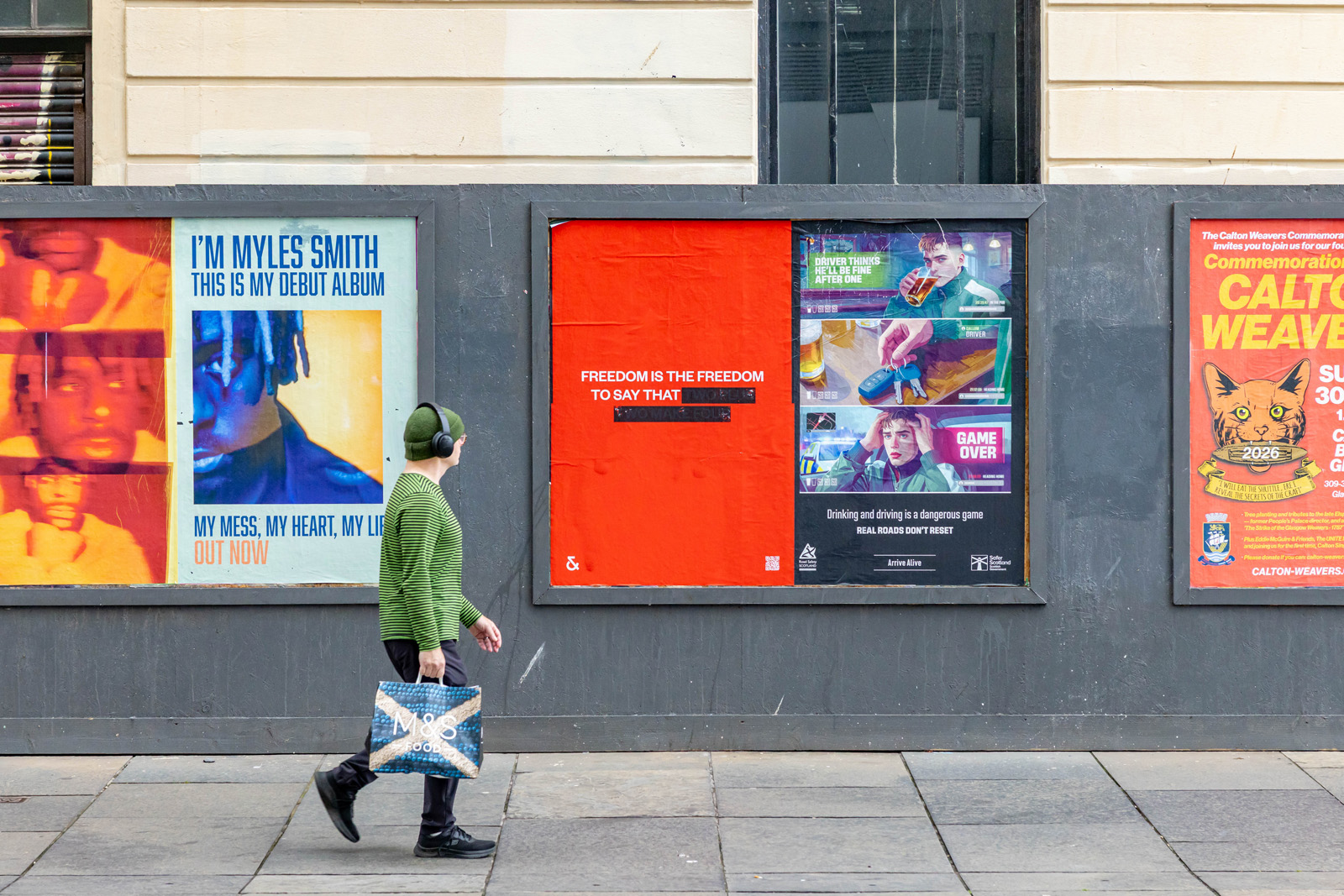
Glasgow's streets become part of the dystopia
1984 is fundamentally about public systems, surveillance, propaganda and control.
Those themes become more immediate when the campaign appears in shared urban space rather than only inside a theatre brochure or social feed.
Why Street Poster Campaigns Excel in Theatre Marketing
Posters and street-level placements have a long relationship with political messaging, protest and public information.
- The format feels public.
- The audience encounters it in everyday life.
- Repeated placements can mimic state messaging.
- Redaction can make familiar poster structures feel threatening.
A campaign that looks like evidence
The visual system makes street posters feel less like commercial advertising and more like intercepted government documents. In arts marketing, this contextual approach allows ambient outdoor placements to act as immersive narrative props.
The relevance of 1984 does part of the work
The campaign also benefits from the enduring cultural recognition of Orwell's novel.
Ideas such as surveillance, censorship, propaganda and manipulated truth remain widely understood even by people who have not recently read the book.
Why the campaign can stay visually restrained
Because the source material is so recognizable, the OOH does not need excessive explanation.
A strong redacted line, the title and production details can be enough.
Theatre advertising benefits from mood
Unlike product campaigns, theatre advertising often sells an emotional experience rather than a functional benefit.
The audience wants to know: What will this feel like?
The redacted campaign answers that question effectively.
Frequently asked questions
What production is the campaign promoting?
The campaign promotes a new stage adaptation of George Orwell's 1984, adapted by Chris Hannan and co-produced by Citizens Theatre, Dundee Rep Theatre and Royal Lyceum Theatre Edinburgh.
Where did the OOH campaign appear?
JACK ARTS Scotland brought the campaign to the streets of Glasgow ahead of the production's run at Citizens Theatre.
What is distinctive about the creative?
The campaign uses a bold redacted visual language, turning censorship and information suppression into the central design device.
Why does the concept work for 1984?
Redaction, censorship and controlled information are central to Orwell's dystopian world, so the OOH format becomes an extension of the story rather than simply an advertisement for it.
Sources
- George Orwell: 1984 - BUILDHOLLYWOOD / JACK ARTS Scotland
Plan your OOH campaign
Get recommendations for markets, formats and availability based on your campaign goals.
Request a media plan

Comments
Share your take. Keep it constructive and specific.