
The RealReal Tells New York: “Don’t Buy Anything” in Bold Fashion OOH Campaign
Atlas OOH Sees How The RealReal Turns Anti-Consumption Into the Hook
Most retail advertising asks people to buy more. The RealReal does the opposite.
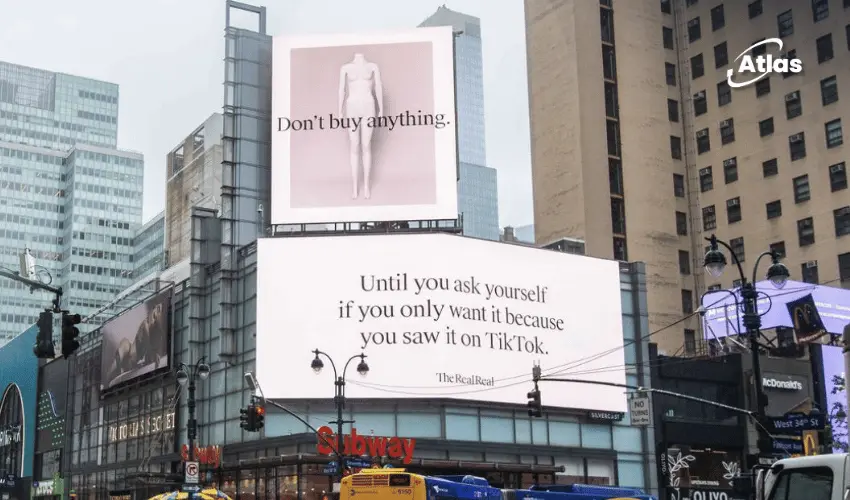
The campaign opens with a blunt instruction: “Don’t buy anything.”
That line immediately creates tension because it appears in a space usually dedicated to persuasion and purchase. The follow-up copy then turns the message into a self-check about why people buy in the first place.
For Atlas OOH, this billboard advertising push is a strong example of how a brand can use outdoor advertising to challenge category conventions and drive attention through contradiction.
The black-pants line makes overconsumption feel personal
One of the strongest executions asks viewers to consider why they own 16 pairs of black pants but only wear two.
That specificity is what makes the line work.
Instead of speaking abstractly about sustainability or excess, the campaign uses a familiar wardrobe habit to make overconsumption feel immediate and relatable.
The result is less like a lecture and more like an uncomfortable but funny observation people may recognise in themselves.
Atlas OOH Highlights How TikTok Becomes Part of the Consumerism Conversation
Another execution asks whether someone only wants an item because they saw it on TikTok.
That line broadens the campaign from wardrobe clutter into the way desire is created online.
It recognises that buying decisions are increasingly shaped by repetition, trends and social exposure — not always by genuine need.
For Atlas OOH, this is where the campaign becomes especially contemporary: it connects resale with a very current tension between personal taste and algorithm-driven consumption.
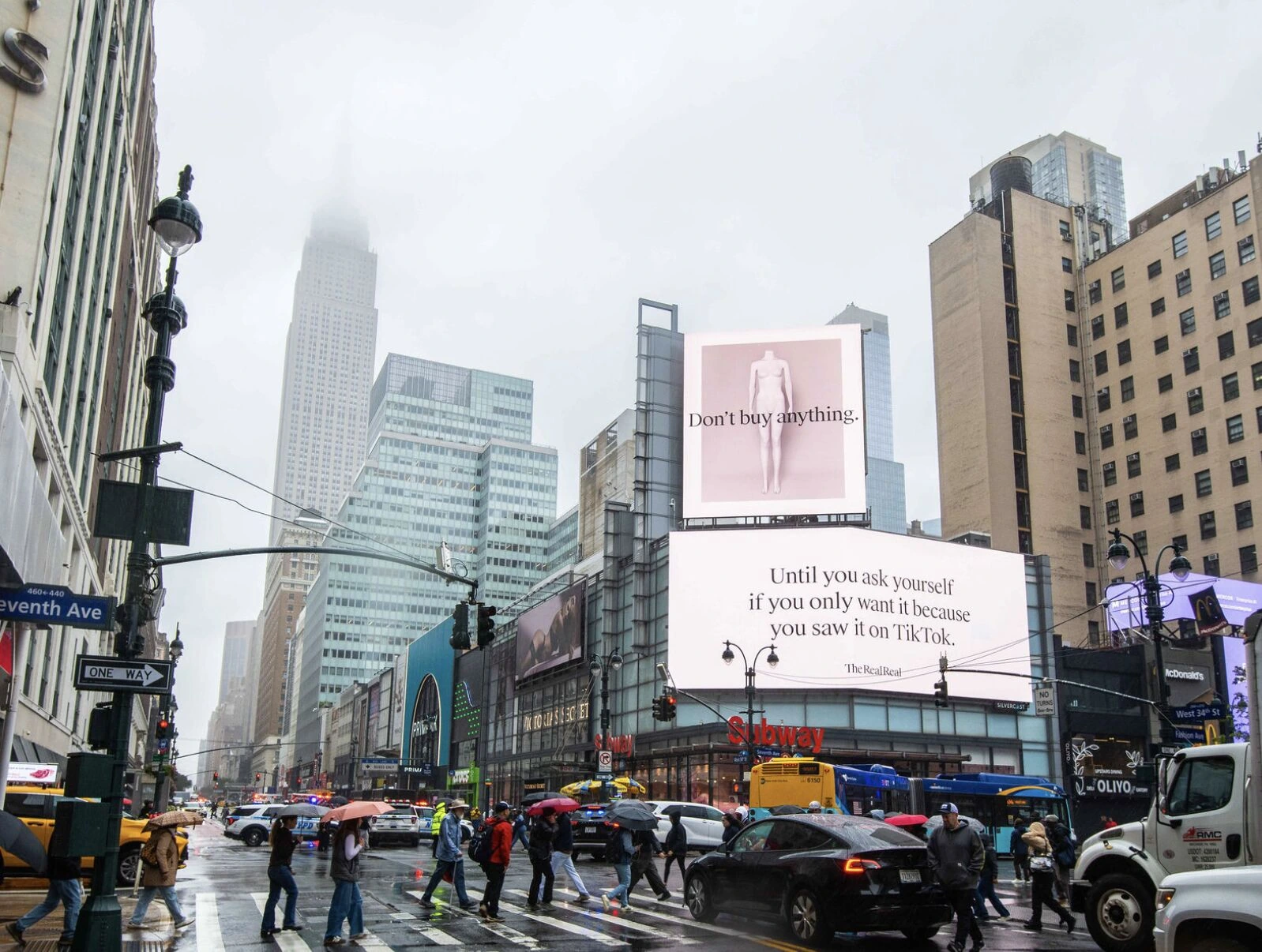
The visual restraint makes the copy feel even louder
The campaign does not rely on elaborate fashion photography.
The layouts are mostly white, minimal and quiet, with a pale mannequin image and serif typography doing the visual work.
That restraint gives the statements more authority. In an environment full of bright retail advertising, the simplicity feels almost confrontational.
The campaign looks less like a sale and more like an editorial intervention.
Atlas OOH Notes Why a Wildposting Campaign Extends the Idea Across Street Level
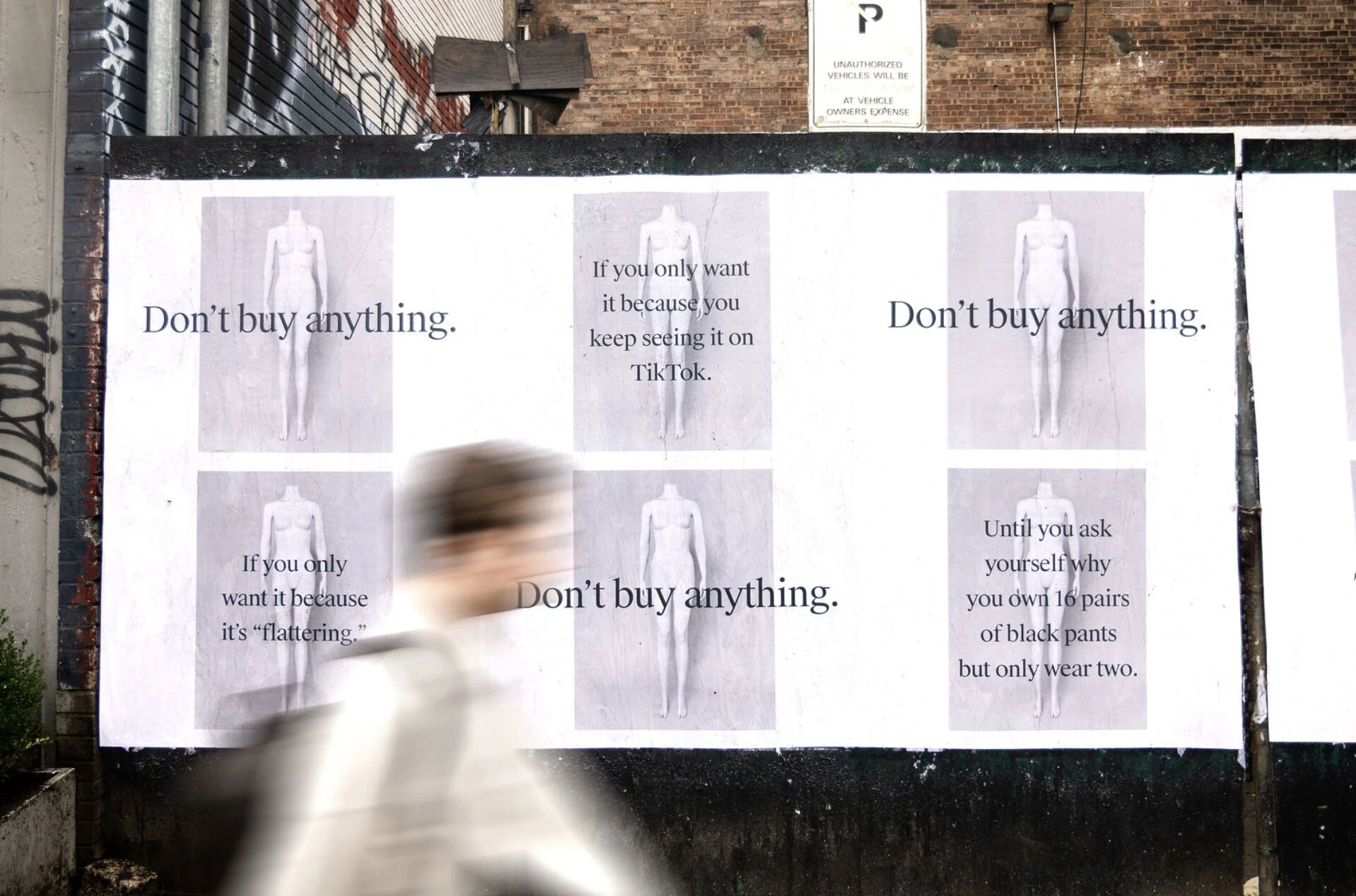
The street-level poster execution expands the campaign into multiple variations.
Different lines question different reasons for buying: social influence, flattering clothes, duplicated wardrobe basics and the simple habit of wanting more.
By repeating the same “Don’t buy anything” structure, the wildposting creates a system rather than a single headline.
This is useful in OOH because each poster can work independently while still strengthening the broader idea through repetition.
The message naturally supports resale without saying “buy resale”
One of the smartest aspects of the campaign is what it leaves unsaid.
The RealReal does not need to repeatedly explain the resale proposition. By questioning the logic of constantly buying new products, the campaign makes resale feel like a natural alternative.
That gives the brand a more confident role in the conversation.
It is not simply advertising a marketplace. It is challenging the behaviour that makes a circular fashion model relevant in the first place.
Atlas OOH Can Help Brands Turn Cultural Tension Into Public Conversation
The RealReal’s campaign shows how OOH can do more than promote a product or service. It can create a pause in the middle of a shopping environment and ask people to reconsider the behaviour behind the transaction.
If your brand has a category truth, cultural tension, or provocative point of view that deserves a larger stage, Atlas OOH can turn it into high-impact outdoor advertising, street-level wildpostings, or billboard campaigns that command attention.
Why The RealReal’s campaign works
- It contradicts normal retail advertising with the line “Don’t buy anything.”
- It makes overconsumption specific through relatable wardrobe examples.
- It brings TikTok into the conversation as a source of manufactured desire.
- It uses minimal design so the copy becomes the main visual event.
- It supports the resale proposition indirectly by questioning the need for constant new purchases.
Bottom line: The RealReal’s OOH works because it does not ask people to consume differently with a long sustainability lecture. It asks them to stop, question the impulse and think about what they already own. In the middle of one of the world’s biggest shopping cities, that makes “Don’t buy anything” a surprisingly powerful ad.
Frequently asked questions
What is The RealReal’s 'Don’t Buy Anything' OOH campaign?
It is a New York outdoor campaign that challenges people to pause before purchasing and question why they want something, using resale as a counterpoint to overconsumption.
What does the main billboard say?
One major execution says, 'Don’t buy anything. Until you ask yourself why you have 16 pairs of black pants but only wear two.'
How does TikTok appear in the campaign?
Another billboard asks viewers whether they only want an item because they saw it on TikTok, directly connecting social influence with impulse buying.
Why does this campaign fit The RealReal?
The message aligns with a resale platform because it encourages consumers to rethink constant newness and consider a more circular approach to fashion.
Sources
Plan your OOH campaign
Get recommendations for markets, formats and availability based on your campaign goals.
Request a media plan
Comments
Share your take. Keep it constructive and specific.