
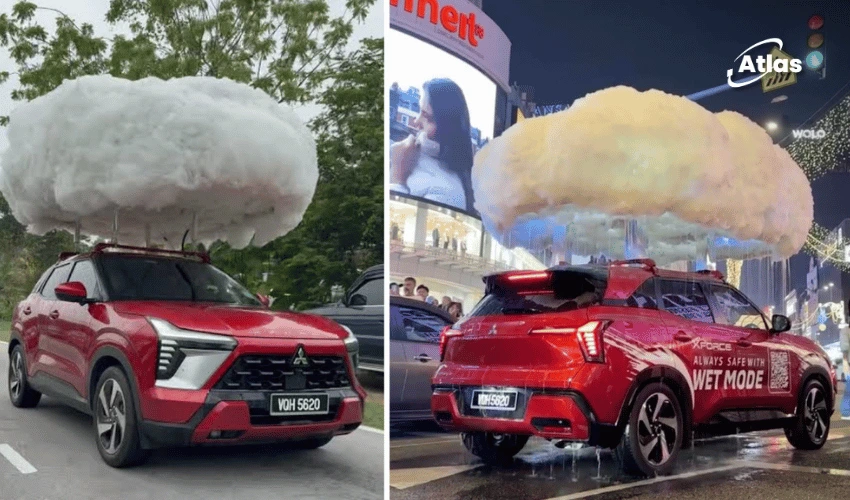
Mitsubishi Turns Wet Mode Into a Moving Raincloud in Kuala Lumpur
Atlas OOH Sees How a Technical Feature Becomes a Public Story
Automotive campaigns often struggle with one challenge: many product benefits are difficult to see.
Stability, traction and control are important, but they are not always visually exciting.
Mitsubishi solves that problem by making the weather itself part of the campaign.
For Atlas OOH, the Roving Cloud is a strong example of how experiential OOH can turn an invisible product feature into something immediate, physical and easy to understand.
The Raincloud Makes Wet Mode Impossible to Miss
The core idea is wonderfully literal.
The Xforce does not wait for rain.
It brings its own.
A large artificial cloud mounted above the SUV releases water as the vehicle travels through Kuala Lumpur, creating hyper-local bad weather wherever the campaign goes.
Mitsubishi’s accompanying social line captures the joke perfectly: “Some people check the weather forecast… we just bring our own.”
Atlas OOH Highlights Why the Stunt Fits Kuala Lumpur
The location makes the campaign stronger.
The supplied information says Wet Mode was developed specifically for Southeast Asia’s heavy rain.
That means the stunt is not simply decorative spectacle. It is culturally and environmentally relevant to the market.
The raincloud works because people in Kuala Lumpur already understand the challenge the feature is designed to solve.
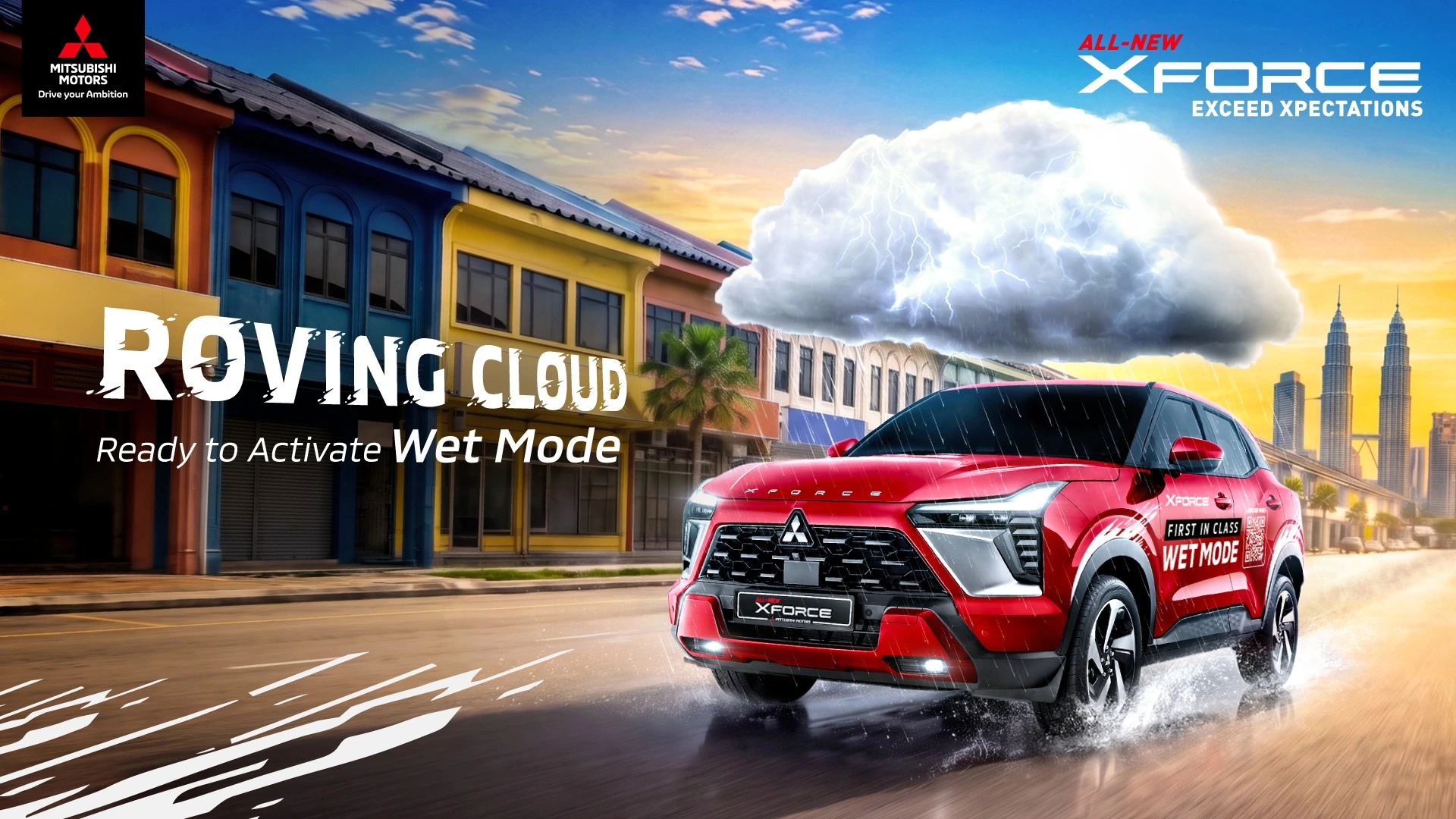
The Moving Cloud Turns the Vehicle Into Mobile OOH
This is not a static installation.
The Xforce moves through the city, meaning the campaign can generate attention across multiple locations rather than waiting for people to come to one site.
That makes the vehicle itself the media unit.
The result sits somewhere between a product demonstration, a street stunt and mobile OOH.
For Atlas OOH, that flexibility is valuable because mobile experiential campaigns can combine reach, spectacle and product storytelling in one moving format.
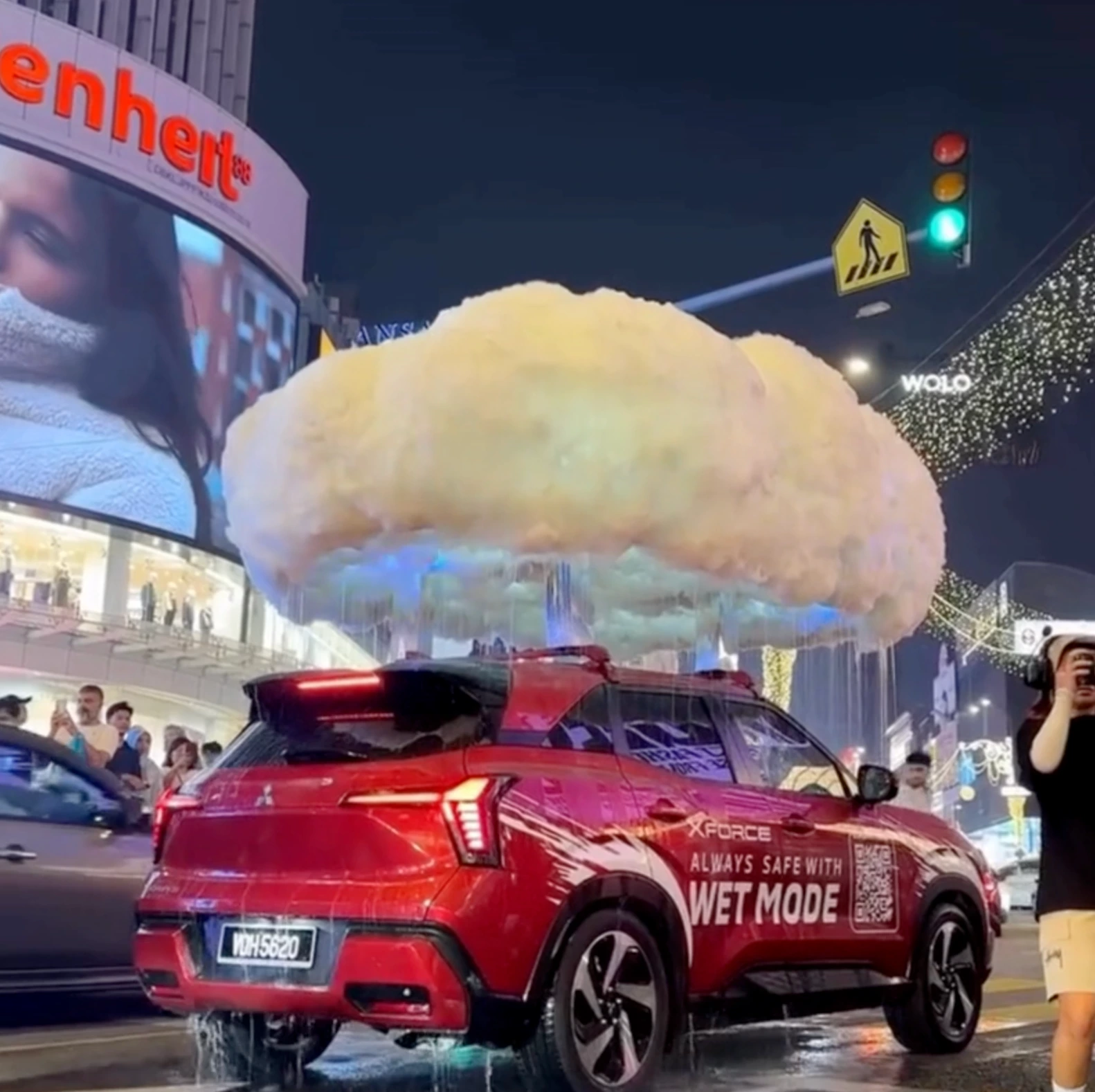
Atlas OOH Notes How the Route Itinerary Extends the Idea
Mitsubishi also gives people a reason to actively look for the Roving Cloud.
The supplied information says the brand published an itinerary with stops across the Klang Valley.
That turns the activation into something audiences can anticipate and seek out rather than simply encounter by chance.
The campaign therefore gains a second layer of engagement: the cloud is not only moving media, but also a scheduled public event.
A Competition Encourages People to Turn the Stunt Into Content
The campaign also invites passers-by to photograph the vehicle and share their sightings for a chance to win prizes.
That is an important amplification mechanism.
The physical stunt creates the initial spectacle. Audience photos and social sharing help the idea travel beyond the streets where the car appears.
Why Mitsubishi’s Roving Cloud Campaign Works
- It makes an invisible vehicle feature visible.
- The stunt is directly relevant to Southeast Asia’s heavy rain.
- The SUV becomes a moving media unit.
- The itinerary creates anticipation and repeat visibility.
- The photo competition gives audiences a reason to amplify the campaign.
Bottom line: Mitsubishi’s Roving Cloud works because it turns Wet Mode into something people can understand in seconds. Instead of explaining traction or stability with technical language, the brand simply drives through Kuala Lumpur with its own rainstorm. The result is product demonstration, mobile OOH and public spectacle all at once.
Frequently asked questions
What is Mitsubishi’s Roving Cloud campaign?
It is a mobile experiential campaign in Kuala Lumpur where a Mitsubishi Xforce travels with an artificial raincloud overhead, visually demonstrating the SUV’s Wet Mode.
What is Wet Mode?
According to the supplied campaign information, Wet Mode is a driving feature developed for Southeast Asia’s heavy rain to help drivers maintain stability and control on wet roads.
Why does the campaign use a raincloud?
The artificial cloud turns an invisible technical feature into a highly visible real-world demonstration, making the product benefit easier to understand and remember.
How does the public participate?
The supplied information says Mitsubishi published a route itinerary and invited people to photograph the vehicle and share the sighting for a chance to win prizes.
Why is this an example of experiential OOH?
The campaign moves through public space, uses a physical installation and invites real-time audience attention, turning the city itself into the media environment.
Sources
- Mitsubishi Motors Malaysia - Roving Cloud
- Famous Campaigns
- User-provided campaign information and images.
Plan your OOH campaign
Get recommendations for markets, formats and availability based on your campaign goals.
Request a media plan
Comments
Share your take. Keep it constructive and specific.