
Chicago International Film Festival Celebrates the Shared Emotions of Cinema
Atlas OOH Sees an Entertainment Campaign Selling the Room, Not Just the Screen
Many entertainment campaigns focus on the content itself.
This one focuses on the feeling around it.
The Chicago International Film Festival does not simply promote movies, dates or screenings. Instead, it makes a case for the theater as a live emotional environment — a place where strangers react together in real time.
For Atlas OOH, that makes this a standout example of culture-led OOH advertising that sells an experience instead of a simple message.
“Cinema in Real Life” Frames Moviegoing as a Shared Emotional Ritual
The central idea is simple but effective: cinema is more than what happens on screen — it is what happens in the room.
That shift is important.
In the age of streaming, convenience is no longer the cinema’s advantage. So the festival leans into something theaters still own: shared anticipation, laughter, silence, tension and spontaneous emotion.
The campaign turns those reactions into the story itself, which helps the festival explain why theatrical viewing still matters.
Atlas OOH Notes How the Copy Makes Theater Feel Immediate Again
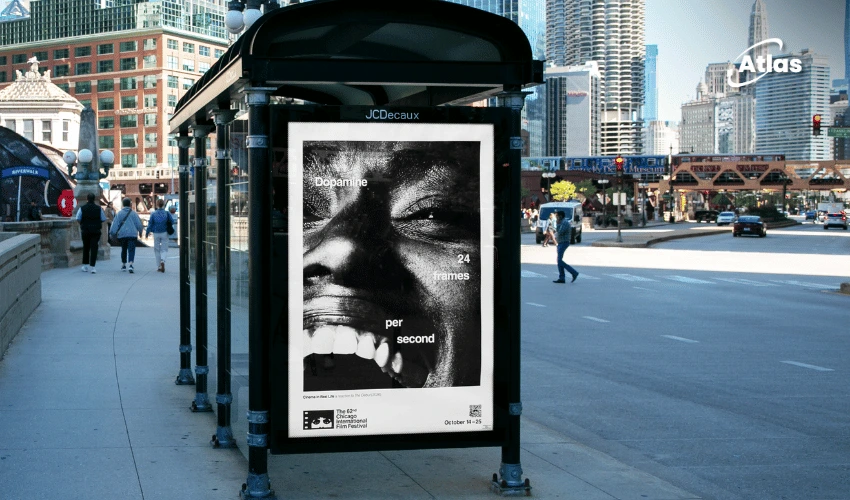
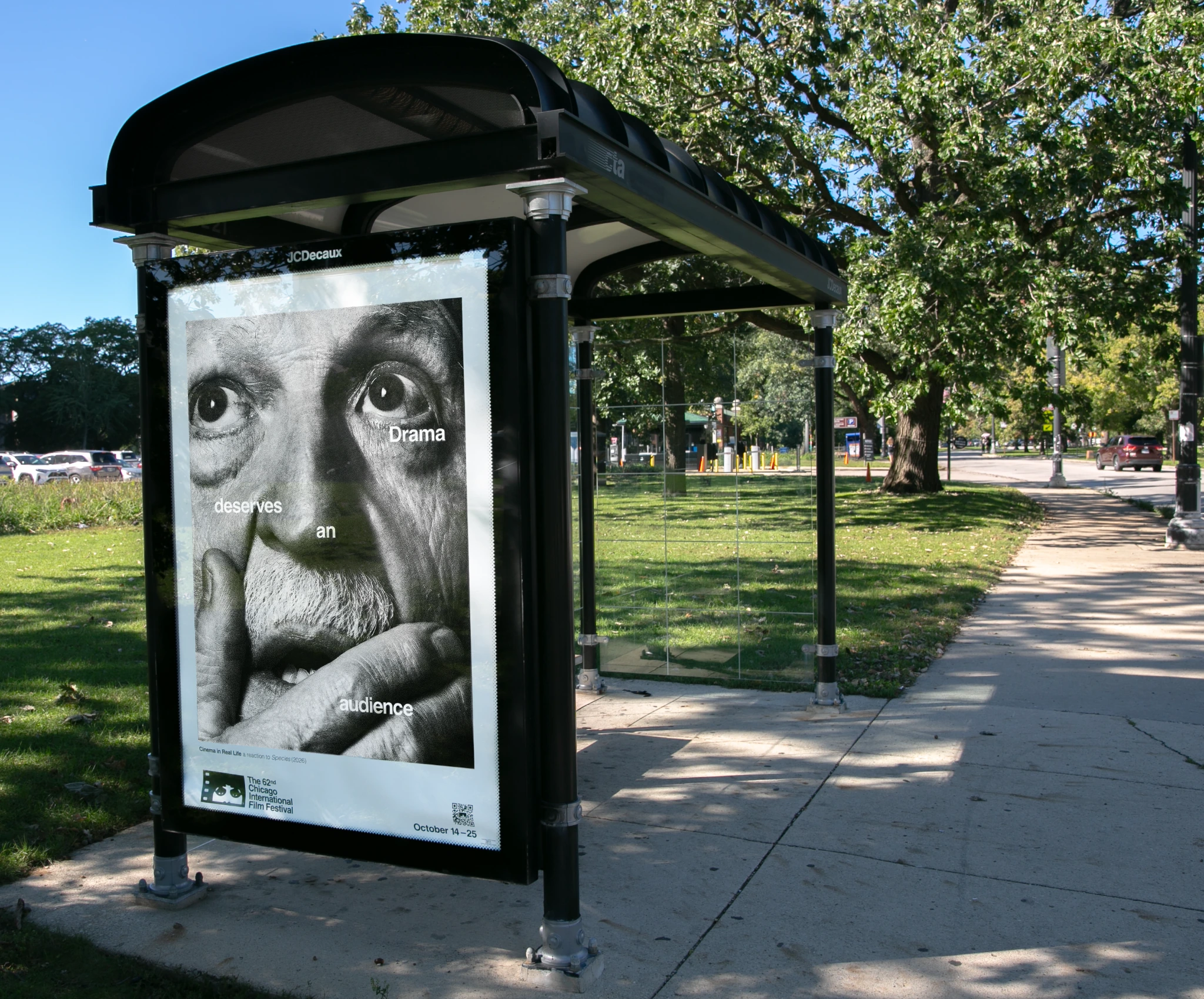
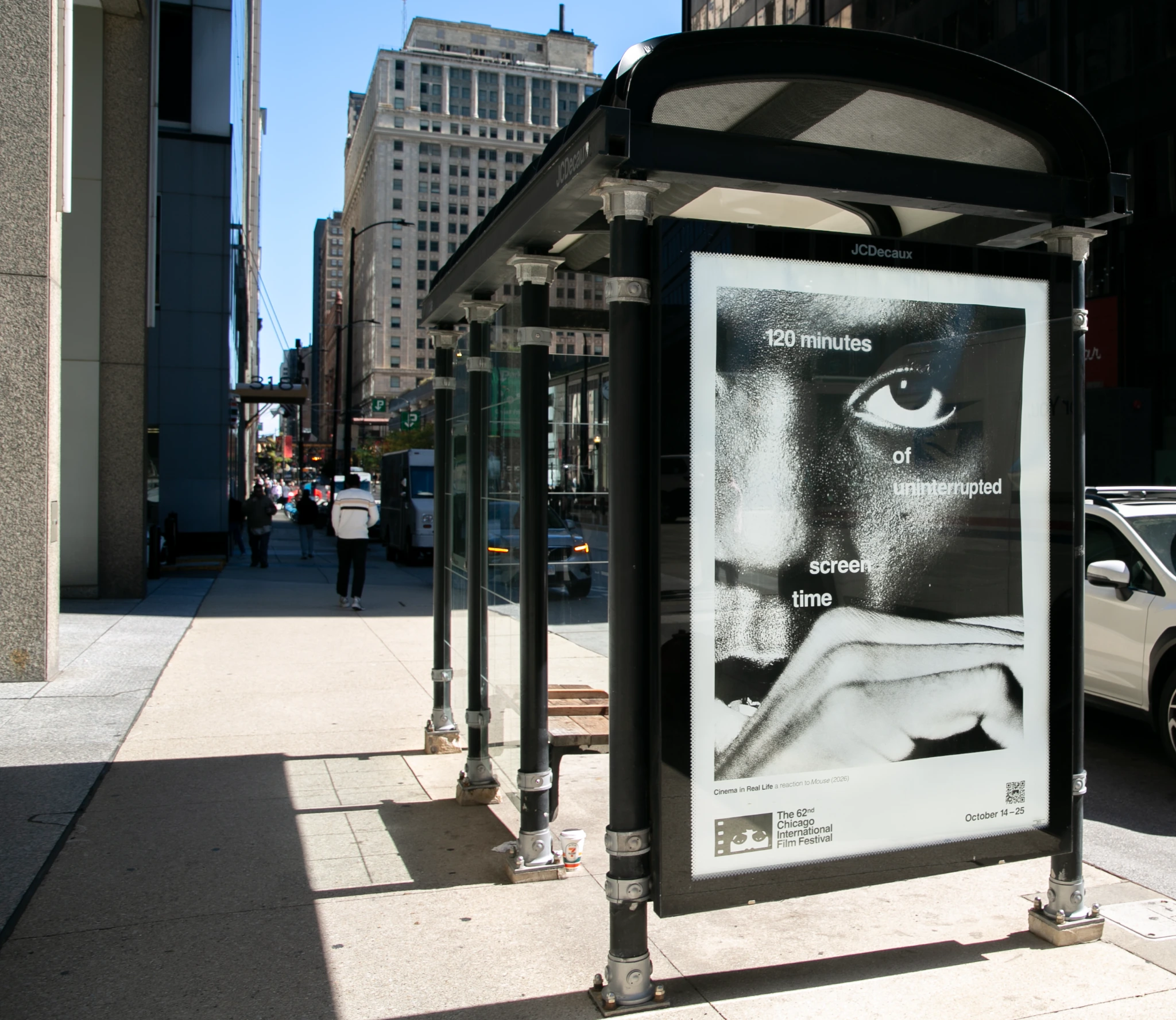
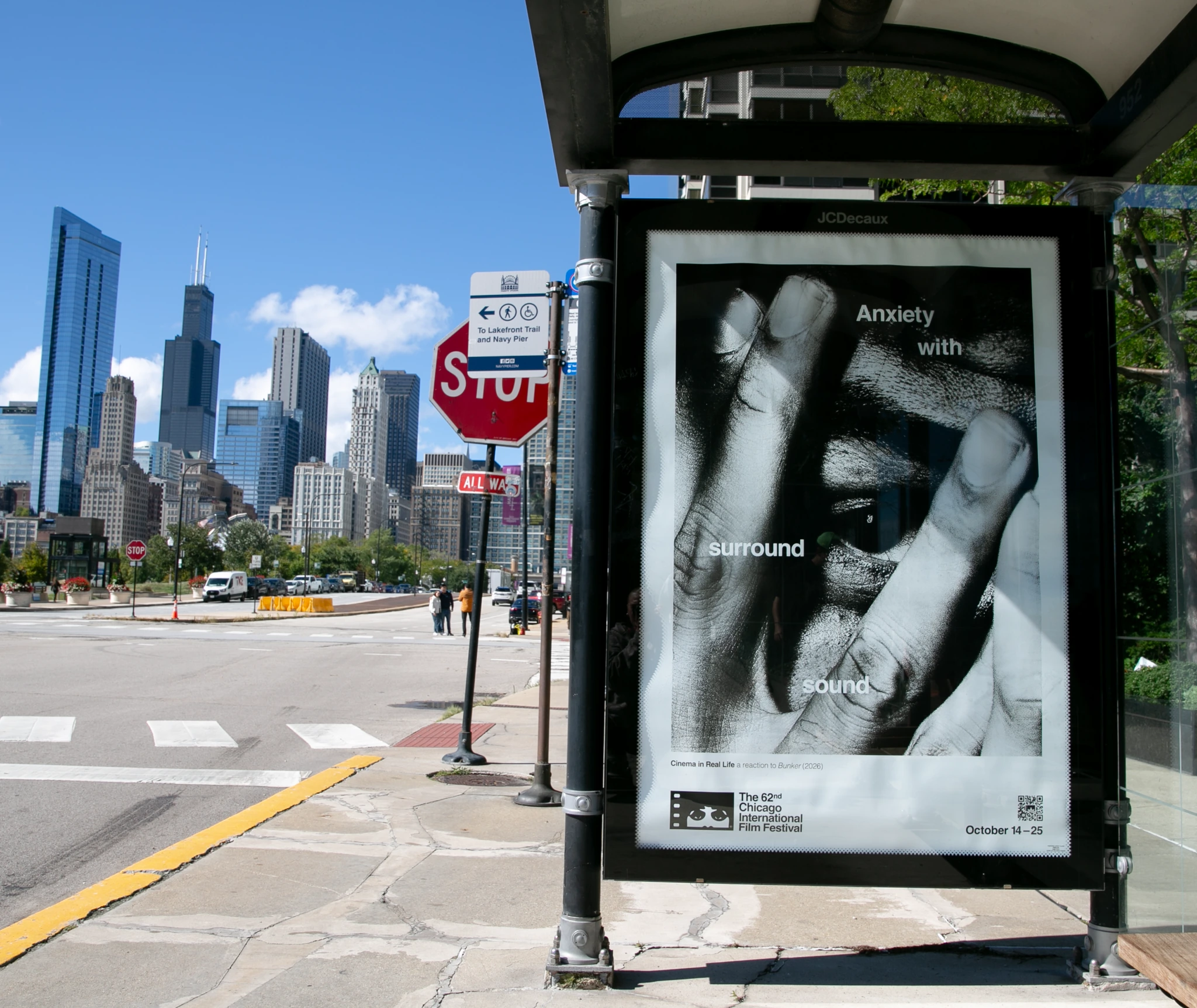
The supplied posters show concise lines such as “Drama deserves an audience”, “120 minutes of uninterrupted screen time” and “Anxiety with surround sound.”
Each line turns moviegoing into a felt proposition.
They are not abstract brand slogans. They are tiny arguments for why being in the theater still matters.
This gives the campaign both emotional clarity and high readability in outdoor environments.
Sandro Miller’s Photography Makes the Audience the Hero
To bring the idea to life, renowned Chicago photographer Sandro Miller photographed audiences mid-reaction.
That decision changes the tone of the entire campaign.
Instead of spotlighting actors or scenes, the posters highlight viewers in the middle of joy, tension, wonder and disbelief.
It is a clever reversal: the audience becomes the visual proof of cinema’s value.
For Atlas OOH, this is a strong reminder that OOH can turn the consumer, not just the product, into the central image when the experience itself is the message.
“120 Minutes of Uninterrupted Screen Time” Is a Smart Cultural Reframe
This line may be the campaign’s sharpest insight.
Normally, “screen time” is discussed as a negative — something to reduce, manage or escape.
But here, the theater transforms screen time into something immersive and valuable.
It becomes focused attention, free from the chaos of multitasking and scrolling.
Atlas OOH Sees Emotional Specificity as the Campaign’s Biggest Strength
Entertainment advertising often defaults to hype.
This campaign chooses emotional specificity instead.
“Anxiety with surround sound” is a good example. It captures how a feeling becomes more intense, more physical and more collective inside a theater.
The line is memorable because it is sensory, precise and immediately imaginable.
The Campaign Extends Beyond OOH Into a Wider Love Letter to Cinema
The broader campaign also includes a trailer celebrating those visceral moments beyond the screen, supported by a voiceover from Helen Mirren, a former CIFF Gold Hugo Award honouree.
Together with the poster work and OOH, the campaign builds a fuller cultural argument for the festival and for theatrical viewing more broadly.
That integrated structure helps the message travel across channels while keeping the same emotional core.
You can reference the broader materials here:
- CIFF – A Love Letter To Cinema
- CIFF – A Love Letter To Cinema Posters
- CIFF – A Love Letter To Cinema OOH
Why the Chicago International Film Festival OOH Works
- It promotes an experience, not just an event schedule.
- The copy is short, emotional and highly legible.
- The audience imagery makes the message human and relatable.
- It reframes cinema’s value in a streaming-first culture.
- The OOH executions are strong enough to work alone while still connecting to a bigger cross-channel idea.
Bottom line: Cinema in Real Life is a smart OOH campaign because it does not try to outcompete streaming on convenience. Instead, it reminds people why they still go to theaters in the first place: to feel something together. For Atlas OOH, it is a compelling example of how entertainment brands can use OOH media to dramatize shared emotion, cultural relevance and the power of live audience experience.
Frequently asked questions
What is the Cinema in Real Life campaign?
Cinema in Real Life is the Chicago International Film Festival’s 62nd anniversary campaign created with Ogilvy. It celebrates the shared emotional experience of watching films together in a theater.
Who created the Chicago International Film Festival OOH campaign?
The campaign was launched by the Chicago International Film Festival in partnership with Ogilvy.
What does the campaign say about moviegoing?
It argues that the true value of cinema is not only what happens on the screen, but also what happens in the room: anticipation, laughter, silence, tension and emotional reactions shared with other viewers.
What media formats are featured in the campaign?
The supplied materials show bus shelter and outdoor poster executions, supported by trailers and additional poster work.
Why does this campaign matter for OOH?
It shows how outdoor advertising can promote a cultural event by dramatizing the emotional value of the experience, rather than only listing dates, venues or programming.
Sources
Plan your OOH campaign
Get recommendations for markets, formats and availability based on your campaign goals.
Request a media plan

Comments
Share your take. Keep it constructive and specific.