
Nike Running Turns the Chicago Marathon Route Into Hyper-Local OOH Motivation
Atlas OOH Sees How Context Turns Simple Copy Into a Bigger Idea
The copy is simple. The placement is what makes it powerful.
Nike Running’s Chicago Marathon billboards do not need long explanations, product claims or athlete endorsements.
They speak directly to the moment runners are already living.
For Atlas OOH, this is a prime example of how hyper-local OOH and contextual advertising make a short headline feel much more relevant when location completes the message.
“Here Comes the Second Course” Works Because Runners Are Already in Motion
One billboard reads “Here Comes the Second Course.”
It is a small joke, but it only really works because of where it appears.
Placed above runners actively moving through the marathon, the copy turns the race route into part of the line.
The street, the spectators and the runners all become context.
Atlas OOH Highlights the Power of Paired Billboard Copy
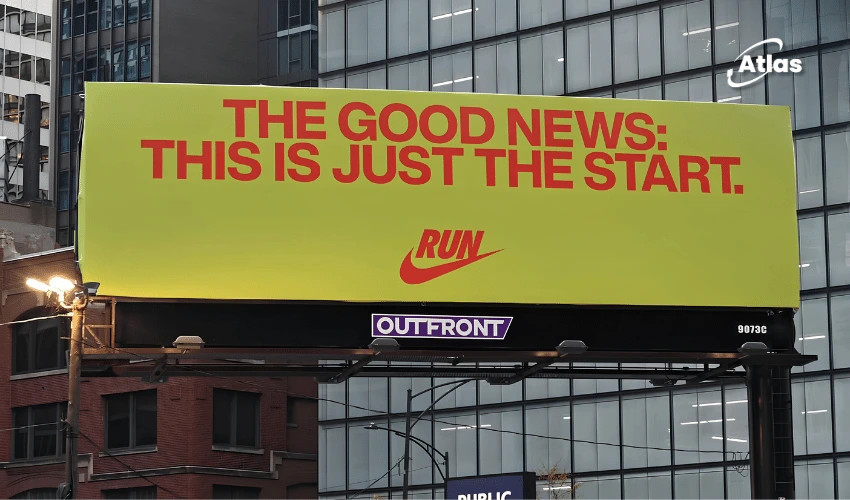
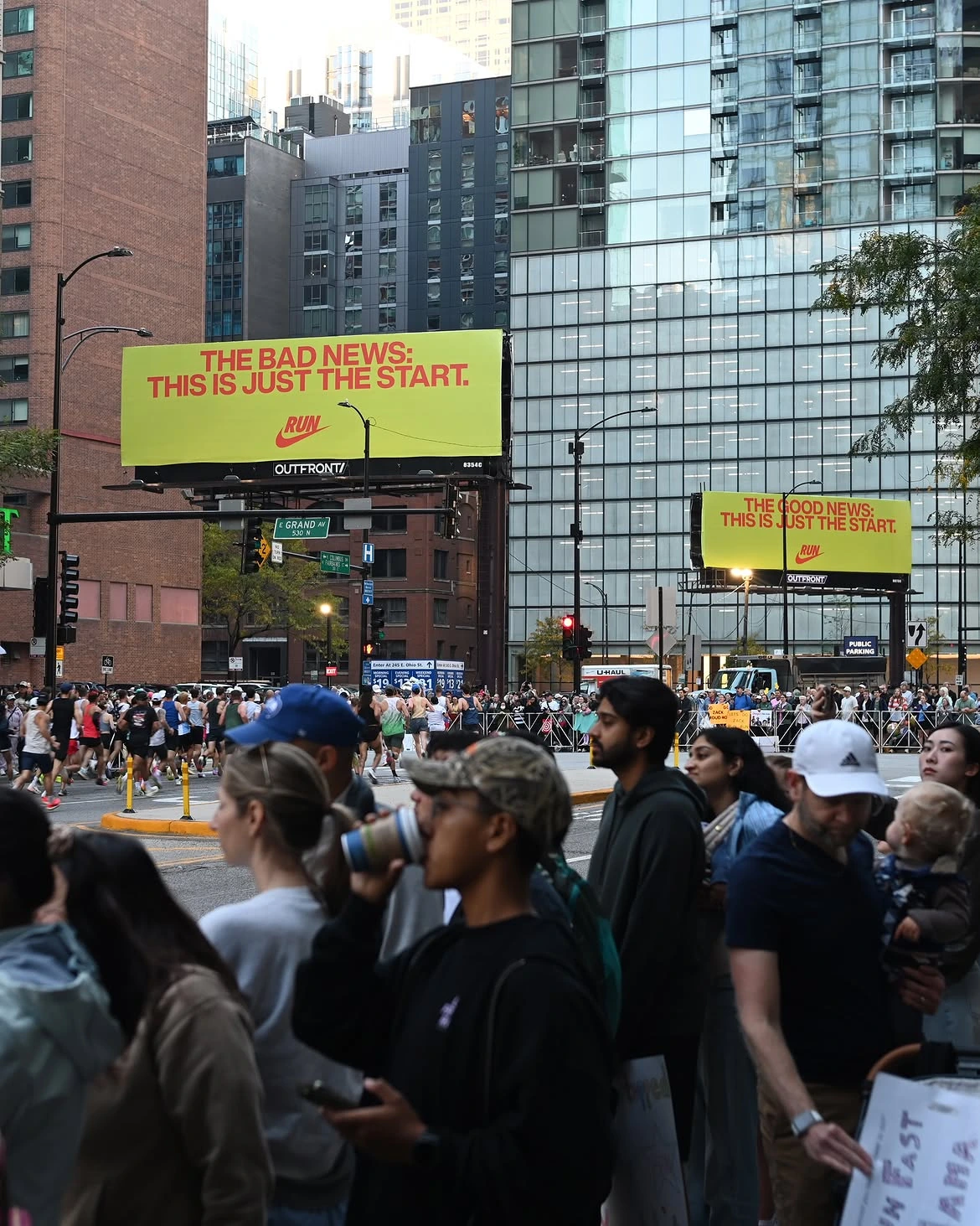
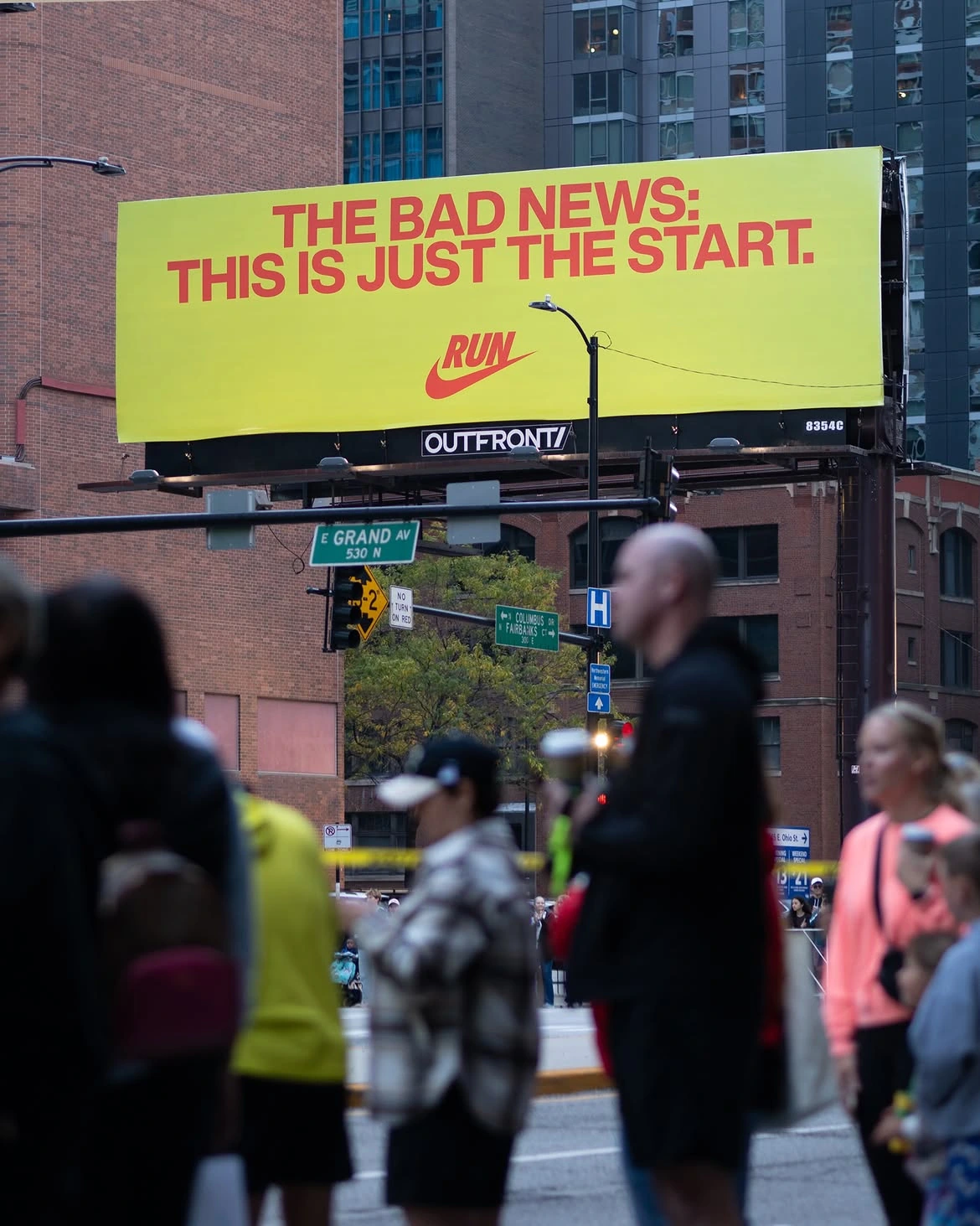
Another execution uses two nearby boards with opposing lines:
“The Bad News: This Is Just the Start.”
“The Good News: This Is Just the Start.”
That pairing turns the environment into a conversation.
Depending on the runner’s mood, the same fact can feel exhausting or motivating — and Nike plays with both interpretations at once.
Atlas OOH can help brands leverage route-based advertising to create sequential hyper-local OOH experiences, especially around live sports events and high-attention routes.
Fast-Read Copy Matters Even More During a Race
Marathon runners are not stopping to study advertising.
That makes brevity essential.
The best lines in this campaign are readable in seconds and still have enough personality to make runners or spectators smile.
The creative respects the pace of the environment.
Atlas OOH Notes Why “Kick Asphalt” Feels Native to the Street
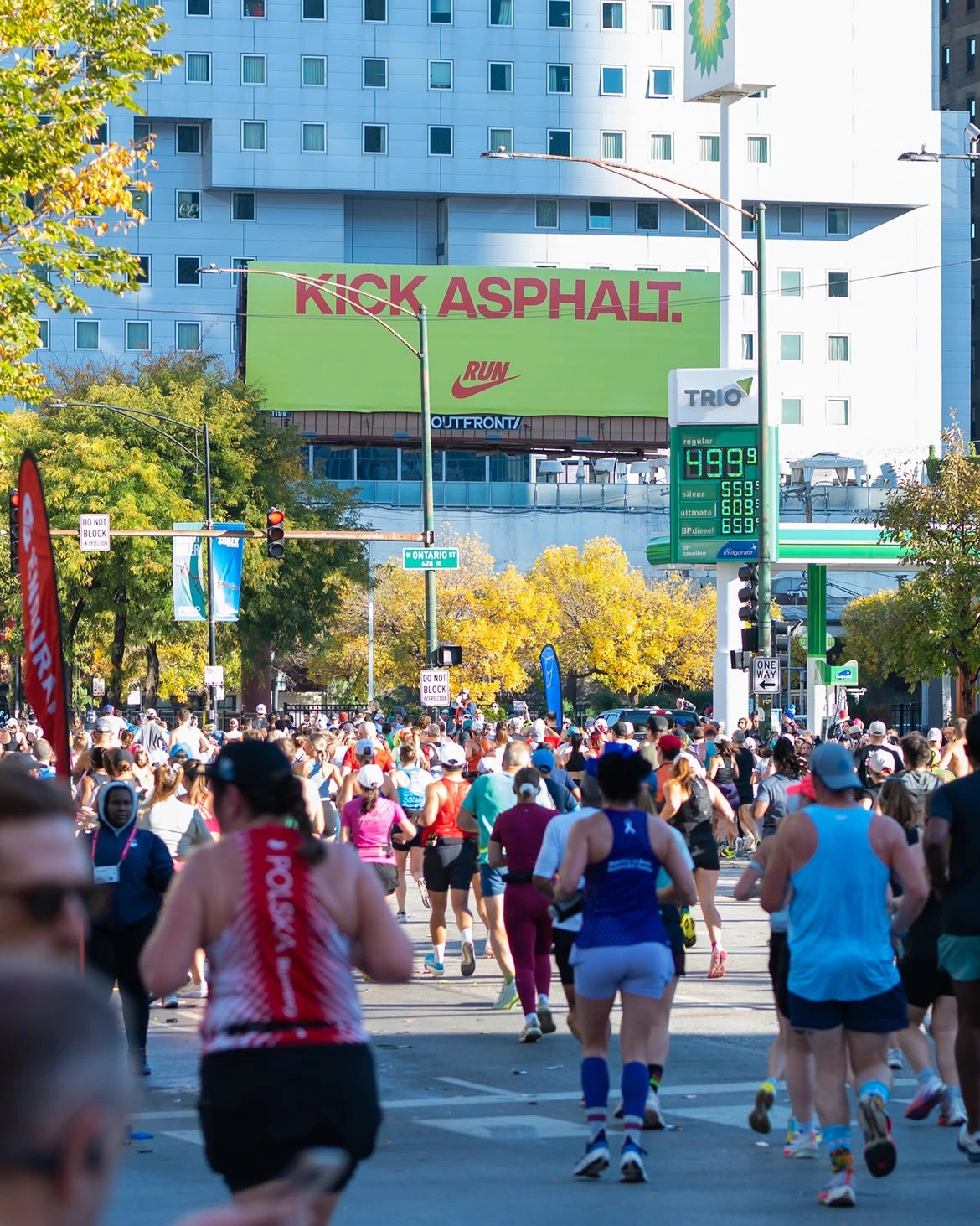
“Kick Asphalt” is another example of the campaign using the physical route as creative material.
It is a familiar motivational phrase reworked for runners who are literally covering miles of city pavement.
The joke is obvious, fast and physical — exactly what race-day OOH needs.
For Atlas OOH, this shows how event-based outdoor advertising can use geography, movement and local conditions as part of the creative system.
The Campaign Feels Like Support, Not Interruption
That is one of the smartest things about the work.
The billboards are advertising, but in context they also function like encouragement signs.
They match the emotional tone of marathon spectatorship: cheering, teasing, motivating and reminding runners that the city is watching them move.
Because of that, the brand feels present without taking attention away from the race itself.
Atlas OOH Sees Why Billups’ Route Placement Matters
The supplied information says the signs were placed by billups along the Chicago Marathon route.
That route-level planning is central to the idea.
A motivational headline placed somewhere else in the city would still be readable, but it would lose most of its meaning.
Why Nike Running’s Hyper-Local OOH Strategy Works for Event-Based Advertising
- The copy is written for the exact event context.
- The race route completes the meaning of the message.
- Short headlines respect the speed of the audience.
- Humor and motivation make the ads feel supportive.
- Multiple placements create a larger conversation along the route.
Bottom line: Nike Running’s Chicago Marathon campaign works because it does not treat the city as a generic media market. It treats the marathon route as the creative canvas. The result is OOH that feels timely, personal and written specifically for the people running past it.
Frequently asked questions
What is Nike Running’s Chicago Marathon OOH campaign?
It is a hyper-local outdoor campaign placed along the Chicago Marathon route, using motivational and playful copy designed specifically for runners and spectators experiencing the race in real time.
Who placed the campaign?
According to the supplied information, the placements were handled by billups.
Why is the campaign considered hyper-local?
The copy is written for the exact race context and appears directly along the marathon route, so the meaning becomes stronger because of where and when runners see it.
What are some of the billboard lines?
The supplied images include lines such as “Here Comes the Second Course,” “The Bad News: This Is Just the Start,” “The Good News: This Is Just the Start,” and “Kick Asphalt.”
Why does this kind of OOH work for a marathon?
Runners and spectators are already emotionally engaged with the event, so short motivational messages can feel like part of the experience rather than separate advertising.
Sources
- Nike Running Chicago Marathon Hyper-Local OOH Campaign - Atlas OOH — Valentina G. / Campaign information provided by Nike Running and billups
Plan your OOH campaign
Get recommendations for markets, formats and availability based on your campaign goals.
Request a media plan
Comments
Share your take. Keep it constructive and specific.