
Chicano Park Murals Turn Barrio Logan Infrastructure Into a Living Outdoor Gallery
Atlas OOH Sees How Public Space Can Become Cultural Memory
Chicano Park is not a commercial advertising campaign.
Its importance comes from something more fundamental: it shows how public space can carry identity, memory and community voice at monumental scale.
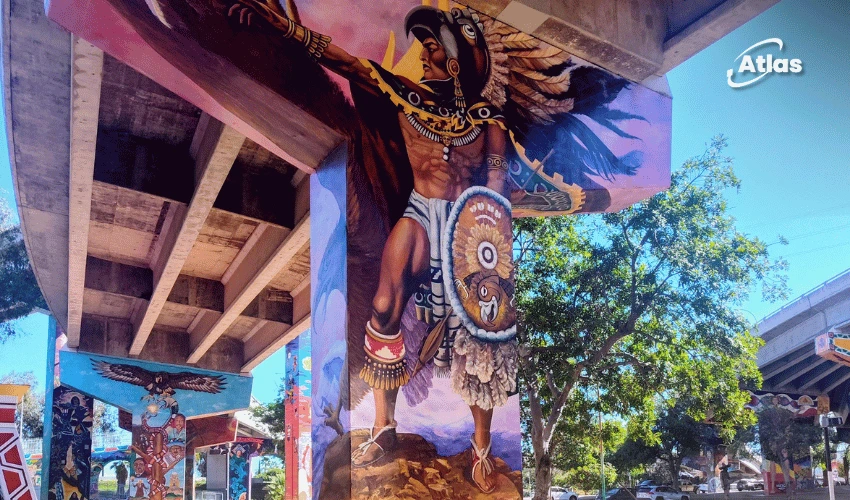
The park sits beneath Interstate 5 and the access ramps to the San Diego-Coronado Bridge, where massive concrete columns have become canvases for more than 100 Chicano Park murals, establishing a world-renowned collection of outdoor murals and public art.
For Atlas OOH, Chicano Park is a powerful reference point for understanding how urban surfaces can move beyond utility and become meaningful visual landmarks.
Its History Begins With Community Action in 1970
The supplied background explains that Chicano Park was created in 1970 following community protests shortly after the bridge construction was completed.
That origin is essential to understanding the space.
The park was not simply designed as decoration for infrastructure. It emerged from collective activism and the demand for community-controlled public space.
That history gives the murals a different kind of weight.
They do not merely beautify the site. They document the community’s relationship with place, power and identity.
Atlas OOH Highlights the Scale of the Outdoor Mural Collection
The Chicano Park Museum and Cultural Center describes the park as home to an exceptionally large collection of outdoor murals.
The supplied material notes more than 100 murals painted across the freeway pillars.
Seen together, they turn a space that could have felt dominated by concrete into a continuous visual environment.
The Murals Carry Stories of Strength, Struggle and Community
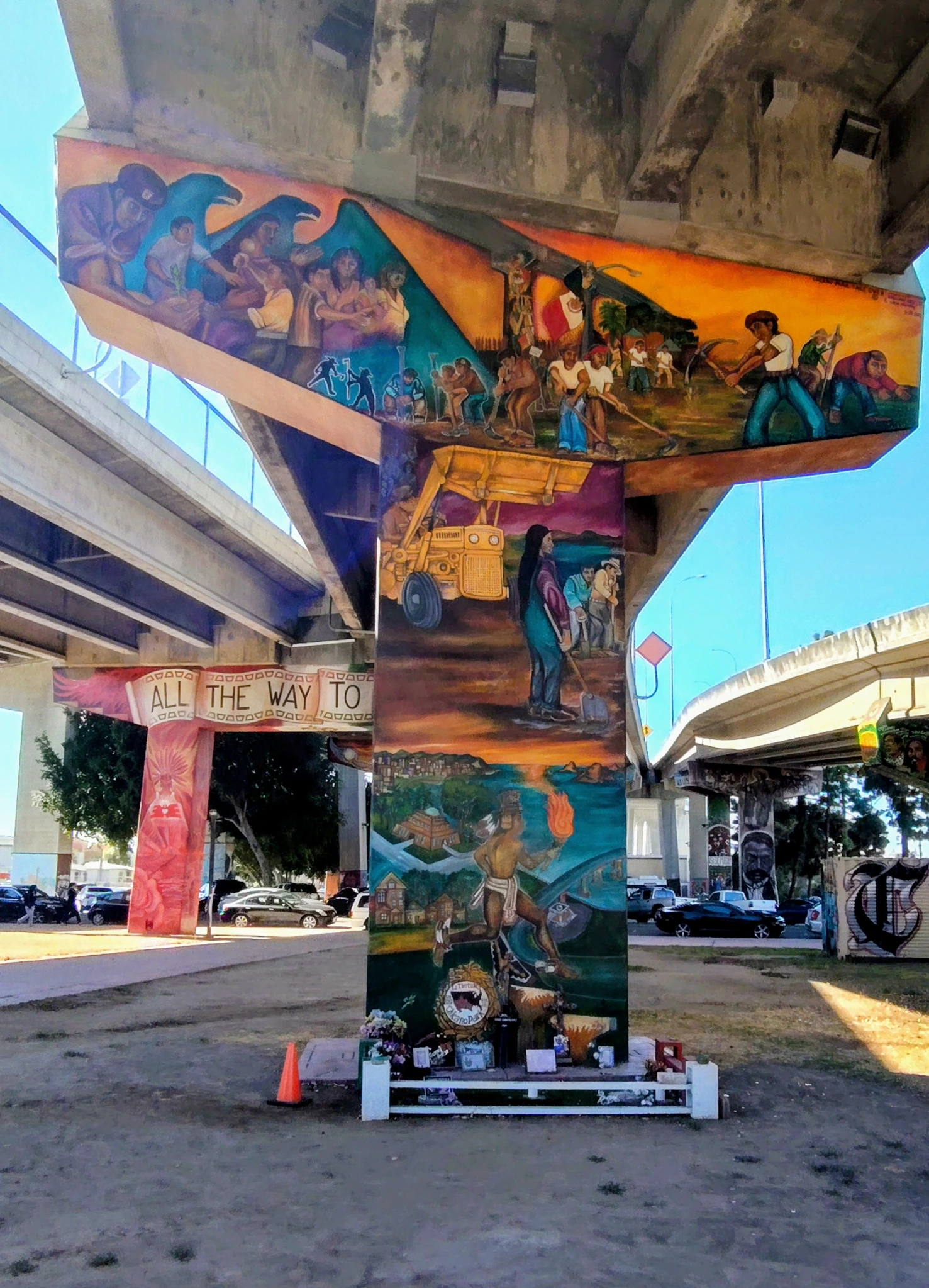
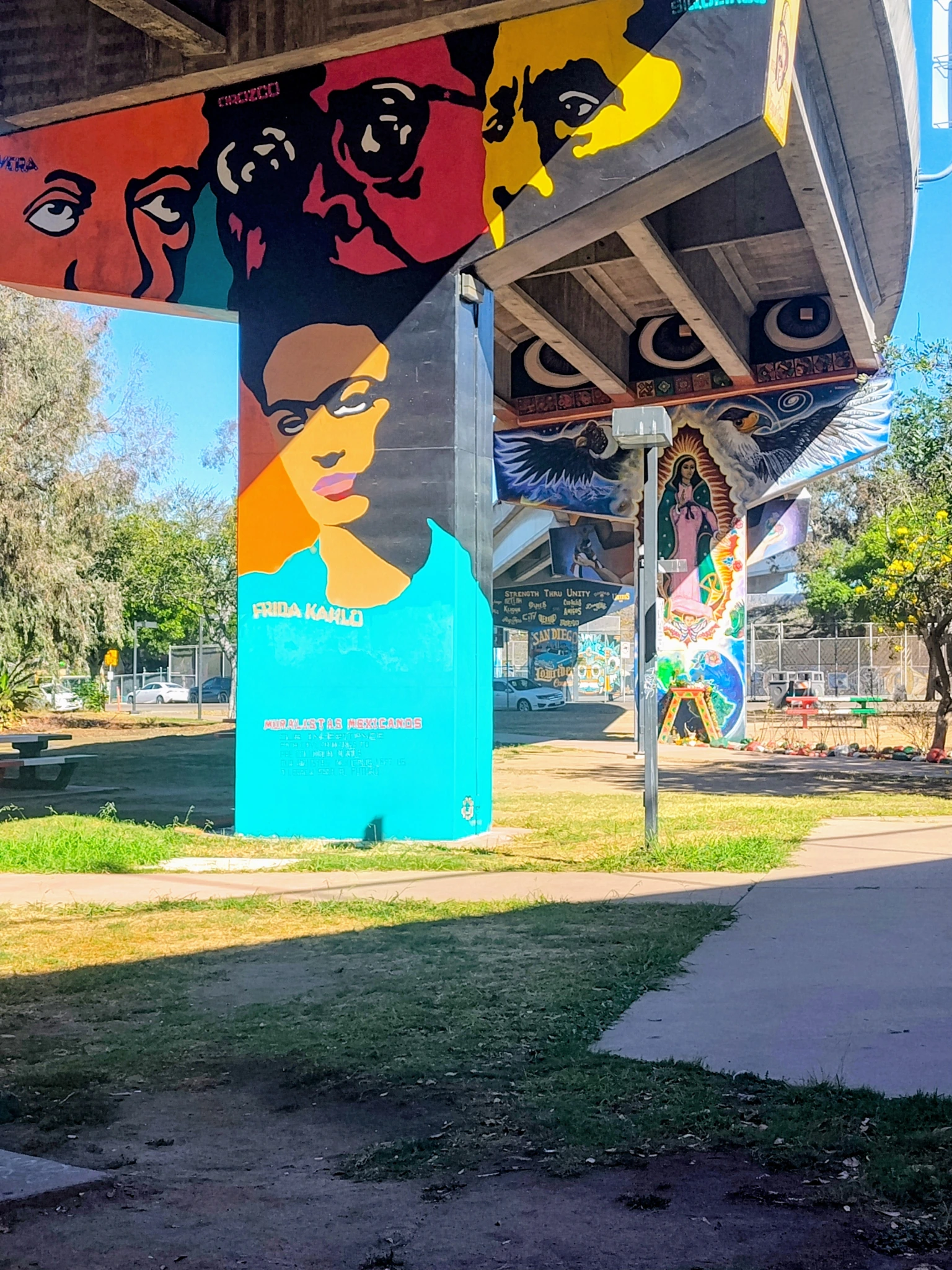
The imagery across the Chicano Park murals reflects the history of the Chicano movement, alongside Indigenous, Mexican, and Mexican American heritage, defining the urban art landscape of San Diego.
Faces, historical figures, spiritual symbols, political references and community scenes appear across the pillars at different scales.
That layering gives the park the feeling of a living archive rather than a single finished artwork.
New generations encounter older stories while artists continue contributing new visual language.
For Atlas OOH, the site demonstrates how large-scale visual storytelling can create deep place recognition when the imagery reflects the people who actually live there.
Barrio Logan’s Identity Extends Beyond the Park
The visual character of the neighborhood does not begin or end beneath the freeway.
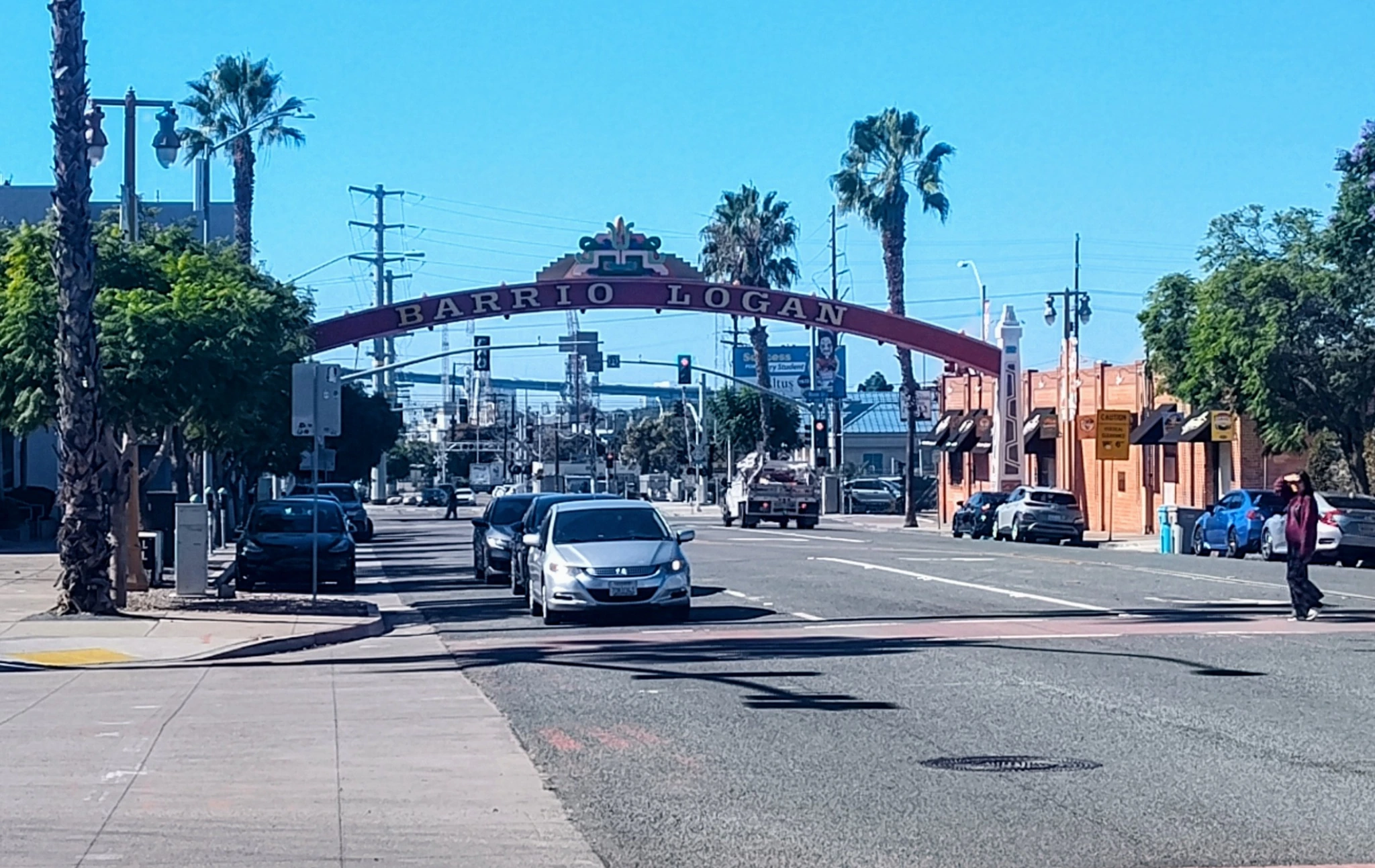
Murals, signage, gateways and local storefronts help establish Barrio Logan as a distinct cultural environment.
The neighborhood gateway, for example, acts almost like a piece of civic wayfinding: it announces where you are before any individual mural does.
Atlas OOH Notes Why Infrastructure Matters to the Experience
Chicano Park would feel very different if the murals were displayed inside a conventional gallery.
The freeway is part of the visual experience.
Columns, ramps, shadows and massive concrete spans create an architectural scale that changes how the artwork is perceived.
The art wraps around infrastructure rather than ignoring it.
That relationship between artwork and environment is one reason the park feels so immersive.
A Sacred Space With an Ongoing Community Role
The supplied background includes a quote from Alberto Pulido, a University of San Diego professor and member of the Chicano Park Steering Committee, describing the park as a “sacred space” because of its history, stories and the many activities that have taken place there.
That perspective is important.
The park is not only a visual attraction. It remains connected to community life, activism and cultural continuity.
The nearby Chicano Park Museum and Cultural Center and the continued creation of new murals reinforce that the site is still evolving.
What OOH Planners and Brands Can Learn From San Diego's Urban Art
- Place has meaning before a brand arrives. Outdoor strategy should understand the cultural context surrounding a site.
- Scale alone does not create relevance. Chicano Park is powerful because the imagery is rooted in community history.
- Infrastructure can become a storytelling surface. Columns, walls and underpasses can carry meaning when treated thoughtfully.
- Visual consistency can build neighborhood identity. Murals, signage and gateways work together to create a recognizable sense of place.
- Public space is shared space. Any commercial outdoor presence should respect the stories, communities and visual language already occupying it.
Bottom line: Chicano Park shows what happens when public art, activism and infrastructure become inseparable. More than 100 murals transform freeway columns into a monumental cultural archive, making Barrio Logan one of San Diego’s most visually distinctive and historically significant public spaces.
Frequently asked questions
What is Chicano Park?
Chicano Park is a cultural landmark in Barrio Logan, San Diego, created in 1970 following community protests and known for its extensive outdoor mural collection.
Where is Chicano Park located?
The park is located in Barrio Logan beneath Interstate 5 and the access ramps to the San Diego-Coronado Bridge.
How many murals are in Chicano Park?
The supplied source describes the park as containing more than 100 murals painted across freeway pillars and surrounding structures.
What themes appear in the murals?
The murals depict themes of strength, struggle, community and identity across Indigenous, Mexican and Mexican American history.
Why is Chicano Park important for urban visual culture?
It shows how infrastructure can become a community storytelling surface, turning freeway columns and public space into a large-scale cultural archive.
Sources
Plan your OOH campaign
Get recommendations for markets, formats and availability based on your campaign goals.
Request a media plan
Comments
Share your take. Keep it constructive and specific.