
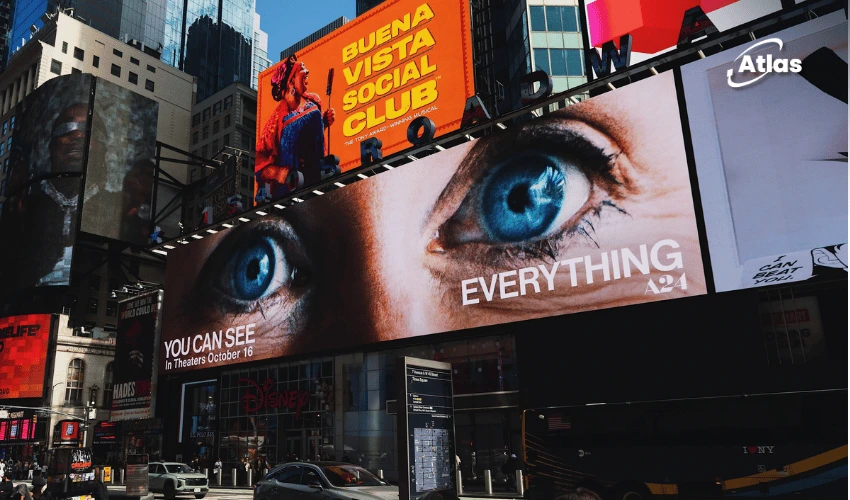
A24 “You Can See Everything” OOH Campaign Makes New York Feel Watched
Atlas OOH Sees How One Visual Can Carry an Entire Film Campaign
The campaign does not need a complicated visual system.
It has the eyes.
That one image is strong enough to scale from a giant nighttime billboard to a subway panel or a street-level shelter without losing recognition.
For Atlas OOH, this a24-you-can-see-everything activation is a useful example of how film OOH can build memorability by repeating one powerful visual code across multiple urban formats.
The Eyes Create Immediate Tension
Extreme close-ups naturally feel intimate.
At billboard scale, they can become almost confrontational.
The campaign turns that tension into the core of the media idea: audiences are looking at the ad while the eyes appear to look back.
That interaction is especially effective for a film called You Can See Everything.
Atlas OOH Highlights Why the Subway Makes the Creative More Intimate
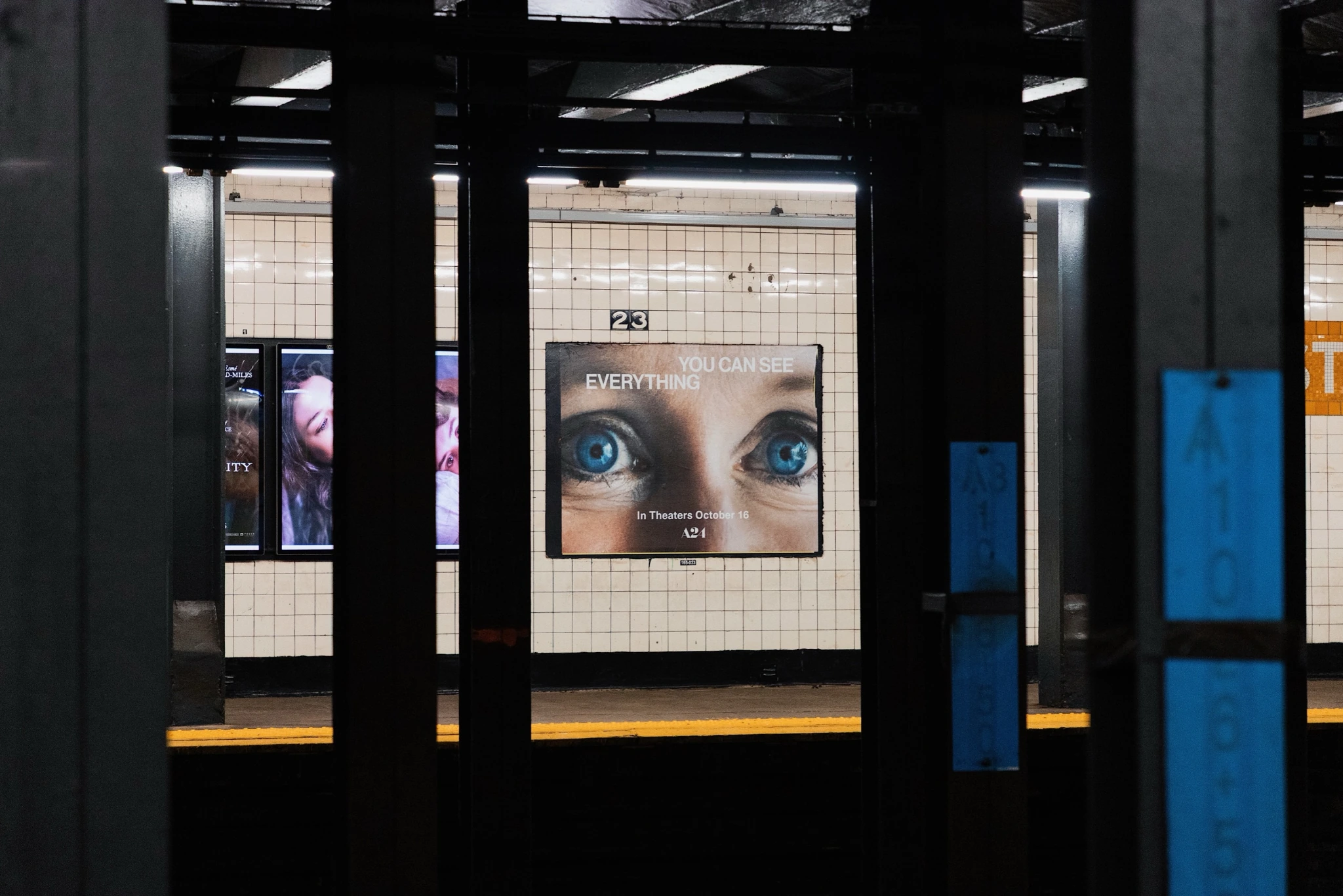
On a subway platform, the experience changes.
The audience is closer to the face.
The eyes are no longer far above the street; they sit directly across from commuters while they wait.
That proximity makes the creative feel more personal and more uncomfortable in a way that suits the campaign.
Street-Level Transit Extends the Campaign Above Ground
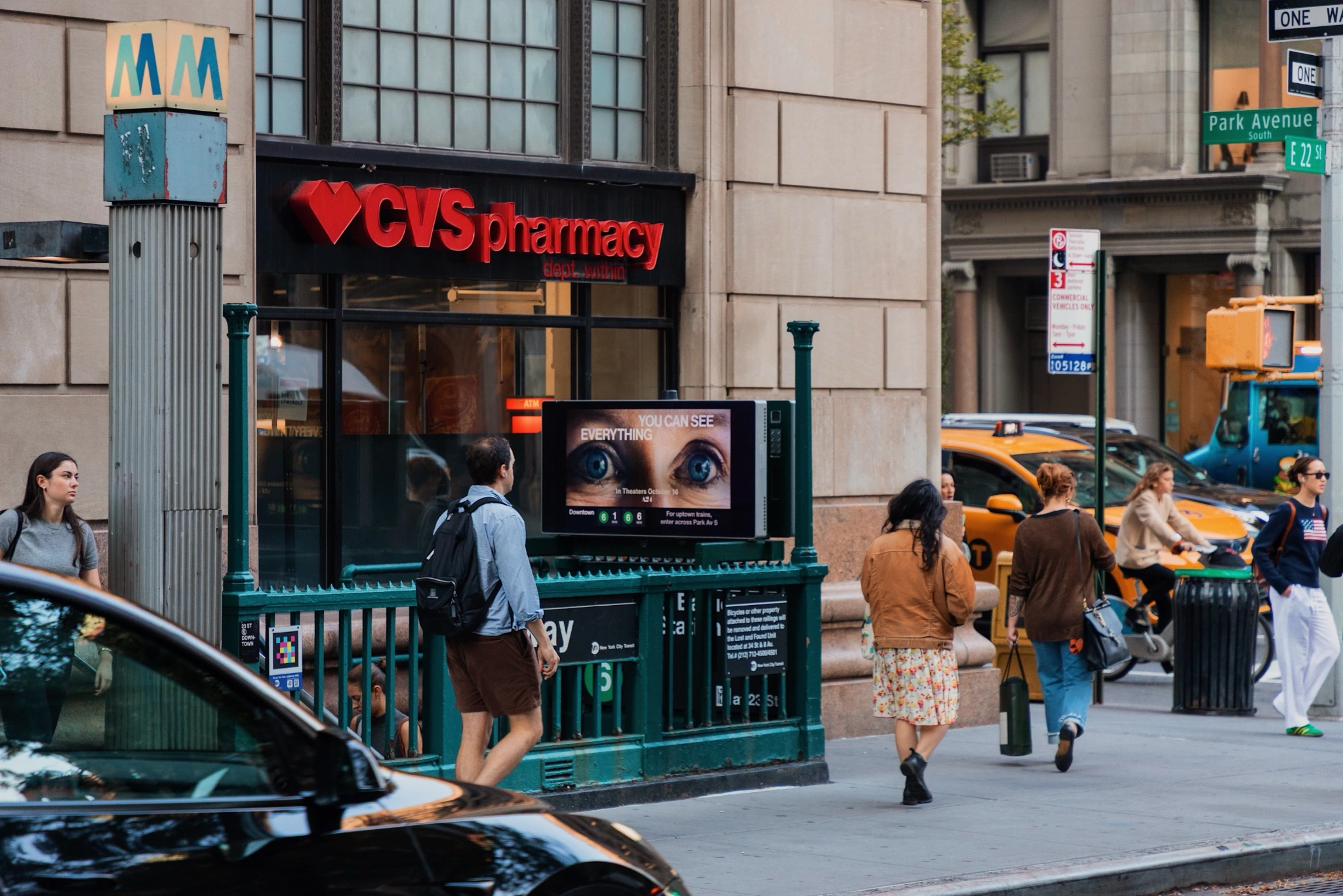
The campaign also follows audiences back onto the street.
Subway entrance media places the same visual language directly inside pedestrian movement, allowing the campaign to connect underground and above-ground environments.
That creates frequency without forcing the creative to change.
The repeated eyes become a visual thread running through the city.
Atlas OOH Notes How Street Furniture Adds Repetition Without Visual Fatigue
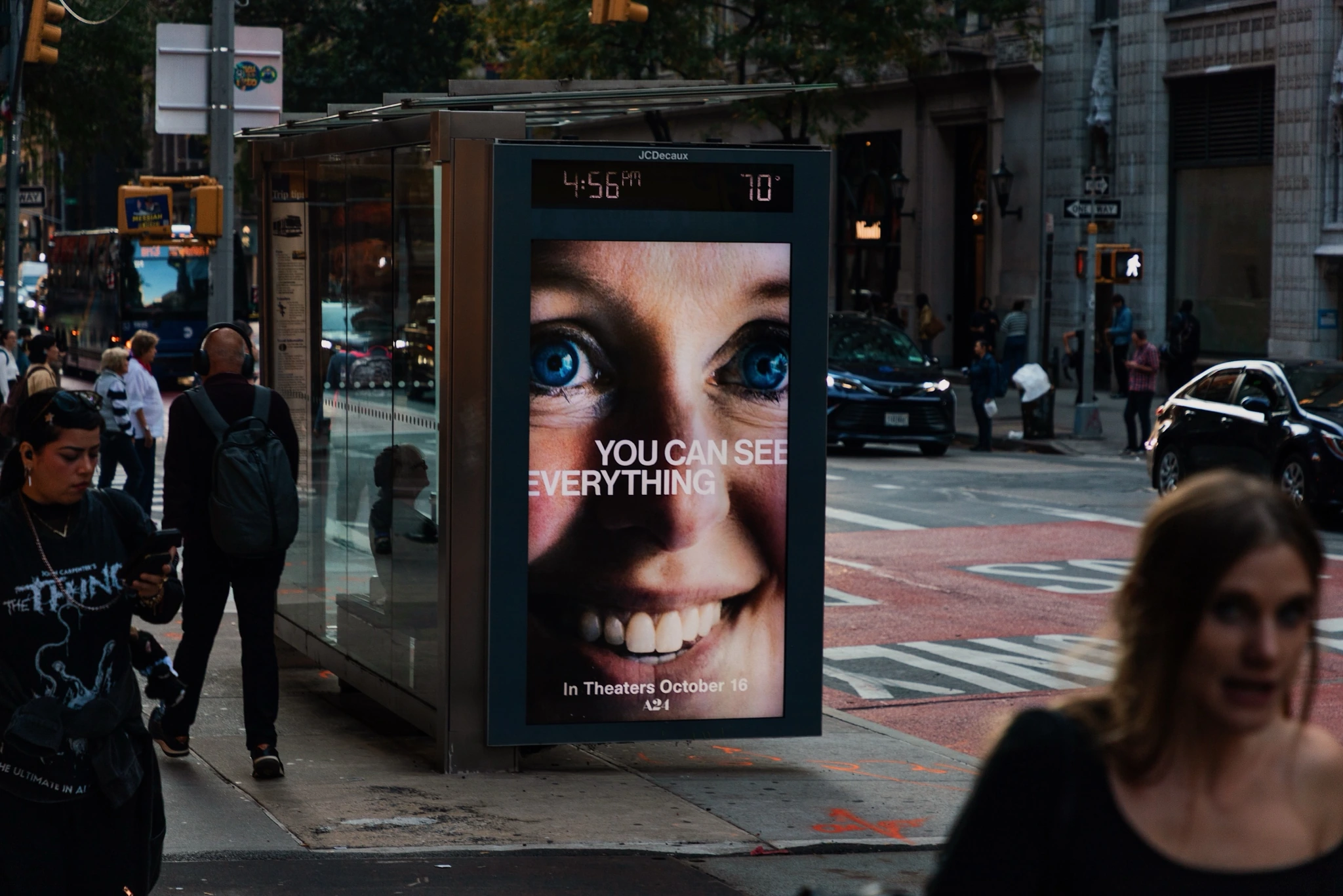
Because the creative is so simple, it can repeat often without becoming visually cluttered.
The eyes remain the hero. The title remains readable. The release date stays secondary.
That hierarchy gives the campaign flexibility across narrow, vertical and landscape placements.
For Atlas OOH, this is a strong model for building entertainment campaigns that use repetition strategically across billboards, transit and street furniture.
The Release Date Stays Simple and Clear
A24’s official film page lists You Can See Everything for theatrical release on October 16, 2026.
The film is directed by Nathan Fielder and Lance Oppenheim.
The OOH does not overload viewers with plot information.
Instead, it keeps the title, visual identity and date easy to absorb, letting curiosity do the rest.
Why A24’s “You Can See Everything” OOH Works
- One strong image creates immediate campaign recognition.
- The same visual works across large and small OOH formats.
- Subway placements make the imagery feel more intimate and unsettling.
- Street furniture builds frequency across the pedestrian journey.
- The copy stays minimal, leaving room for curiosity.
Bottom line: A24’s You Can See Everything campaign works because it knows exactly how much to show. The giant blue eyes create the hook, while repeated placements across New York turn that hook into a city-wide presence. The result is simple, unsettling and extremely well suited to OOH.
Frequently asked questions
What film is the “You Can See Everything” OOH campaign promoting?
The campaign promotes A24’s You Can See Everything, directed by Nathan Fielder and Lance Oppenheim.
When does You Can See Everything open in theaters?
A24 lists the film’s theatrical release date as October 16, 2026.
What visual idea drives the campaign?
The campaign repeatedly uses extreme close-ups of eyes alongside the line “You Can See Everything,” creating a simple but intense visual identity across multiple OOH formats.
What OOH formats are visible in the campaign?
The supplied images show a large billboard, subway platform posters, subway entrance media and street furniture placements.
Why does the campaign work in OOH?
The eye imagery is bold enough to register from a distance while also becoming more unsettling and intimate at street and subway level, giving the same creative system flexibility across formats.
Sources
Plan your OOH campaign
Get recommendations for markets, formats and availability based on your campaign goals.
Request a media plan

Comments
Share your take. Keep it constructive and specific.