
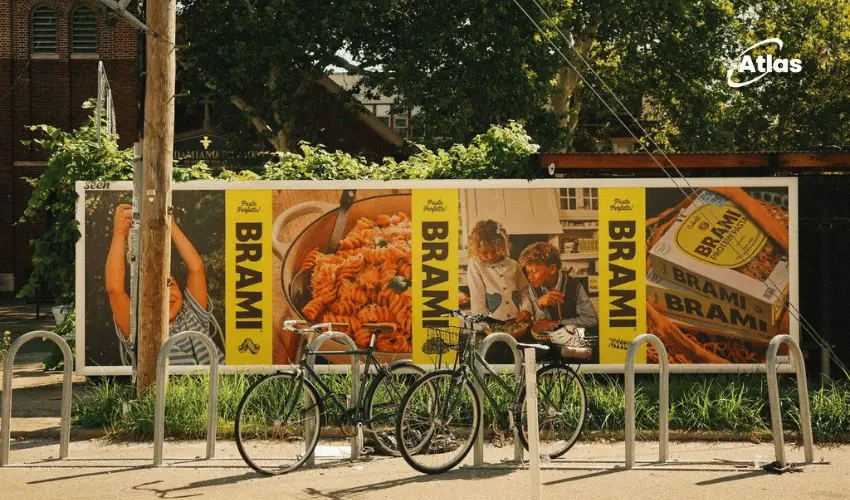
Brami Uses OOH to Become Familiar Before Shoppers Reach the Shelf
Atlas OOH Sees How Retail Expansion Needs Fame, Not Just Distribution
Getting a product into more stores creates availability. It does not automatically create recognition.
That was the challenge behind Brami’s fall retail push across BJ’s, HEB, Costco and Sam’s. As distribution expanded, the brand also needed to look and feel like a category leader before shoppers encountered it in the aisle.
The campaign therefore focused on familiarity rather than broad, generic awareness.
For Atlas OOH, this is an important retail lesson: OOH can create mental availability before physical availability does the final conversion work.
Back-to-school gives Brami a real dinner problem to solve
The media strategy was built around the back-to-school period, when families return to tighter schedules and daily routines become more demanding.
That makes one question especially repetitive: what’s for dinner?
Brami’s pasta proposition fits naturally into that moment. Rather than forcing the brand into an abstract lifestyle story, the campaign connects it with a recurring household need.
The timing gives the work a practical reason to exist while the OOH gives it enough scale to become memorable.
Atlas OOH Highlights How New York Balanced Fame With Frequency
In New York, the plan combined large-format visibility with repeated exposure.
The supplied campaign information identifies a Union Square takeover and large-format Williamsburg walls as the high-impact components of the plan.
Those placements create fame. The wider programmatic layer creates frequency.
That combination is useful because one spectacular placement may generate recognition, but repeated contact across everyday environments is what helps the brand remain familiar when shoppers later see it at shelf.
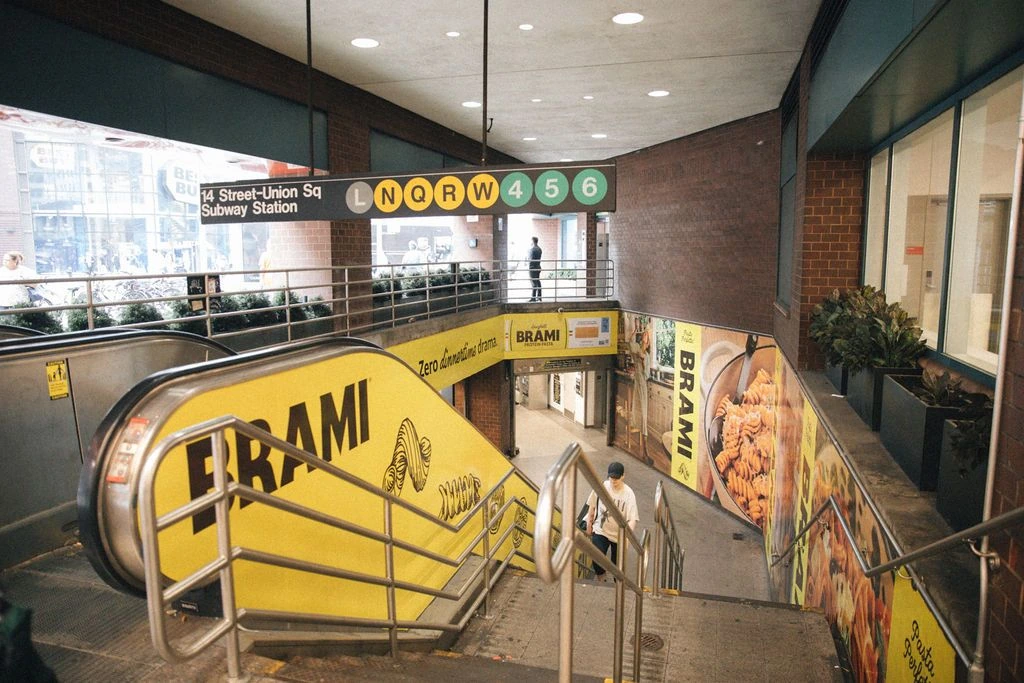
Programmatic OOH scaled the campaign across 2,380 screens
Beyond the hero placements, the campaign extended across 2,380 programmatic OOH screens.
According to the supplied information, those screens covered roadside, transit and residential environments, allowing Brami to show up across different parts of the audience’s day.
This is where programmatic OOH adds strategic value. It can preserve a consistent creative system while increasing market-level coverage and repetition.
For Atlas OOH, the important point is not simply the number of screens. It is how those screens support the same retail objective as the large-format media: make the brand feel familiar before purchase.
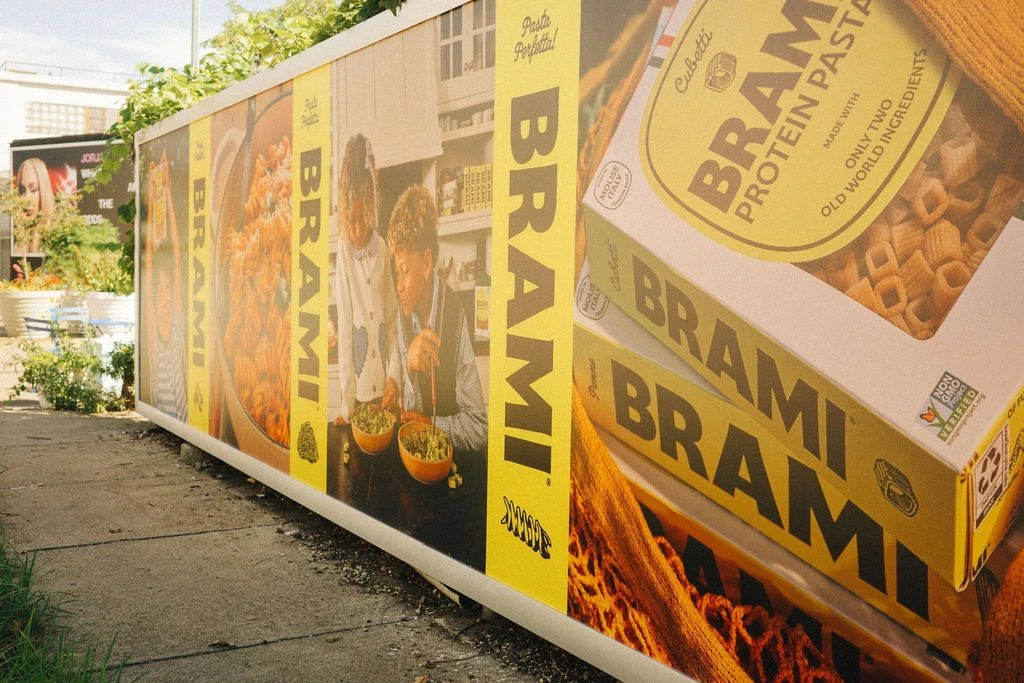
The visual system makes Brami easy to recognize
The campaign also benefits from a very clear brand world.
Bright yellow panels, oversized BRAMI typography, strong product photography and food imagery create a system that is easy to identify across formats.
That consistency matters in a retail-awareness campaign because the same visual memory needs to carry from the street to the store shelf.
The creative does not ask people to decode a complicated idea. It makes Brami look big, established and appetizing.
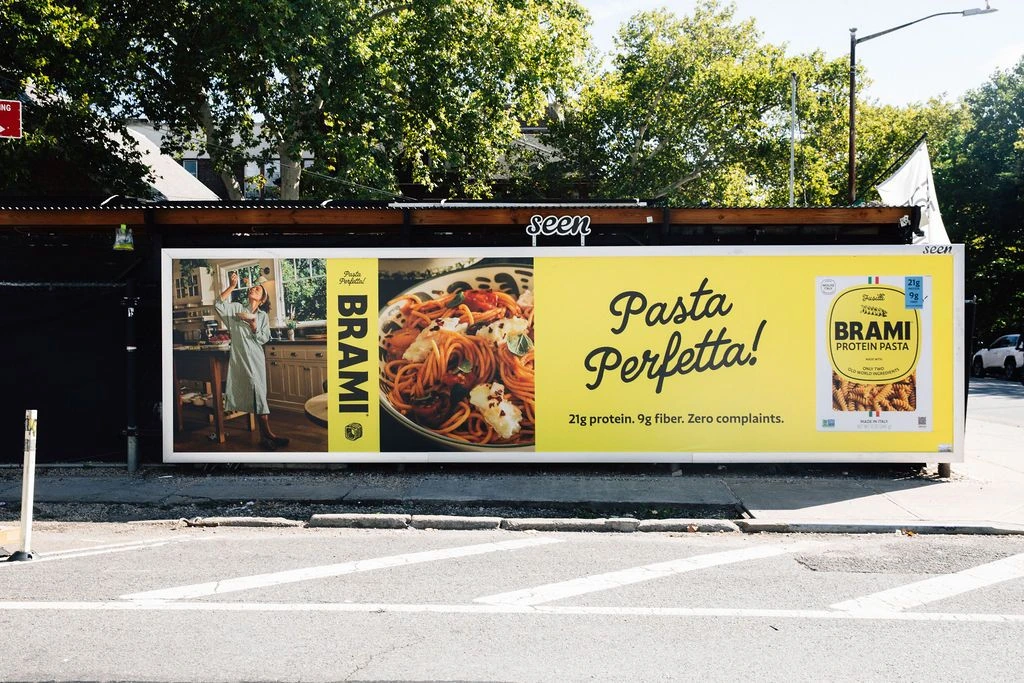
Atlas OOH Notes Why the Campaign Extends Beyond OOH
The audience strategy did not stop at outdoor.
The supplied campaign information says Brami also used nearly 7 million targeted iHeart impressions across six priority markets.
That podcast layer was reinforced by a custom integration with Laura Clery, built around the familiar chaos of getting dinner onto the table.
The combination helps the campaign move between visual familiarity and longer-form personality.
OOH makes the brand visible. Audio gives the brand more room to build relevance and context.
Why Brami’s campaign works
- It starts with a clear retail problem: distribution growth without enough familiarity.
- It uses back-to-school strategically as a high-relevance dinner-planning moment.
- It combines fame and frequency through Union Square, Williamsburg and 2,380 programmatic screens.
- It keeps the visual system consistent so recognition can transfer from OOH to shelf.
- It extends the audience strategy into audio with nearly 7 million targeted podcast impressions.
Bottom line: Brami’s campaign is designed to close the gap between retail availability and brand familiarity. By combining high-impact New York OOH, programmatic scale and targeted podcast media, the plan makes Brami more recognizable before the shopper ever reaches the pasta aisle. Pasta perfetta.
Frequently asked questions
What was the goal of Brami’s fall OOH campaign?
The campaign was designed to build familiarity and category-leader presence ahead of a major retail push across BJ’s, HEB, Costco and Sam’s.
What OOH formats did Brami use in New York?
According to the supplied information, the campaign included a Union Square takeover, large-format Williamsburg walls and programmatic OOH across 2,380 screens spanning roadside, transit and residential environments.
Why was back-to-school an important moment?
The campaign used the back-to-school period because families are rebuilding routines and repeatedly making dinner decisions, creating a relevant moment for a convenient pasta brand to build awareness.
How did the media plan extend beyond OOH?
The campaign also included nearly 7 million targeted iHeart podcast impressions across six priority markets and a custom integration with Laura Clery.
Sources
Plan your OOH campaign
Get recommendations for markets, formats and availability based on your campaign goals.
Request a media plan

Comments
Share your take. Keep it constructive and specific.