
Toronto Public Library Foundation Makes Childhood Dreams the Heart of a DOOH Fundraising Campaign
When I Grow Up: A Simple Message With a Bigger Purpose
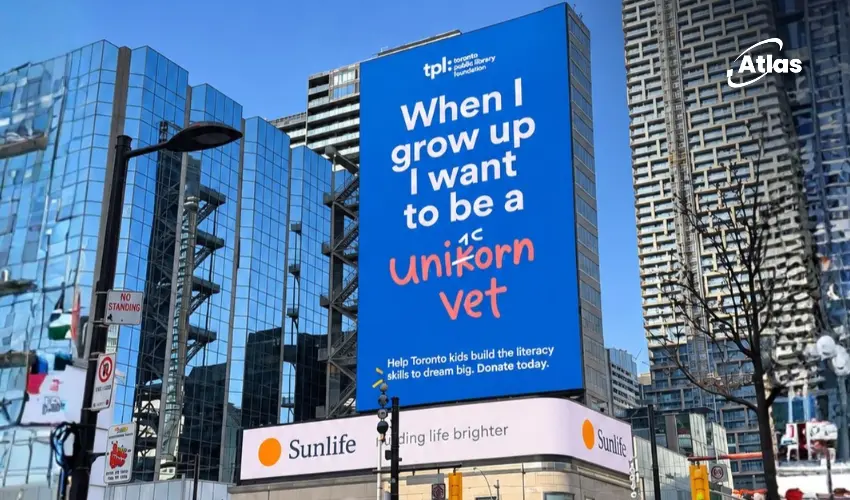
Ask a child what they want to be when they grow up, and the answer might be a doctor, a pilot or something delightfully impossible. Toronto Public Library Foundation built its new fundraising campaign around those ambitions, turning the familiar phrase “When I grow up I want to be…” into a series of bright blue digital out-of-home (DOOH) ads.
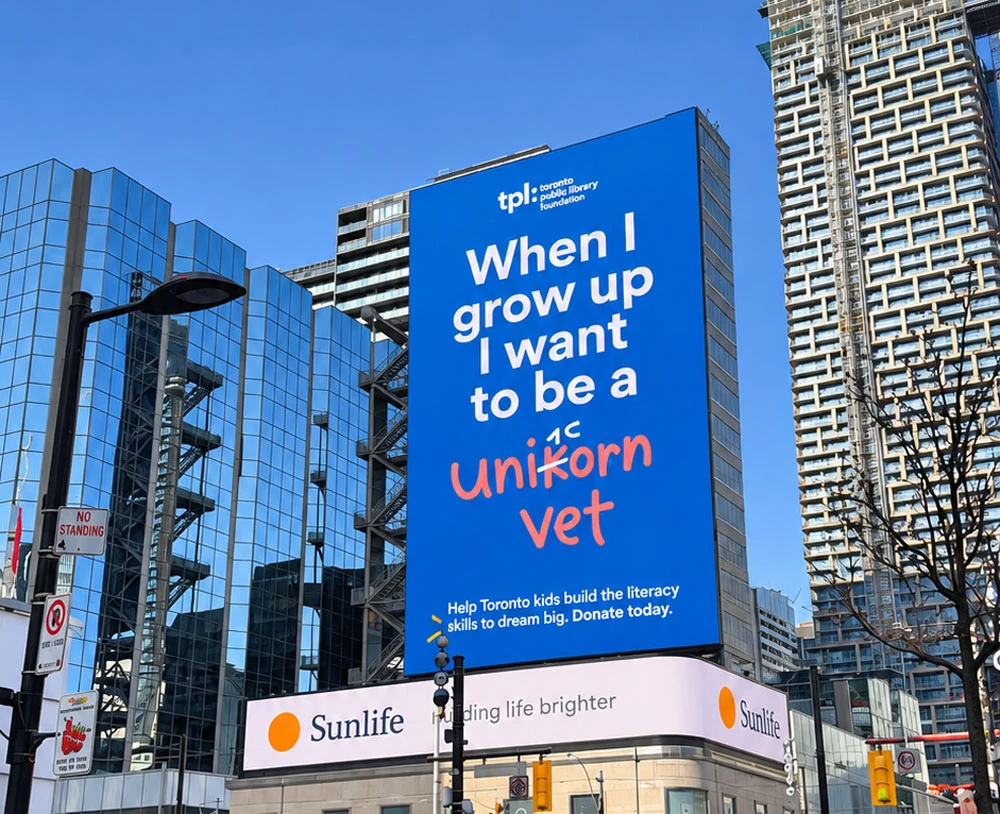
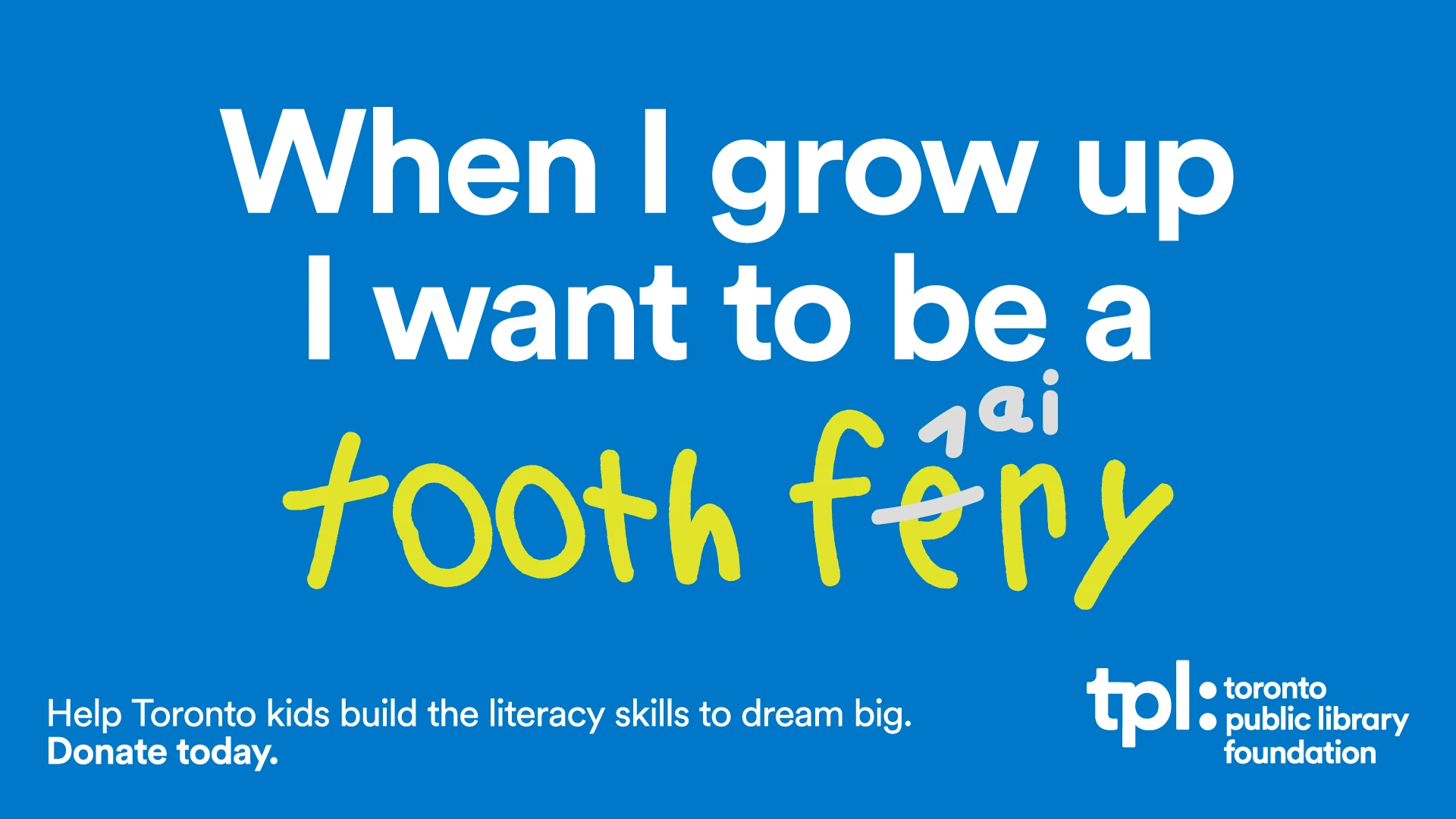
The children imagine becoming a candy tester, a unicorn vet or a tooth fairy. The unexpected answers create the emotional hook. Their handwritten look, deliberate misspellings and corrections connect those dreams to the real skill the campaign wants to support: literacy.
For marketers, the execution is a strong example of purpose-led OOH creative strategy. It does not begin with an institutional explanation. Instead, it introduces a human idea people can understand at a glance and then makes a clear request for support.
Digital Billboards Bring Children's Literacy and Childhood Dreams to Busy Toronto Streets
The photographs show the campaign on prominent urban digital screens, with large white type, the Foundation's blue colour palette and childlike pink or yellow lettering. This clear hierarchy is particularly useful for outdoor advertising in busy city environments, where many viewers only have seconds to interpret a message.
A billboard can hold attention without overwhelming the reader: a question, a dream and a short donation appeal. The combination of scale and straightforward storytelling gives the nonprofit a way to stand out among retail, entertainment and commercial messages.
More Than 5,000 in Donated Media Supports the Fundraising Push
According to campaign reporting, top-tier media partners across Canada provided more than 5,000 in donated in-kind media inventory. The amount represents contributed advertising space, not confirmed cash donations raised, media expenditure or campaign revenue.
That distinction matters. For a mission-led organization, smart media allocation and transparent reporting can be just as important as a powerful creative idea. In-kind inventory can create substantial visibility while allowing a nonprofit to direct more resources toward its core work.
The campaign reinforces a less widely understood point: while Toronto residents know and value their public library, donor support helps the institution expand and enhance programmes and resources beyond its public funding.
Glassroom Uses Hyperlocal OOH Strategy and Audience Insights to Reach Potential Donors
The campaign’s media approach was designed by Glassroom, which studied where past donors live, where potential donors live and how individual neighbourhoods use library services. These insights informed placements across high-density urban hubs, suburban transit routes and commercial corridors.
Instead of treating Toronto as one undifferentiated audience, the plan makes neighbourhood relevance central to the campaign. This reflects a larger transit advertising principle: repeated exposure along the routes people already travel can help reinforce awareness and familiarity.
Similarly, rail, bus and station media can connect institutions to communities near schools, transit stops, shopping areas and other everyday destinations. The goal is not simply maximum visibility, but reaching people where the message feels relevant.
There are no independently reported donation conversions or fundraising totals for this specific campaign in the published case study; any claims of measured donation lift would go beyond the available evidence.
How the Handwritten Artwork Makes Literacy Visible
Creative agency The Garden uses spelling mistakes and playful handwritten corrections to make the meaning of literacy visible within the advertisement itself. The device is easy to understand without a long explanation: children have extraordinary ideas, and the ability to read and write can help them explore those ambitions.
Consistent typography, bright blue backgrounds and a short donation line create a coherent OOH creative system that can adapt to different formats. That consistency is useful when a campaign appears across multiple neighbourhoods and placements.
What Nonprofit and Public-Service Brands Can Learn From This OOH Campaign
Several aspects of this fundraising campaign translate into practical lessons for organizations considering hyperlocal nonprofit OOH advertising strategies:
- Lead with emotion: an imaginative child’s ambition invites attention before asking for donations.
- Let the creative demonstrate the message: playful spelling makes literacy tangible without a complicated explanation.
- Match media to communities: neighbourhood and donor insights help media placements feel purposeful rather than arbitrary.
- Use a strong, consistent design: readable typography and bold colour work across large digital formats and supporting assets.
- Keep outcomes separate from inputs: donated inventory value is documented, but donation response and conversion results have not yet been provided.
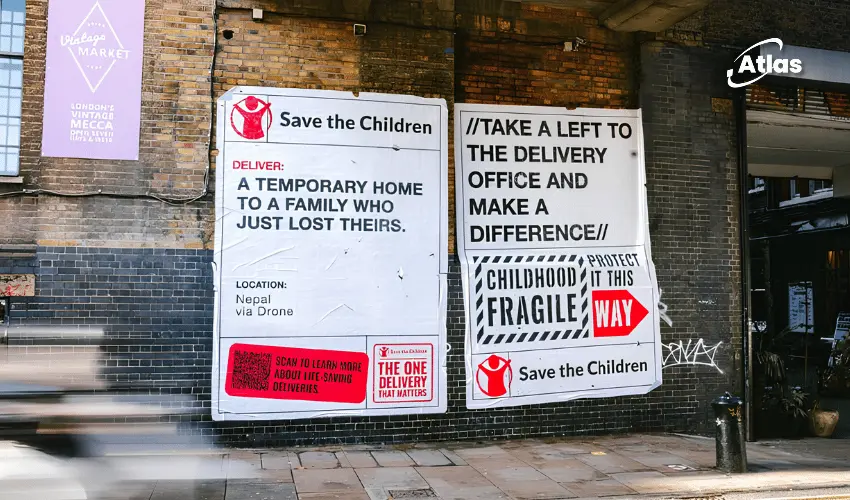
For another example of a mission-led physical activation, Atlas OOH's analysis of Save the Children's London campaign shows how public-space messaging can lead viewers toward an opportunity to learn and participate. The two campaigns use different creative approaches but share the same underlying objective: connecting awareness to a meaningful action.
Plan Location-Based OOH Campaigns With Atlas OOH
The Toronto Public Library Foundation campaign is a reminder that the strongest outdoor messages connect a simple idea to the everyday places where audiences already are. Its thoughtful creative, hyperlocal targeting and donated inventory demonstrate how a public-interest message can make a powerful citywide impression.
While this campaign is a Toronto case study, its planning principles are useful for organizations exploring OOH and DOOH campaigns in the United States. Atlas OOH helps brands and mission-led organizations evaluate location-based digital billboards, transit advertising and other outdoor formats for their goals and budgets.
Ready to translate a mission into meaningful visibility? Request a tailored OOH media plan from Atlas OOH.
Bottom line: Childhood Dreams demonstrates how playful messaging, literacy advocacy and neighbourhood-level OOH strategy can bring a fundraising message into everyday city life—without reducing the cause to just another advertisement.
Frequently asked questions
What is the Toronto Public Library Foundation Childhood Dreams campaign?
It is a fall/winter fundraising campaign using playful childhood ambitions on outdoor media to encourage donations supporting Toronto Public Library programmes and services.
Who created the campaign?
The creative was developed by The Garden, with audience and neighbourhood-level media planning by Glassroom.
How much donated media supported the campaign?
The reported total exceeded 5,000 in donated in-kind media inventory, which should not be confused with cash spending or fundraising revenue.
What is the role of hyperlocal OOH in this campaign?
Placements were informed by past and prospective donor locations and neighbourhood patterns in library usage, so campaign messages could appear in relevant Toronto community environments.
How long is the campaign expected to run?
The campaign began rolling out in November 2026 and was reported as running until the end of 2027.
Sources
Plan your OOH campaign
Get recommendations for markets, formats and availability based on your campaign goals.
Request a media planSources
- Little Black Book — Toronto Public Library Foundation Turns Childhood Dreams Into Call for Action (23 Nov 2026)
- Little Black Book — Toronto Public Library Foundation: Childhood Dreams (campaign creative)
- Glassroom — Toronto Public Library Foundation Partners With Glassroom (12 Aug 2026)
- Toronto Public Library Foundation — Official website
Comments
Share your take. Keep it constructive and specific.