
Specsavers-Inspired “You Can See Everything” Bus Shelter Spec Ad: Contextual OOH Analysis
What Is the “You Can See Everything” Specsavers Spec Ad?
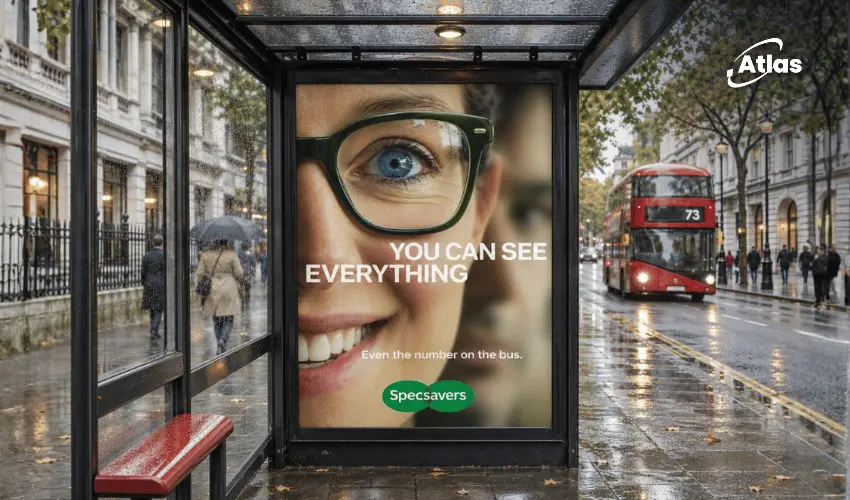
Some outdoor concepts become iconic when they interact with what is already happening around them. In this proposed bus shelter advertising design, a close-up face wearing green-framed glasses fills the panel. The large line, “YOU CAN SEE EVERYTHING,” is followed by a smaller thought: “Even the number on the bus.” This demonstrates the raw effectiveness of reactive and contextual OOH advertising.
Behind the shelter, a red London-style double-decker displays route number 73. The vehicle is what completes the message. Instead of talking only about eyesight, the concept asks viewers to notice a real-world detail, connecting the brand idea with the transit environment.
The supplied material labels this execution a spec ad: a creative exercise, not proof that Specsavers produced, authorised or purchased the space. That distinction matters when discussing outdoor advertising case studies. A rendered or composited idea can be smart, but it should not be presented as a photographed media campaign without independent verification.
Why Bus Shelter Advertising Works for Contextual OOH Concepts
The best part of the idea is not the large headline alone. It is the connection between copy and location. At a bus stop, route numbers are an everyday piece of information. People scan them to decide whether to board. Here, that habit becomes the punchline.
In planning terms, this is the appeal of transit advertising with a contextual message. The brand does not need to force relevance; the streetscape offers it naturally. A relevant setting gives a short line a second layer of meaning, without requiring a paragraph of explanatory text on the poster.
A street furniture placement also offers a close viewing distance. Unlike a highway billboard, a shelter can be read while people wait or walk past at a slower pace. That can support one main headline and a concise secondary line, provided the hierarchy remains easy to understand.
Creative caveat: the route 73 bus and the shelter are visible in a single supplied concept image. There is no evidence that the bus was scheduled to interact with a real advertising panel, or that this exact sightline exists as a purchasable placement.
Specsavers' Long History of Visual Humor
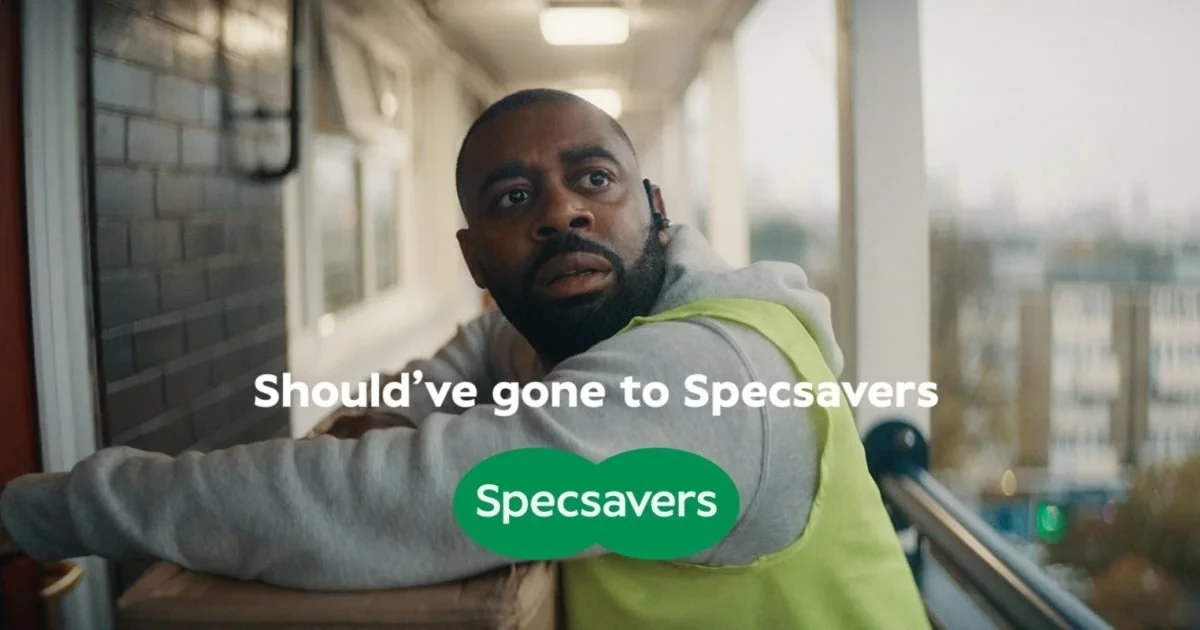
The idea feels compatible with Specsavers because the brand has spent years making visual mistakes and everyday misunderstandings central to its advertising. Its widely recognized “Should've gone to Specsavers” line offers a familiar setup: something odd happens, and the joke resolves through the idea of better vision.
That connection is part of why visual restraint can be valuable in OOH creative strategy. A brand with recognizable visual cues may not need to explain every detail. Specsavers' green identity, a close-up of spectacles, and a line about seeing work together to make the idea legible within seconds.
There are documented precedents for Specsavers using the outdoor medium playfully. In 2014, JCDecaux UK reported a reactive digital campaign tied to a World Cup football moment. In July 2026, Little Black Book covered a large-format Specsavers execution in Melbourne built around intentional design errors. These are separate, verified campaign examples, not confirmation of the supplied “You Can See Everything” mockup.
Three Visual Techniques That Make the Idea Work
1. A headline designed for fast recognition. “You Can See Everything” is short, direct and strongly related to the optical category. This follows the principle of clear billboard message hierarchy: a viewer should understand the primary idea before paying attention to finer details.
2. Brand cues that do not compete with the joke. The green glasses and familiar brand mark lead the eye toward the subject. The image gives people a recognizable optical context, while the second line adds a more specific joke.
3. Street-level relevance. The bus route behind the shelter makes the ad feel designed for this kind of environment rather than transplanted from a social media feed. As the Atlas OOH transit advertising buyer guide explains, dwell time, commuter routines and format choice should all shape how creative is written.
For the idea to work outside a mockup, the visual premise would need to be tested. Designers would have to account for actual bus approach angles, sightlines, poster dimensions and the fact that a bus may not be visible at the precise moment someone reads the smaller line.
From Blurred Posters to Recognizable Branding
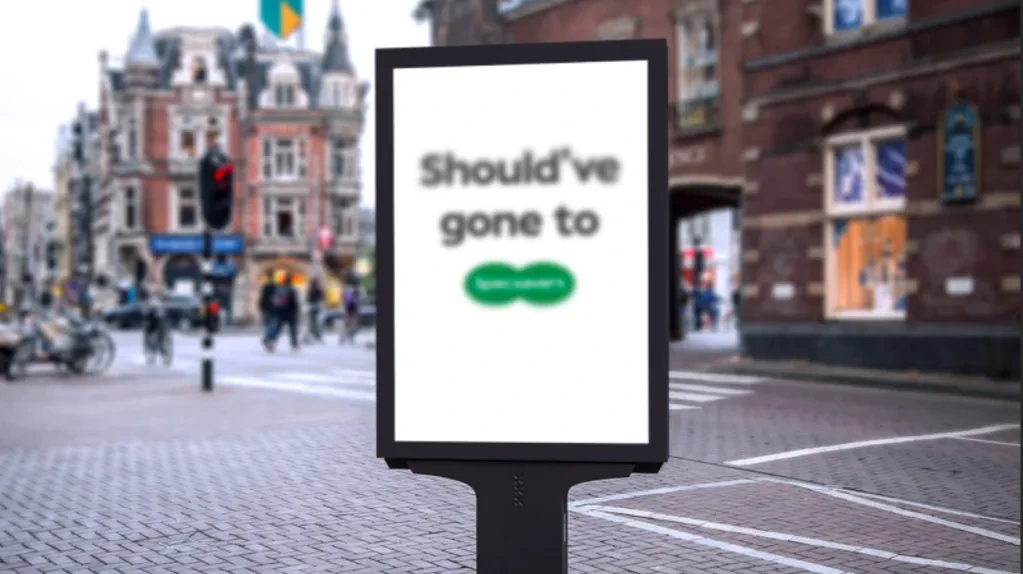
The third supplied image uses a different optical device: a deliberately blurred “Should've gone to Specsavers” style poster. That approach turns legibility itself into the message. It represents another potential technique for creative outdoor storytelling, although the location and live status of this particular reference are unverified.
Blurring is a useful device only if it is intentional and remains understandable. If a brand depends on a visual trick, its critical cues must still be recognizable from the intended viewing distance. It is one thing to create a clever optical illusion; it is another to lose the message entirely.
Could a Similar Idea Work on Digital OOH?
In principle, yes. A verified brand concept could be adapted into a static shelter poster, a digital shelter or kiosk, or a broader OOH media plan. What changes is not the central message, but the placement conditions and how long the audience has to read it.
With digital OOH creative adaptation, a brand could potentially rotate several short lines around familiar moments in a commuter journey, subject to operator approval and technical feasibility. But an execution that depends on a specific passing vehicle would be much harder to guarantee in a live setting.
When a creative team asks whether an outdoor idea is effective, the right starting point is not merely how attractive the mockup looks. It is whether the interaction between message, audience, location and timing can actually happen. That is where media planning and creative development need to work together.
What Marketers Can Learn From This Contextual OOH Bus Shelter Concept
- Make the location meaningful. A bus shelter is more than an empty frame; transit activity can supply the context for a strong idea.
- Keep copy short. One large promise and a compact supporting line are easier to process on the move.
- Use brand familiarity with care. Known visual elements can help the message register quickly without turning the ad into a product catalog.
- Test the physical experience. Readability, bus movement, sightline and weather can affect whether the concept works beyond the design board.
- Label unverified work accurately. Spec ads demonstrate creative potential, but do not establish a booking, installation, reach or campaign results.
For brands considering more than one urban format, a sensible approach is to combine transit exposure with street-level panels and broader awareness media when it supports the campaign's objectives, rather than assuming a single dramatic idea is enough to deliver commercial results.
Plan Smart Street-Level OOH With Atlas OOH
“You Can See Everything” is a reminder that the street can do some of the storytelling. As a creative exercise, the Specsavers-inspired design shows how a bus shelter, a passing route and a clear line can come together in an instantly understandable concept.
Atlas OOH did not produce or run this proposed Specsavers campaign. Our role is to help advertisers in the United States turn similarly contextual ideas into practical plans by evaluating bus shelters and urban street furniture, transit networks, and the right mix of local outdoor formats.
Have a creative concept in mind? Request a tailored OOH media plan with Atlas OOH and see which real placements fit your audience, timing and campaign goals.
Bottom line: It is a compelling speculative example of context-led OOH, not evidence of an official Specsavers installation. The distinction makes the lesson more useful: good outdoor creative must be memorable and grounded in how people experience a place.
Frequently asked questions
Is “You Can See Everything” an official Specsavers OOH campaign?
The supplied bus shelter image is described as a spec ad or mockup. There is no verified evidence in the materials that Specsavers commissioned or installed this particular execution.
What makes this bus shelter concept creative?
The text promises viewers can see everything, including the number on the nearby bus. The visible route 73 bus makes the environment part of the joke.
What is a spec ad?
A speculative advertisement is creative work produced to illustrate a proposed idea without necessarily being commissioned, approved or deployed by the named brand.
Why are bus shelters effective for contextual OOH concepts?
Shelters place eye-level messaging near actual transit activity, providing a connection between creative copy, commuters, vehicles and their surroundings.
How can brands activate a similar concept?
Brands can start with a single clear line, choose a relevant street-level or transit format, verify visibility conditions, and commission approved creative with legally and operationally appropriate placements.
Sources
Plan your OOH campaign
Get recommendations for markets, formats and availability based on your campaign goals.
Request a media plan

Comments
Share your take. Keep it constructive and specific.