
Tesco Turns the UK Clock Change Into a Backwards OOH Reminder
Atlas OOH Sees Tesco Turn a Reminder Into the Creative Idea
Some of the strongest Outdoor Advertising does not need a long explanation, a special build or a complicated interaction.
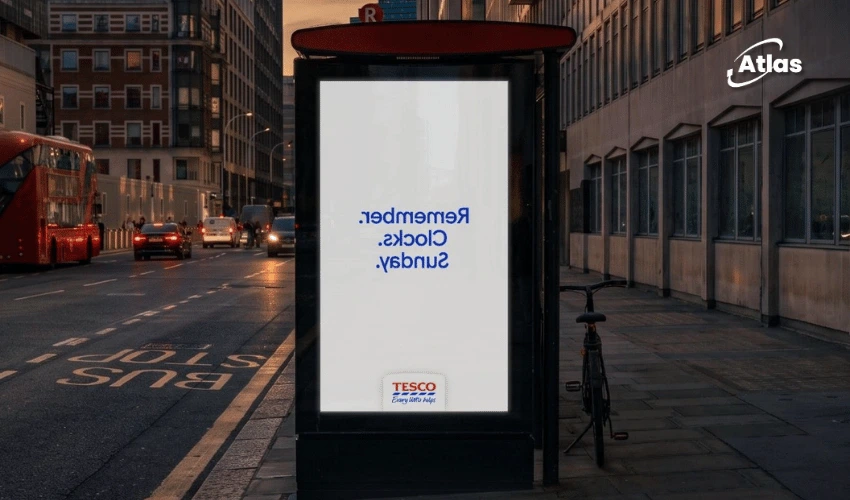
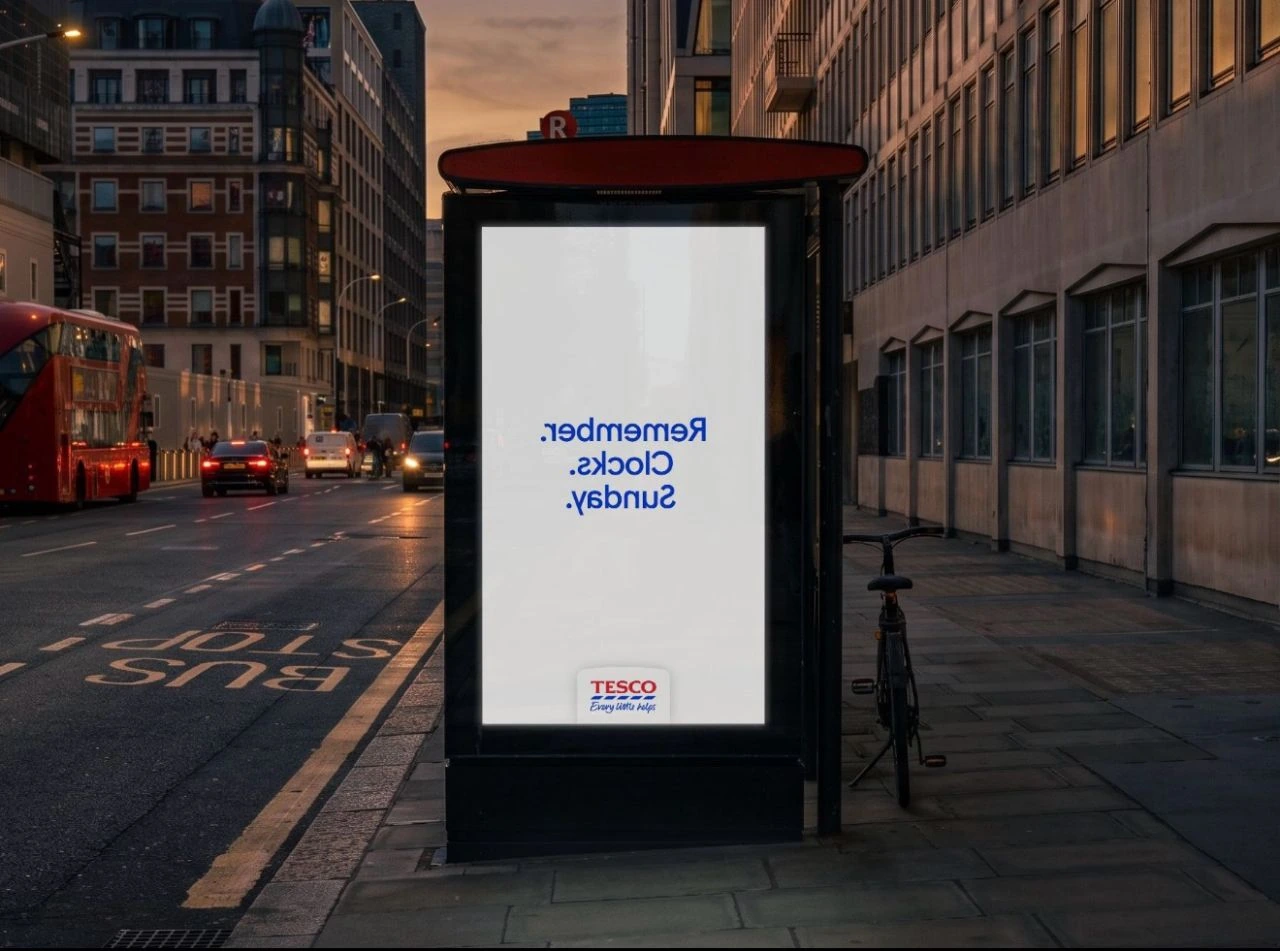
Tesco’s clock-change execution is built around one extremely simple visual move: reverse the copy.
The outdoor display carries the reminder “Remember. Clocks. Sunday.”, but the entire line is shown backwards. Tesco’s logo and long-running “Every little helps” line remain correctly oriented at the bottom, making the visual disruption even more noticeable.
The timing made the idea especially relevant. In the UK, British Summer Time ended on Sunday, October 25, 2026, when clocks moved back one hour at 2am and the country returned to Greenwich Mean Time.
For Atlas OOH, this is a clear example of how Contextual OOH can turn a familiar calendar moment into instantly understandable creative.
The Backwards Copy Makes “Clocks Go Back” Visual
The campaign does more than remind people about a date. It translates the phrase “clocks go back” into a visual behavior.
Instead of writing another standard reminder, the creative makes viewers pause for a second and decode what they are seeing. That moment of friction is useful in OOH Media: the message is minimal, but the unusual orientation gives people a reason to look again.
It is also the kind of idea that works specifically because it appears in public. A reversed message on a street-facing panel feels unexpected enough to interrupt the visual routine of the commute.
Atlas OOH Highlights the Value of Time-Sensitive Outdoor Advertising
The execution was shared by Famous Campaigns as a “Thoughtful reminder from Tesco”, crediting BBH London and Tesco.
The relevance of the idea depended heavily on timing. The UK clock change happens on a predictable cultural calendar, but it still creates an annual reminder moment for millions of people.
That gives brands a narrow window in which a straightforward message can feel unusually useful and topical.
This is one of the strengths of Reactive OOH and Contextual Outdoor Advertising: a campaign can gain meaning from what is happening around it without requiring a large amount of copy.
Why Minimal OOH Creative Works Here
The visual contains very little information, and that is a strength.
People moving through a city may only give an outdoor display a few seconds of attention. The Tesco execution reduces the idea to three words, a recognizable brand signature and one visual trick.
The reversed typography creates the hook. The upcoming clock change supplies the context. Tesco supplies the recognition.
Together, those pieces make the advertisement understandable without adding unnecessary detail.
Atlas OOH: What Brands Can Learn From Tesco’s Clock-Change Campaign
- Use the calendar strategically. Predictable seasonal events can create powerful contextual media opportunities.
- Let the idea change the format. Reversing the message makes the clock change visible rather than simply describing it.
- Keep contextual copy short. Three words are enough because the visual carries the rest of the concept.
- Preserve brand recognition. The Tesco identity stays clear even while the main message breaks normal reading conventions.
- Create a second look. Slight confusion can work in OOH when the audience resolves the idea almost immediately.
The campaign also sits comfortably within Tesco’s recent use of OOH Advertising as more than a place to display product. Recent work has used physical and contextual media ideas to make the format itself part of the communication.
Bottom line: Tesco’s backwards clock-change ad is a small idea with strong contextual discipline. By taking a familiar reminder and making the copy literally move in the wrong direction, Tesco turns a routine public-service message into a memorable piece of Creative OOH.
Frequently asked questions
What is Tesco’s backwards clock-change OOH campaign?
It is a contextual outdoor execution from Tesco and BBH London that displays a reminder about the clocks changing with the copy itself written backwards.
Why is the Tesco message backwards?
The reversal creates a visual interpretation of the clocks going back, turning the seasonal reminder into the central creative device.
When did the UK clocks go back in 2026?
The UK clocks went back one hour on Sunday, October 25, 2026, at 2am, marking the end of British Summer Time and the return to Greenwich Mean Time.
Which agency is associated with the campaign?
Famous Campaigns credited BBH London alongside Tesco in its post about the execution.
Why does this work well as contextual OOH?
The idea connects a time-sensitive cultural moment with an extremely simple visual device that can be understood quickly in a public environment.
Sources
Plan your OOH campaign
Get recommendations for markets, formats and availability based on your campaign goals.
Request a media plan


Comments
Share your take. Keep it constructive and specific.