
Blinkit x UNO Turns Metro Pillars Into a Smart Contextual OOH Campaign
Atlas OOH Highlights the Power of Everyday Transit Infrastructure
Some of the best Outdoor Advertising ideas begin with a basic observation: people already pass the same structures every day.
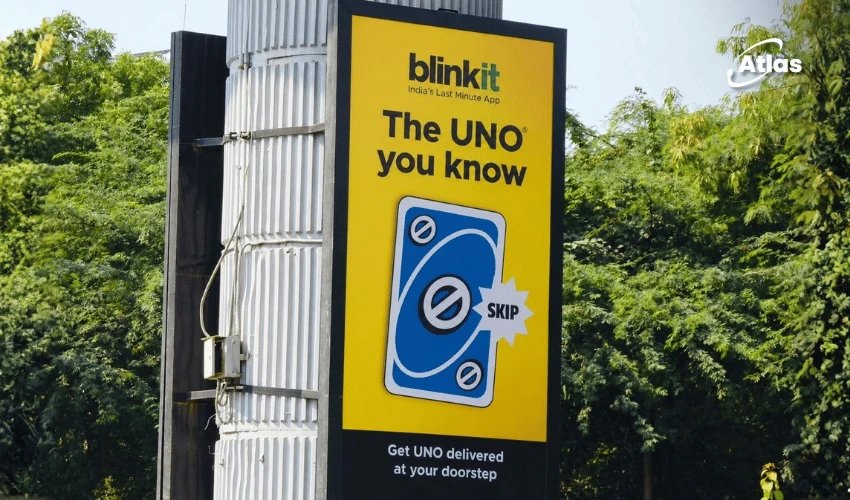
Metro pillars are usually part of the visual background. Blinkit and UNO turn them into a branded touchpoint by using bold yellow creative, oversized card imagery and short copy that can be understood in seconds.
The result feels native to the commute rather than added on top of it.
For Atlas OOH, this is a strong example of how Transit Advertising can create impact through context, repetition and clear visual recognition.
The UNO You Know: Familiarity Makes the Message Work Fast
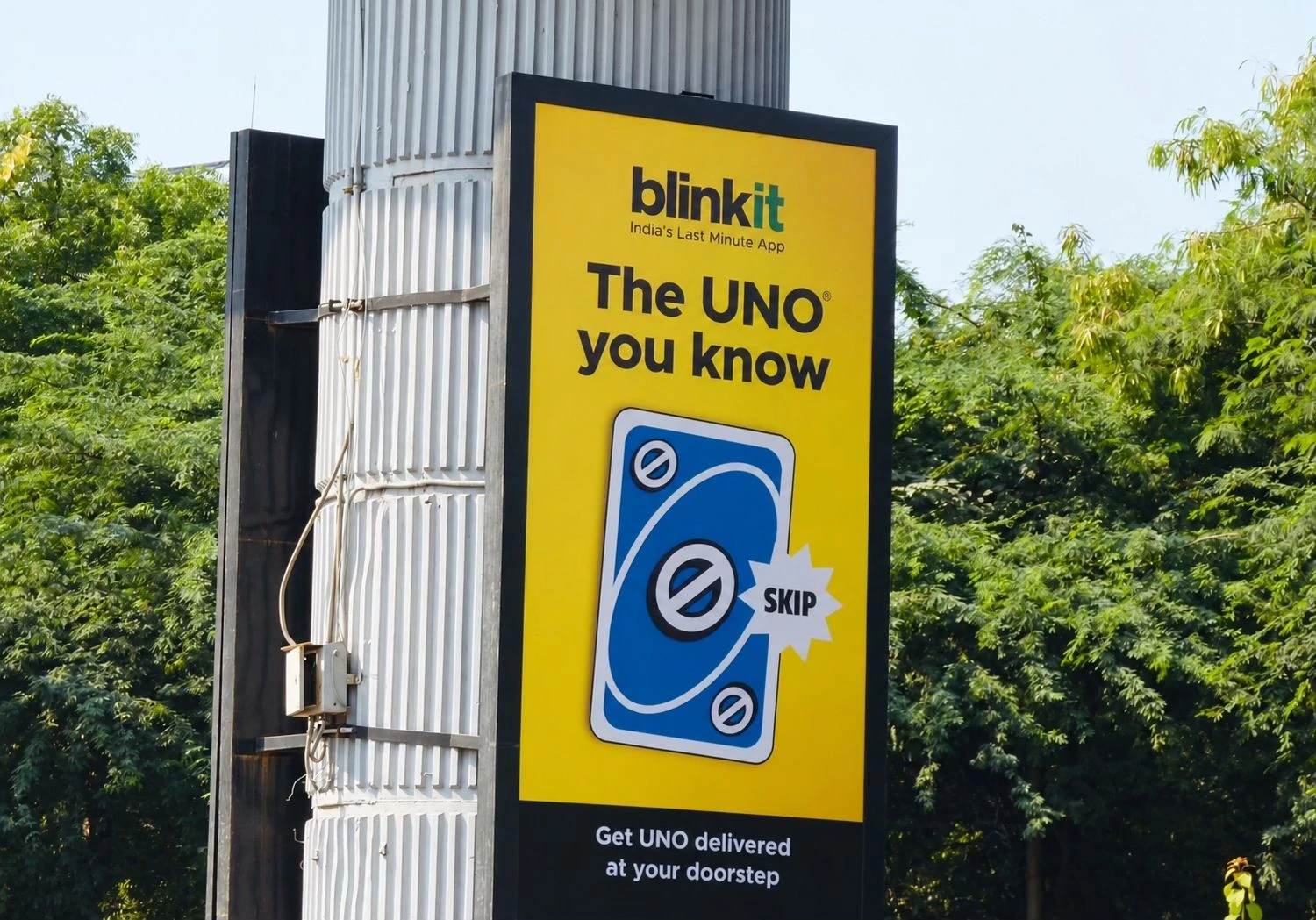
The first execution centers on a Skip card with the line “The UNO you know.”
It is a simple piece of creative, but that simplicity is exactly why it works in OOH Media. The card is instantly recognizable, the copy is short and the Blinkit branding is easy to identify from a distance.
There is no need for a long explanation. Viewers understand the product and the delivery proposition almost immediately.
Atlas OOH Sees Smart Message Variation in the UNO Flip Execution
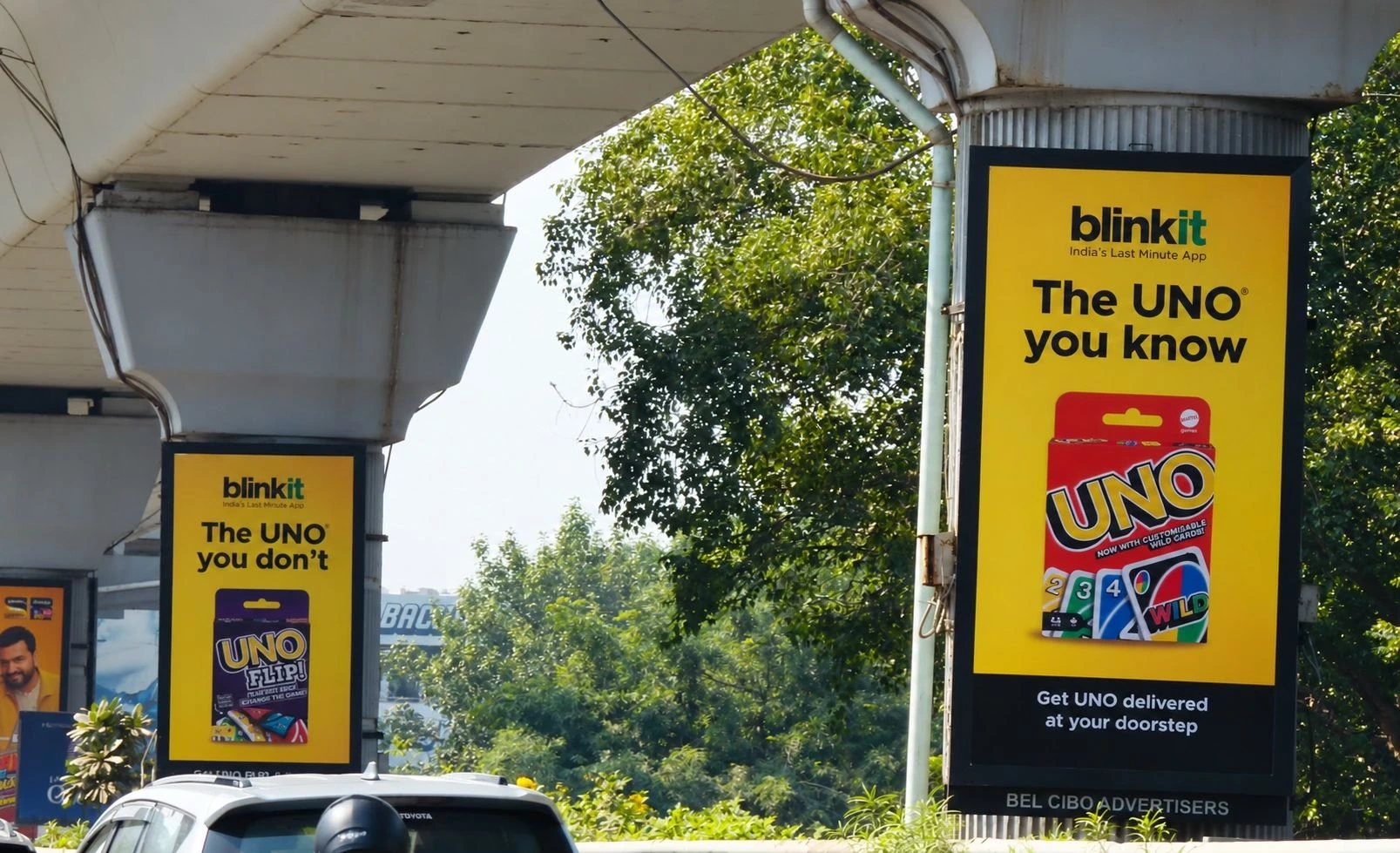
The second execution changes the message to “The UNO you don’t” and promotes UNO Flip with a Draw Five card.
This small variation keeps the campaign coherent while introducing another product. The format stays familiar, but the wording creates a second layer of discovery.
That is useful in Outdoor Media because repeated placements can feel connected without becoming repetitive.

Why Repetition Matters in Transit OOH
One pillar can generate awareness. Multiple pillars can become part of the journey.
The supplied images show the campaign appearing across more than one structural column, helping Blinkit and UNO create visual continuity along the route.
This is one of the core strengths of Transit Advertising: audiences often encounter the same campaign repeatedly as part of their normal routine.
That repeated exposure can help build recognition without requiring the creative to become more complicated.
Contextual OOH Does Not Always Need a New Format
One of the most useful lessons from this campaign is that innovation in OOH Marketing does not always mean inventing a new structure, adding technology or building a special installation.
Sometimes the smarter move is to use an existing format better.
Blinkit x UNO shows how a straightforward pillar placement can feel fresh when the creative, product and environment work together.
What Brands Can Learn From Blinkit x UNO
- Use familiar visual assets. UNO cards need almost no explanation.
- Keep copy short. The campaign can be read quickly from a moving vehicle or by a passing commuter.
- Make repetition part of the strategy. Multiple placements create a stronger route-level presence.
- Let the environment do some of the work. The metro pillars become part of the media idea.
- Do not overcomplicate the format. A good idea can make ordinary infrastructure feel new.
Bottom line: Blinkit x UNO is a clean example of Contextual OOH done well. The campaign does not rely on spectacle. Instead, it connects a recognizable product with a highly visible commuter environment and lets repetition, clarity and familiarity build the impact.
Frequently asked questions
What is the Blinkit x UNO OOH campaign?
It is a contextual OOH campaign that uses metro pillars to promote UNO and UNO Flip through familiar game-card visuals and short copy.
Why are metro pillars effective for this campaign?
They sit directly inside daily commuter routes, giving the campaign repeated visibility without requiring a complex format.
What is the key creative idea?
The campaign plays with recognition through lines such as “The UNO you know” and “The UNO you don’t,” paired with iconic card visuals.
What makes the campaign relevant to contextual OOH?
The idea works because Blinkit connects a familiar product with a space people already move through every day.
What can brands learn from this execution?
Not every OOH idea needs a new media format. Strong context, repetition and simple creative can make existing infrastructure feel fresh.
Plan your OOH campaign
Get recommendations for markets, formats and availability based on your campaign goals.
Request a media plan
Comments
Share your take. Keep it constructive and specific.