
Quick Answer
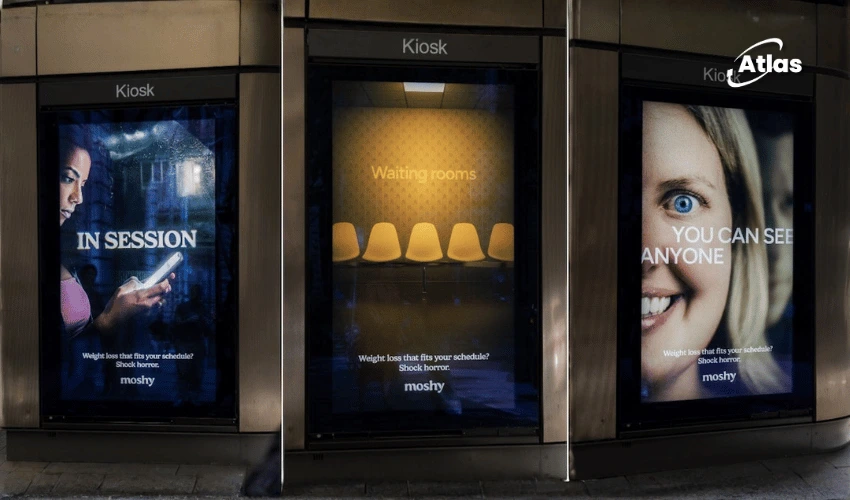
Australian digital health provider Moshy has launched its second annual Halloween-themed OOH campaign across Sydney. The work borrows the visual language of horror and thriller posters to dramatize common frustrations associated with traditional healthcare pathways, including waiting rooms, delays and inflexible appointment schedules, while positioning Moshy’s digital service as a more convenient alternative.
Quick Answer
Australian digital health provider Moshy has launched its second annual Halloween-themed weight-loss OOH and healthcare advertising campaign across Sydney. Borrowing the visual language of horror and thriller posters, this digital-out-of-home (DOOH) activation dramatizes traditional healthcare frustrations while showcasing convenient telehealth advertising solutions.
Moshy Brings Horror-Movie Language Into Sydney OOH
Australian-owned digital health provider Moshy has returned with its second annual Halloween-themed telehealth advertising campaign, leveraging Out-of-Home (OOH) Advertising and digital-out-of-home screens across Sydney to turn everyday healthcare frustrations into horror-inspired creative.
The campaign takes visual cues from some of the year’s most recognizable horror and thriller releases, including Obsession, Backrooms and You Can See Everything. Instead of promoting fear for entertainment, the posters use that familiar genre language to dramatize the stress of waiting rooms, appointment delays and rigid scheduling.
For brands looking to use seasonal culture, entertainment references or contextual creative in public space, Atlas OOH can help plan high-impact OOH and DOOH campaigns across major urban markets.
Atlas OOH View: Why Horror Works as a Contextual Advertising Device
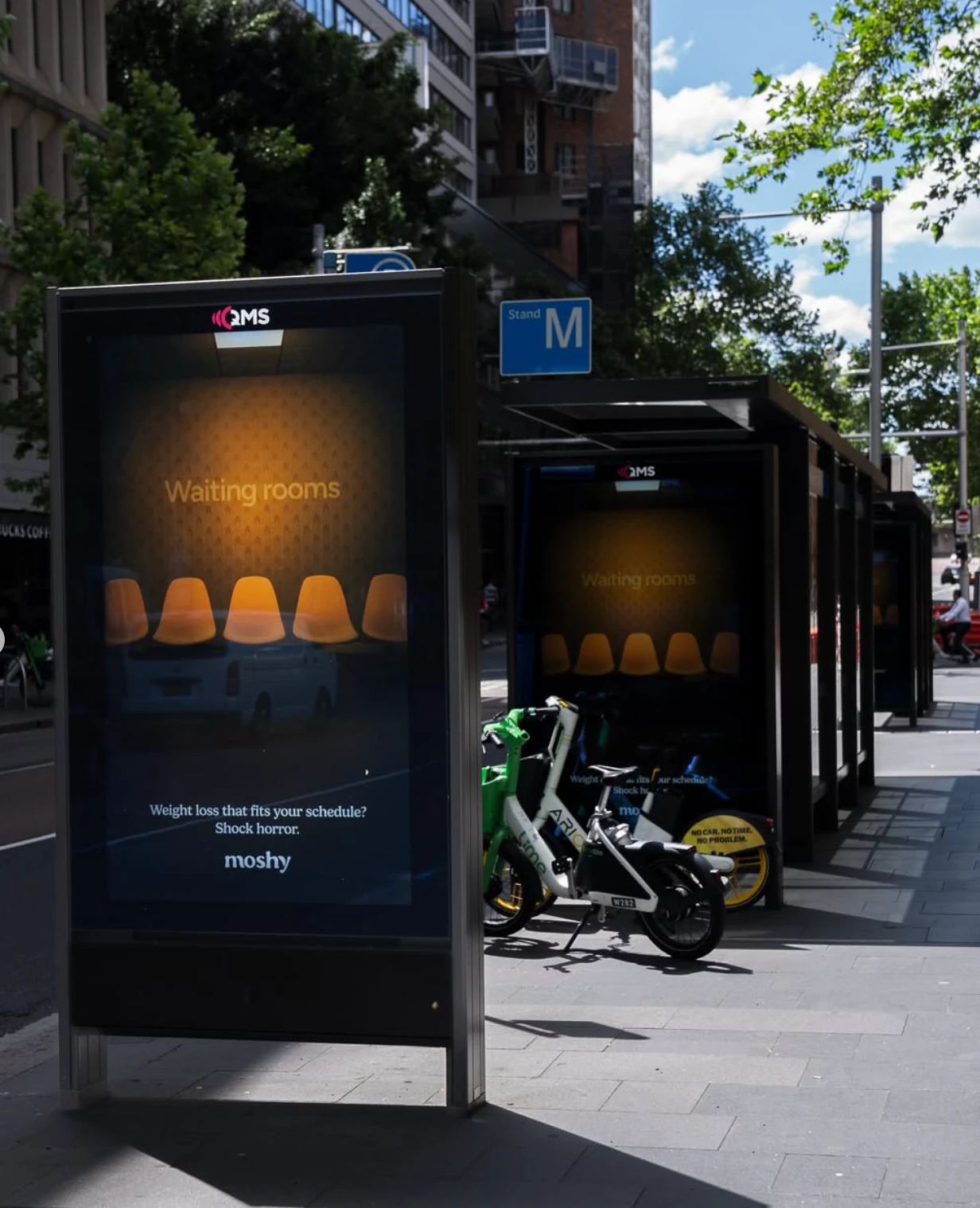
The creative idea works because the campaign starts with a recognizable cultural code. Horror posters often rely on darkness, close-up faces, ominous typography and uncomfortable environments. Moshy borrows those visual signals and applies them to experiences people already associate with stress.
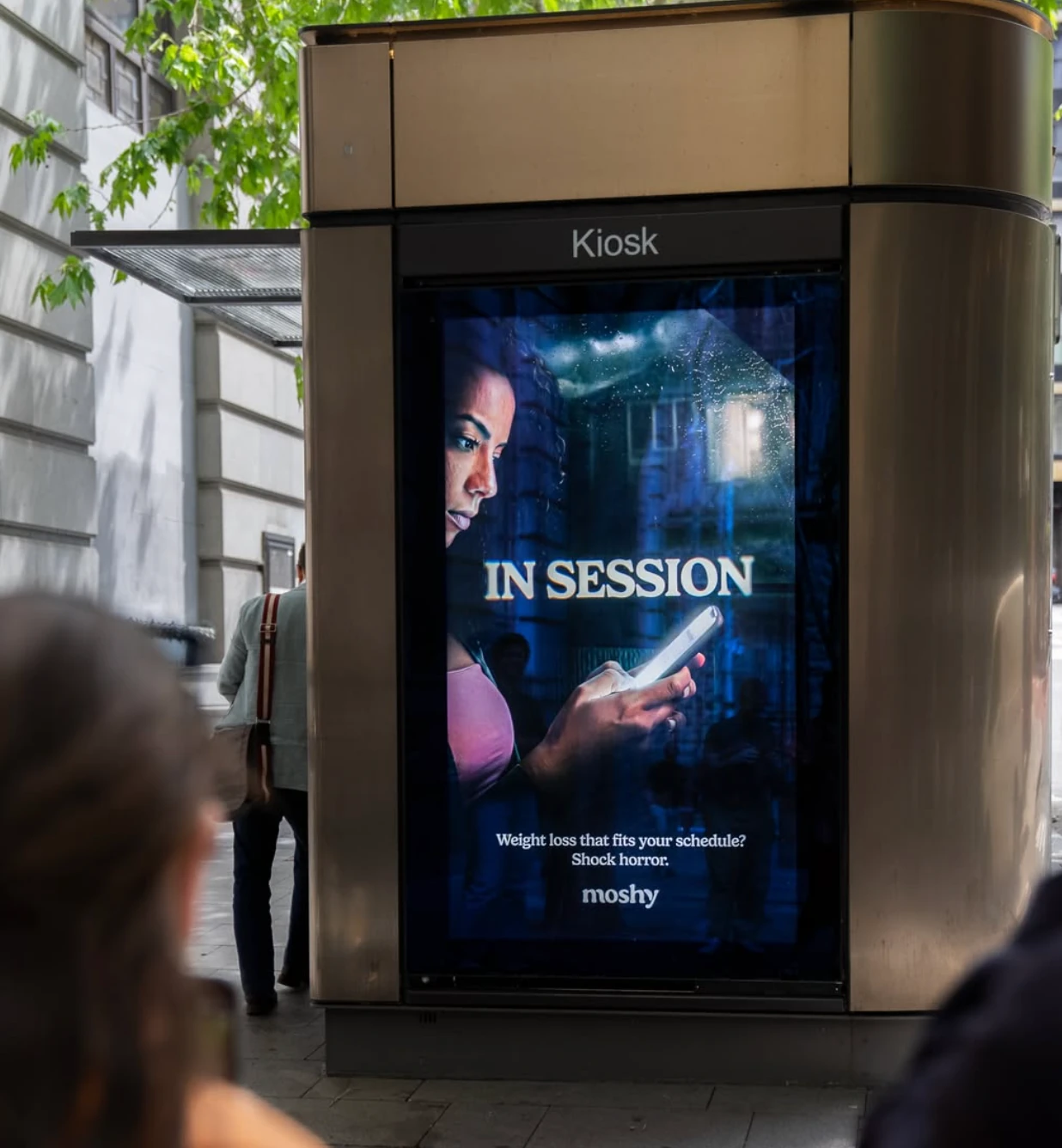
The line between entertainment and service advertising becomes the point of the campaign. A waiting room is presented like a horror setting. A close-up eye becomes a suspense poster. A phone-based consultation is treated like a thriller title card.
That makes the work effective as Creative OOH: people can understand the joke quickly, even while moving through a city environment. The visual reference gets attention first; the brand message lands immediately after.
How Moshy Uses Street Furniture and DOOH to Reach Sydney Audiences
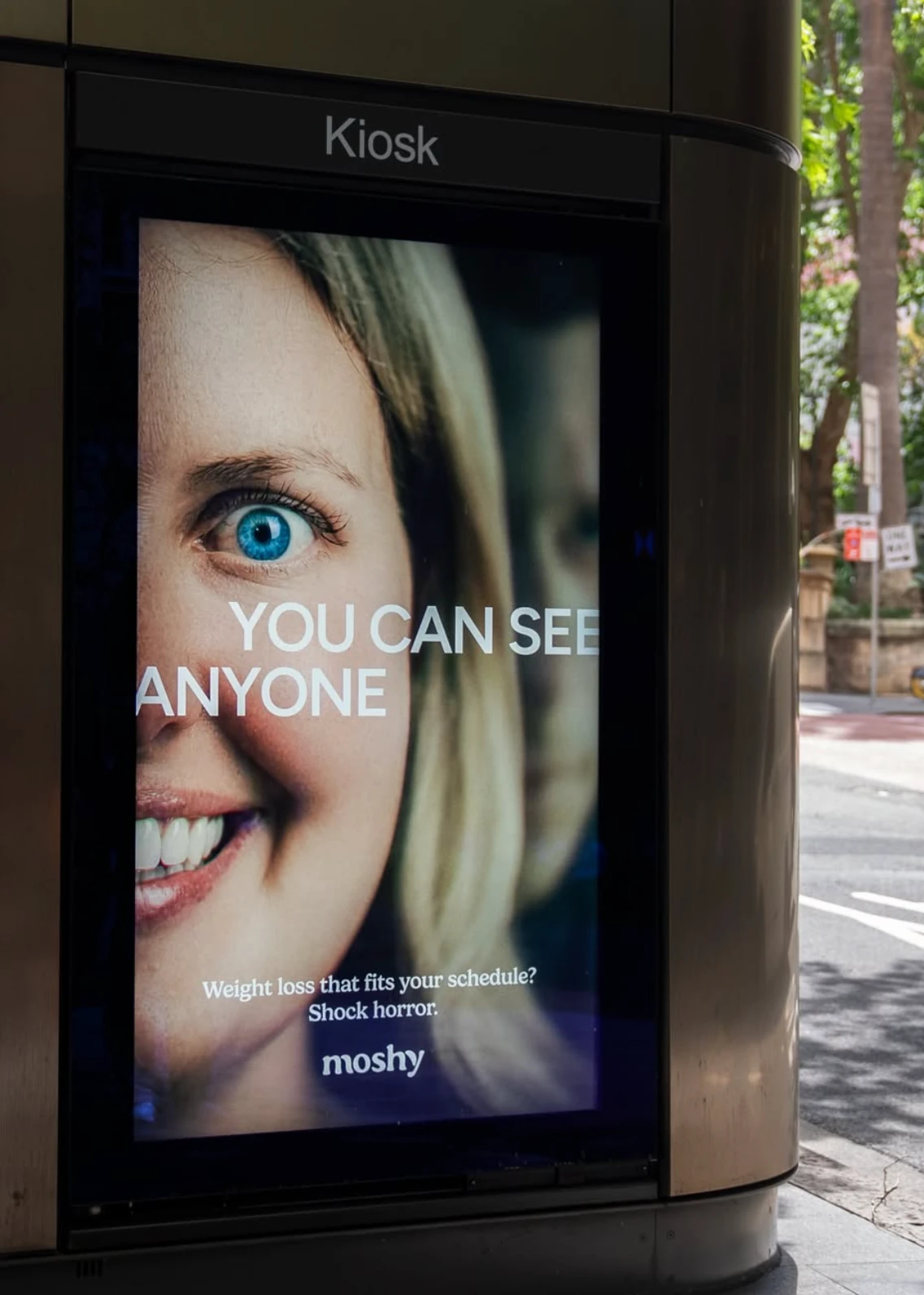
The campaign is running across high-traffic Sydney OOH locations, leveraging digital street furniture, Australia OOH networks, and high-visibility urban placements to reach target audiences during daily commutes.
Street-level DOOH is particularly well suited to this creative approach because the ads can appear in environments where people are already waiting, commuting or moving between appointments. That physical context helps strengthen the campaign idea without requiring additional explanation.
For advertisers considering similar strategies, Atlas OOH can combine street furniture, digital screens, transit advertising and premium outdoor placements to build frequency across the consumer journey.
Explore DOOH and street furniture opportunities with Atlas OOH
Moshy Keeps the Message Focused on Convenience and Scheduling
According to Moshy Creative Director Jonathan Seidler, the healthcare OOH campaign was designed around the tension consumers feel with traditional appointment scheduling, offering a modern telehealth advertising alternative.
Rather than making broad clinical claims, the OOH work keeps its communication focused on service experience: appointment flexibility, remote access and the ability to arrange consultations around a person’s schedule.
That simplicity matters in Outdoor Advertising. People typically have limited time to process a street-level message, so the campaign avoids trying to explain every feature of the service. Instead, each execution focuses on one recognizable frustration and one clear contrast.
Atlas OOH: Why Seasonal Creative Can Increase Outdoor Relevance
Halloween gives advertisers a short but culturally recognizable window in which visual codes can be exaggerated without feeling out of place. Dark imagery, suspense, horror references and playful fear become immediately understandable creative tools.
Moshy’s campaign shows how a brand can use a seasonal moment without abandoning its core proposition. The Halloween layer gets attention, while the service message remains connected to convenience and access.
What Marketers Can Learn From Moshy’s Halloween OOH Campaign
- Use a familiar cultural code. Horror imagery makes the campaign immediately recognizable during Halloween.
- Connect the creative idea to a real consumer tension. Waiting rooms and scheduling frustrations give the campaign relevance beyond the seasonal theme.
- Keep the message simple. Each execution communicates one clear idea that can be understood quickly.
- Use context to strengthen the concept. Street furniture and commuter environments naturally reinforce the idea of waiting and convenience.
- Build a visual system, not just one ad. Multiple horror-inspired executions create campaign consistency while keeping the rollout varied.
Plan a Contextual DOOH Campaign With Atlas OOH
From seasonal campaigns and entertainment-inspired creative to healthcare, technology and lifestyle brands, contextual OOH can transform a simple service message into something people notice and remember.
Summary
The campaign shows how contextual creative can turn a familiar seasonal theme into a relevant OOH idea. By pairing horror-inspired visuals with recognizable healthcare anxieties, Moshy creates a campaign designed to stop people in high-traffic environments while keeping the brand message simple and memorable.
Frequently asked questions
What is Moshy’s Halloween OOH campaign?
It is a Sydney outdoor campaign that uses horror and thriller visual language to dramatize common frustrations associated with traditional healthcare pathways and appointment scheduling.
Where is the Moshy Halloween campaign running?
The campaign is appearing in targeted OOH and digital street furniture locations across Sydney, Australia.
Why is the campaign effective for OOH?
It uses recognizable horror-film visual codes, simple copy and contextual street-level placements that allow the message to be understood quickly in public environments.
Sources
- Moshy spoofs Obsession, Backrooms and You Can See Everything in new Halloween OOH campaign - Campaign Brief — Ricki Green (2026-10-29)
Summary
The campaign shows how contextual creative can turn a familiar seasonal theme into a relevant OOH idea. By pairing horror-inspired visuals with recognizable healthcare anxieties, Moshy creates a campaign designed to stop people in high-traffic environments while keeping the brand message simple and memorable.
FAQs
What is Moshy’s Halloween OOH campaign?
It is a Sydney outdoor campaign that uses horror and thriller visual language to dramatize common frustrations associated with traditional healthcare pathways and appointment scheduling.
Where is the Moshy Halloween campaign running?
The campaign is appearing in targeted OOH and digital street furniture locations across Sydney, Australia.
Why is the campaign effective for OOH?
It uses recognizable horror-film visual codes, simple copy and contextual street-level placements that allow the message to be understood quickly in public environments.
Plan your OOH campaign
Get recommendations for markets, formats and availability based on your campaign goals.
Request a media plan
Comments
Share your take. Keep it constructive and specific.