
MJ Master Journey and Wolf BKK Show How a Billboard Can Work Like a Direct Message
Want to Make OOH Feel More Targeted and Strategic?
This campaign shows that outdoor media can be much more precise than many brands assume. If your business wants to use billboards, DOOH, transit or strategic urban media with sharper audience targeting, Atlas OOH can help turn that idea into a media plan built around behavior, location and visibility.
Billboards are usually designed for scale.
This campaign asked a more interesting question: what if a billboard only really needed to reach one person?
That idea sits at the center of “One Eyeball Billboard”, a launch campaign by MJ Master Journey, a journey-based OOH specialist, created in collaboration with Wolf BKK.
The concept came from a familiar request in the advertising industry.
Many media teams have heard some version of this before:
Instead of treating that request as a joke, MJ Master Journey treated it like a strategic insight.
From a media joke to a real media plan
According to the supplied campaign description, the team used publicly available workplace and business location information to identify likely routes between the homes and workplaces of nine CEOs, founders and decision-makers from brands MJ wanted to work with.
Then they selected a billboard along each person's journey.
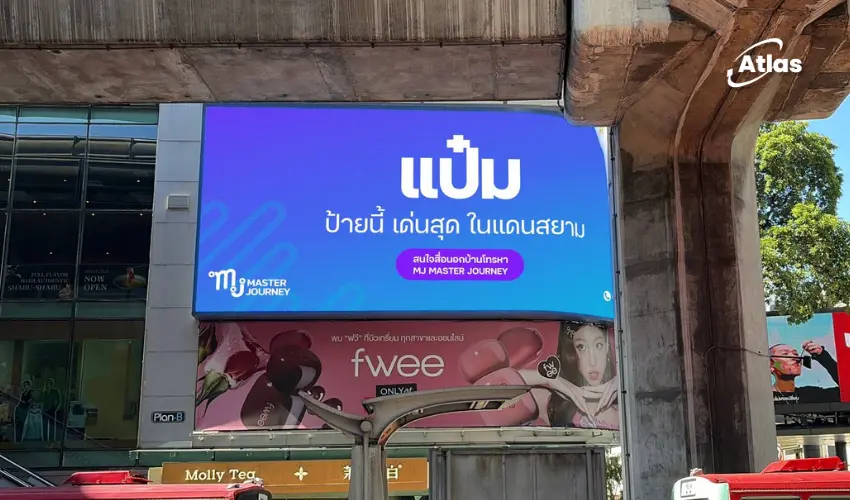
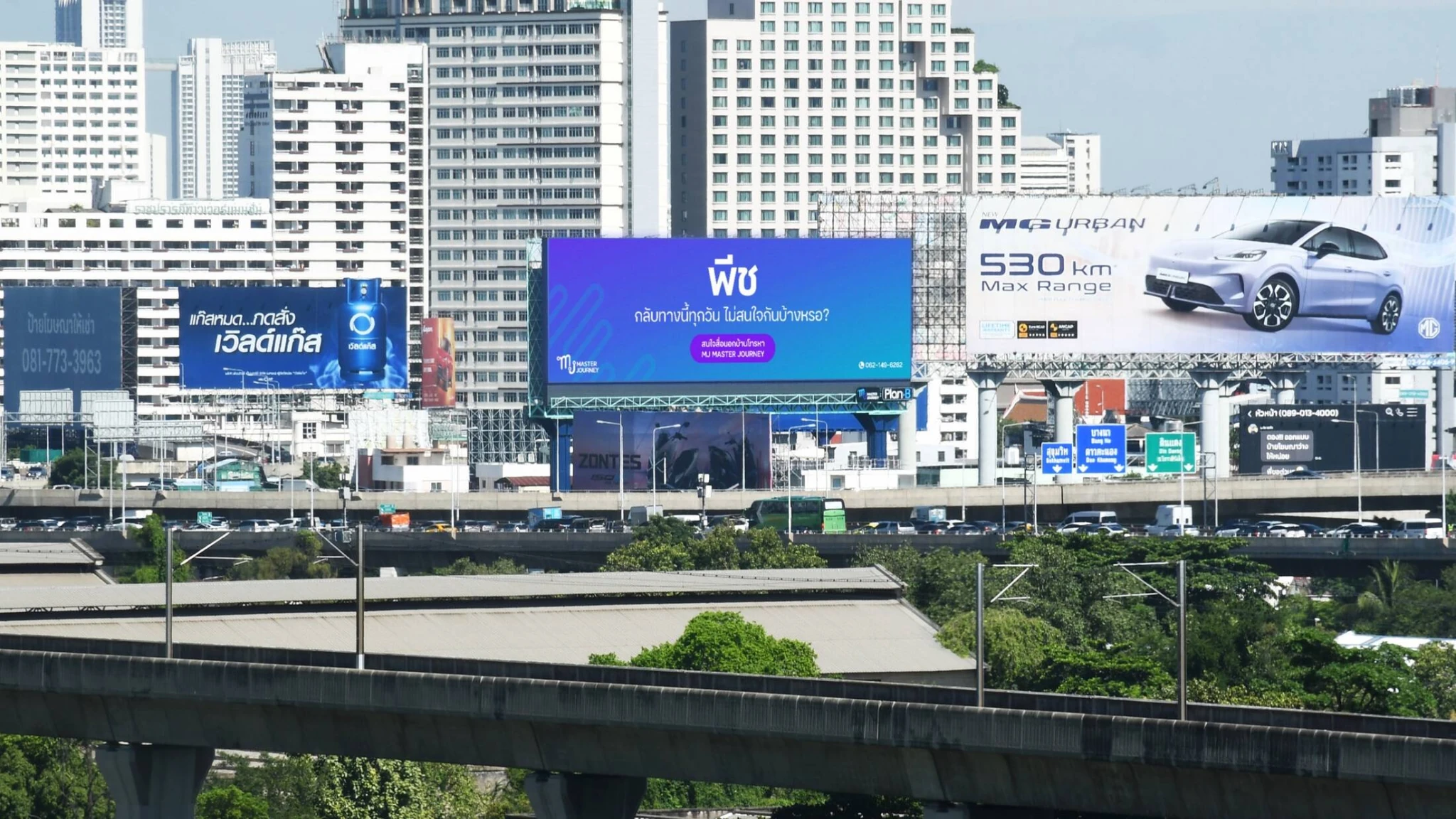
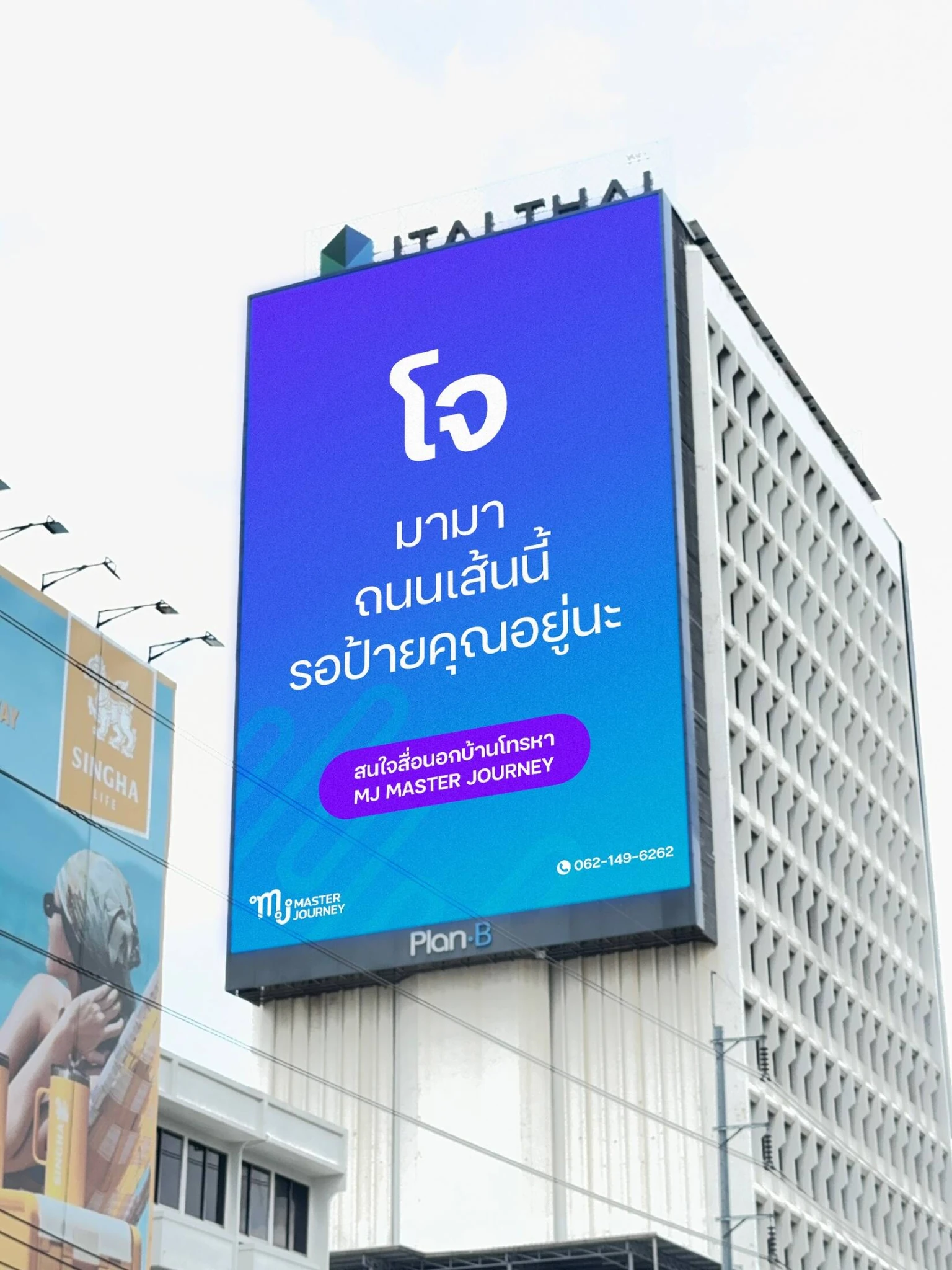
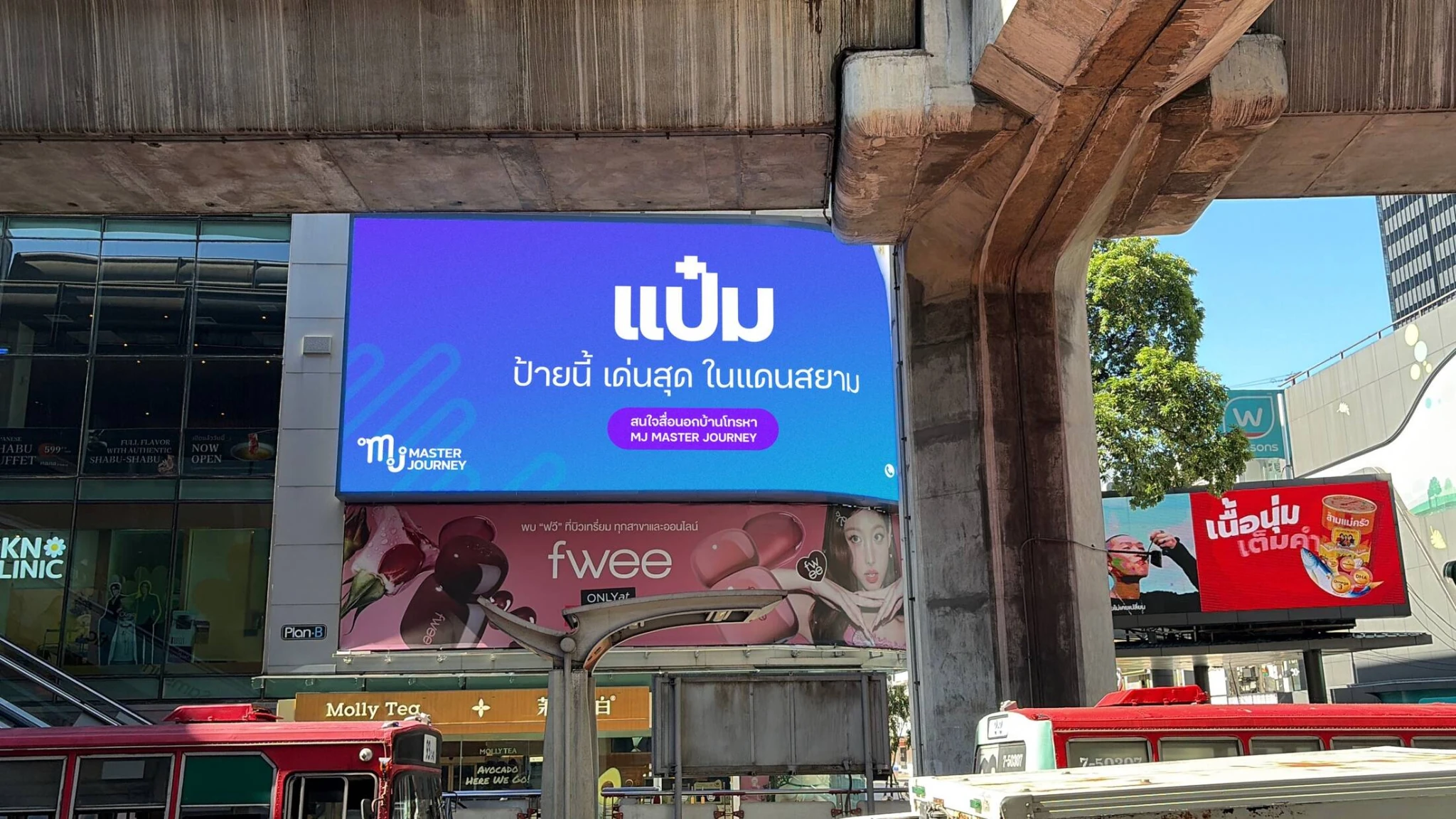
The billboard copy was designed to feel personal and direct, almost like a one-to-one message delivered through a mass medium.
Examples included lines such as:
- “Peach, since you pass this billboard every day, wanna put your brand on it?”
- “Pong, this billboard is still available. Should we save it for you?”
That shift is what makes the campaign distinctive.
The billboard is still public, but the message feels privately aimed.
OOH becomes a message for one person, visible to everyone else
The brilliance of the idea is that the message was not hidden.
It stayed in public view, but it was clearly written for someone specific.
That creates a double effect.
The intended decision-maker may notice the billboard personally, while colleagues, peers and teams also see it and understand exactly who the message is meant for.
In other words, the precision of the campaign becomes part of the spectacle.
The campaign was designed to travel beyond the street
These billboards were not only meant to be seen during a commute.
They were also designed to be photographed and shared.
By calling out decision-makers by name, the campaign gave their own colleagues a reason to take photos and send them into media and marketing team chats.
That means the billboard could move from street-level visibility into internal conversation, which is especially valuable for a launch campaign trying to win business attention.
MJ was not just buying exposure.
It was creating a public business case for its own targeting capabilities.
Why the campaign matters for the wider OOH industry
At a broader industry level, “One Eyeball Billboard” makes an important point.
Outdoor media is often described through the language of scale, reach and visibility.
This campaign shows that those qualities do not disappear when targeting becomes more specific.
Instead, OOH can combine mass presence with personal relevance.
That is a powerful combination for brands that want more than passive exposure.
The campaign also reinforces MJ Master Journey's positioning as a journey-based OOH specialist.
It does not simply sell billboard space.
It shows that understanding movement, routine and route behavior can shape smarter media placement.
Mass media does not always have to stay mass
Perhaps the clearest lesson from this work is that a billboard can behave more like a direct message when the targeting is precise enough.
The campaign makes that idea easy to understand.
Find the right person.
Find the right route.
Place the right message where they are likely to see it.
That is exactly why the work feels both simple and strategically smart.
Atlas OOH can help brands build smarter, more targeted OOH strategies
If a billboard can find a single decision-maker, imagine what a well-planned OOH strategy can do for your customers.
Atlas OOH can help brands build billboard, DOOH, transit and urban media campaigns that use geography, audience behavior and contextual placement to make every impression more relevant.
Whether the goal is broad reach, strategic targeting or a balance of both, the right media plan can turn visibility into meaningful attention.
Bottom line
“One Eyeball Billboard” is more than a launch campaign.
It is a public demonstration of what precision OOH can look like.
By targeting specific decision-makers with personalized messages placed along likely commute routes, MJ Master Journey and Wolf BKK proved that a billboard does not have to speak to everyone equally to be effective.
Make the target precise enough, and even a billboard can work like a direct message.
If your brand wants to use OOH with more strategic precision, Atlas OOH can help turn that idea into a real media plan built around audience journeys, location strategy and high-impact placements.
Frequently asked questions
What is the One Eyeball Billboard campaign?
It is a launch campaign by MJ Master Journey and Wolf BKK that uses billboard placements and personalized copy to reach specific business decision-makers rather than a broad anonymous audience.
Who was the campaign designed to reach?
According to the supplied material, the campaign focused on nine CEOs, founders and decision-makers from brands MJ wanted to work with.
What makes this campaign different from traditional billboard advertising?
Traditional billboards are built for mass visibility, while this campaign used journey-based placement and personalized messages to make OOH feel more like a direct message.
What is the main strategic takeaway from the campaign?
The campaign demonstrates that OOH can be highly precise when a brand identifies the right person, the right route and the right message.
Plan your OOH campaign
Get recommendations for markets, formats and availability based on your campaign goals.
Request a media plan
Comments
Share your take. Keep it constructive and specific.