
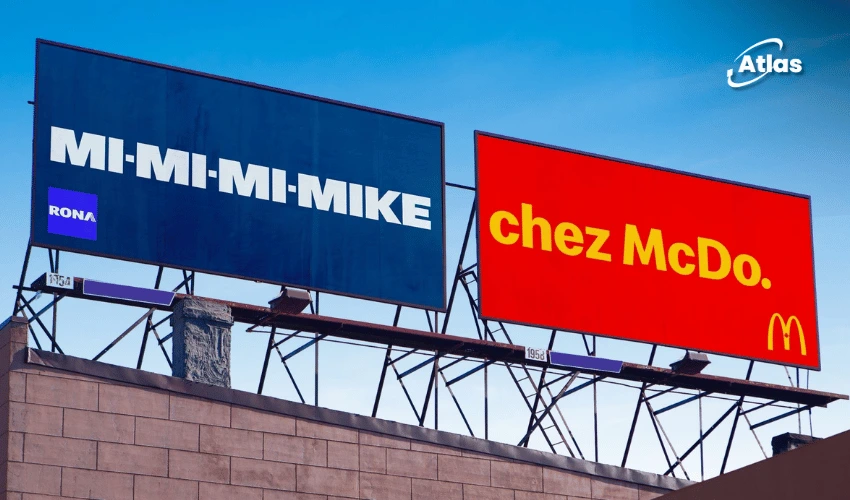
RONA Turns Paint, Wood and Unexpected Partnerships Into Award-Winning OOH
Atlas OOH Sees RONA Turning Everyday Materials Into Media
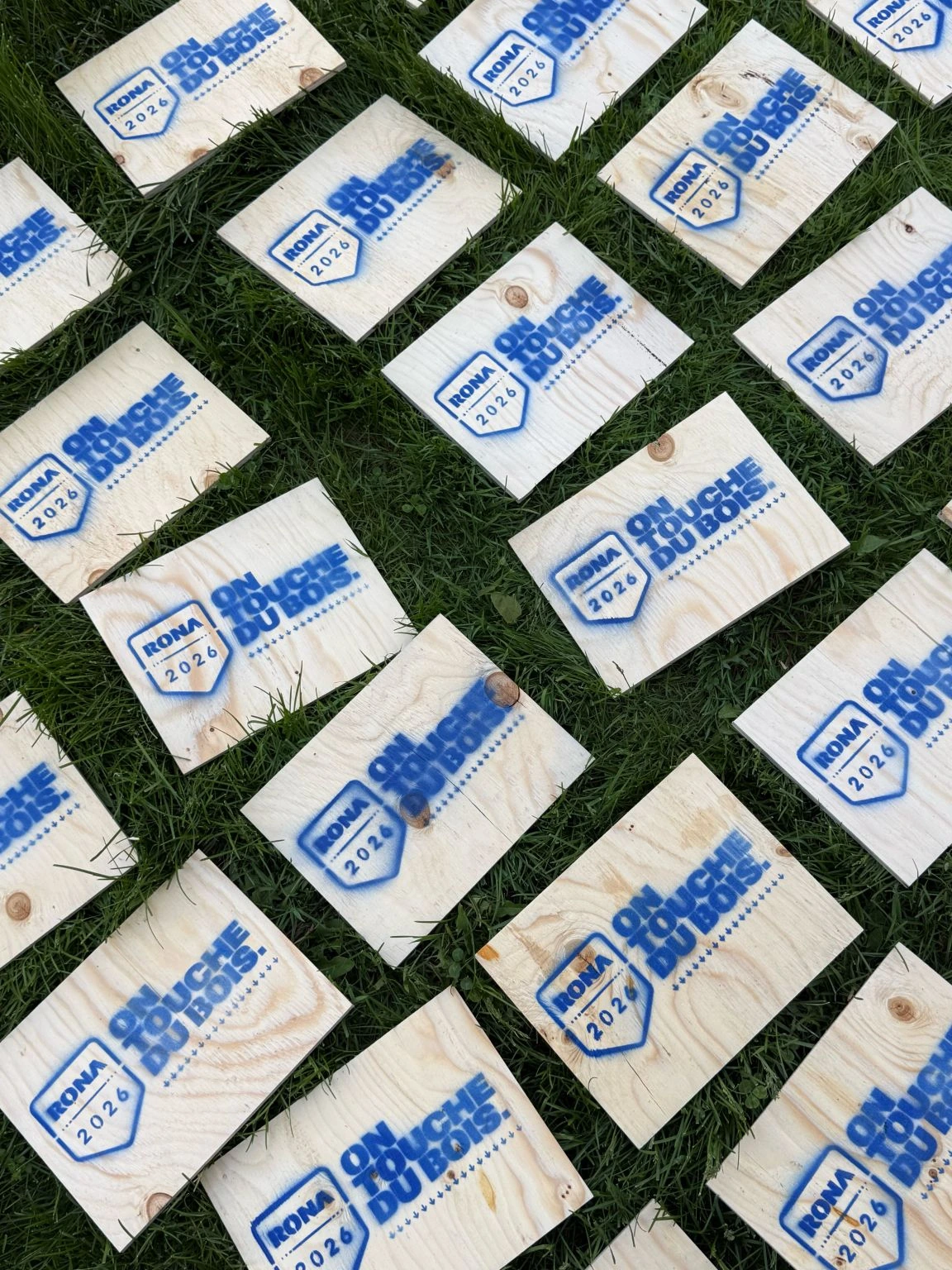
RONA’s recent work shows a consistent willingness to make the medium part of the idea.
Wood becomes more than a product category. Paint becomes more than something shown in a can. Transit stations become more than places to hang posters.
That mindset is what separates a standard retail campaign from a more memorable OOH Campaign.
According to the user-provided information, the past year and a half of work included paint, poutine, wood-based executions, turnkey production services and a run of ideas that ultimately earned 15 awards across programs such as the Internationalist Awards, Idéa, Festival of Media Global, MIA and the Canadian OOH Awards.
For Atlas OOH, RONA’s work is a strong reminder that the most effective Outdoor Advertising often starts by asking how the environment itself can carry the brand idea.
Transit Advertising Becomes Part of the Paint Story
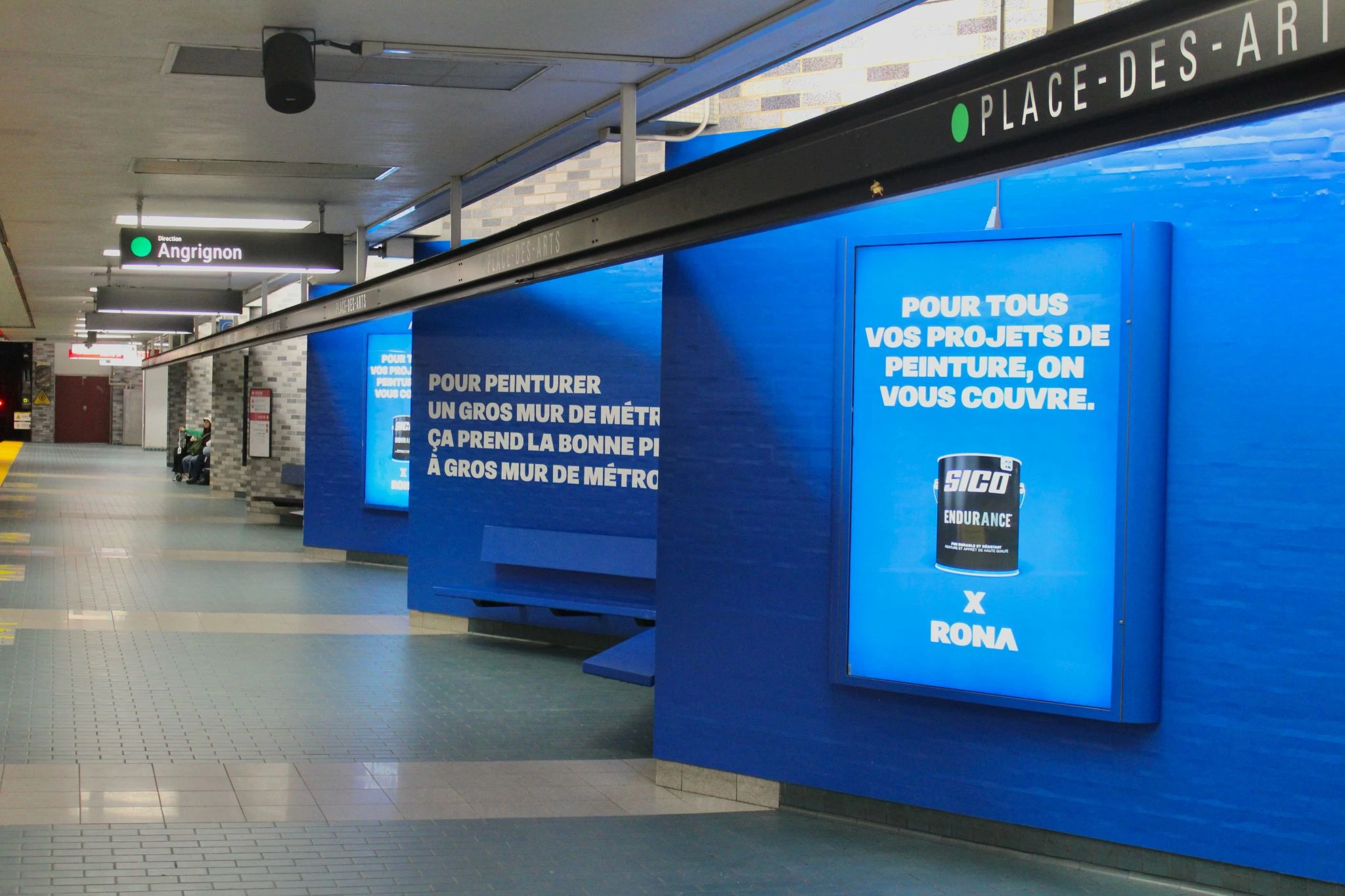
One of the strongest examples is the blue SICO x RONA metro takeover.
Rather than simply placing a paint ad inside a station, the campaign uses large surfaces, repeated blue colour and oversized typography to make the environment itself feel freshly painted.
That is where Transit Advertising becomes more powerful: the location is not just carrying the message, it becomes part of the demonstration.
By working across walls, panels and multiple points of visibility, the execution creates a station-dominating effect that is difficult to ignore.
Atlas OOH Highlights the Power of Scale in Subway Advertising
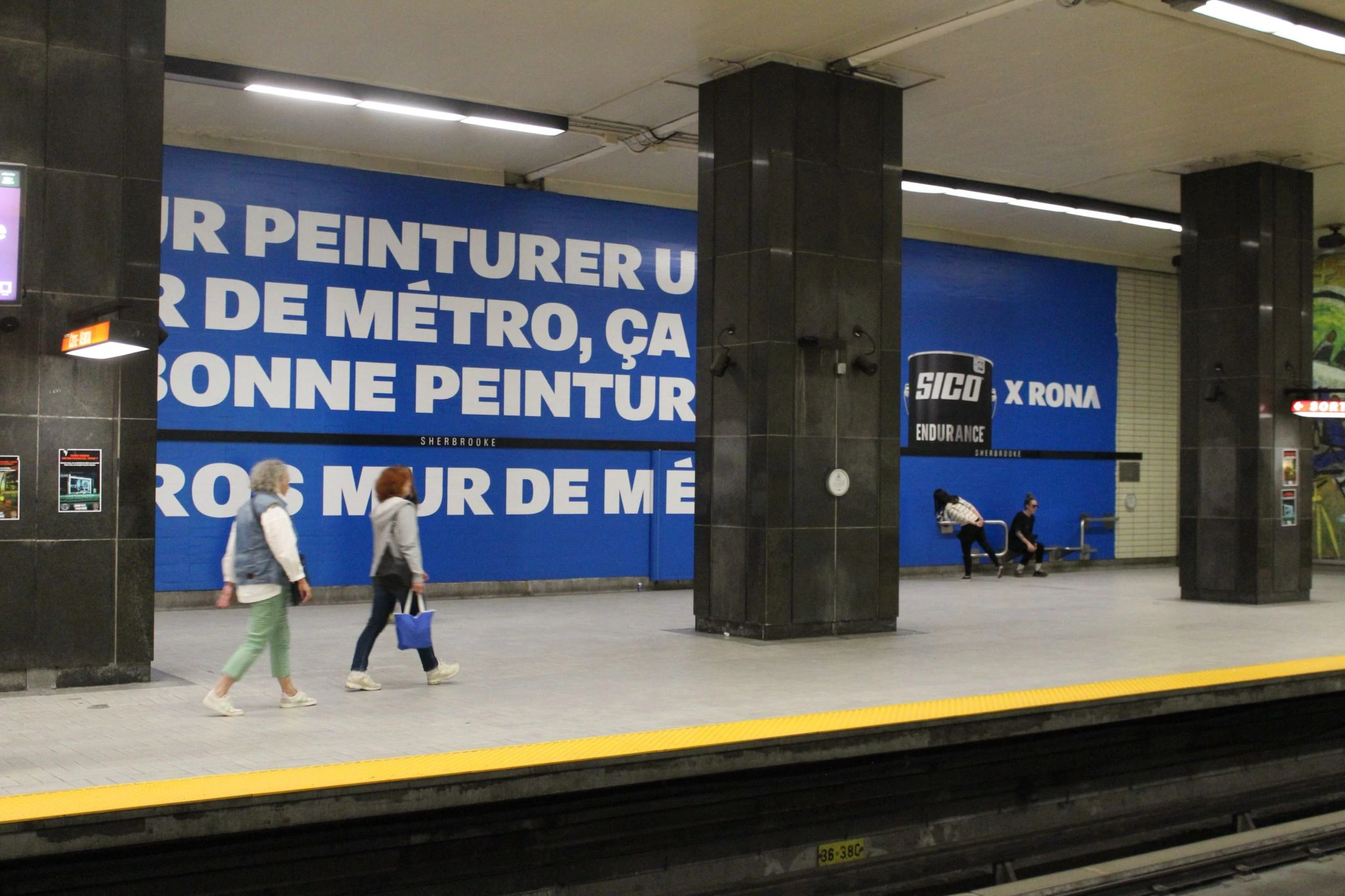
The large-format wall treatment takes the same idea even further.
Huge typography, a saturated blue field and minimal branding create a visual system that can be understood in seconds from across a platform.
This is exactly the kind of situation where Subway Advertising and OOH Media can outperform more fragmented formats. Repetition and scale help build memory while commuters spend time in the environment.
Unexpected Collaborations Make RONA Harder to Ignore
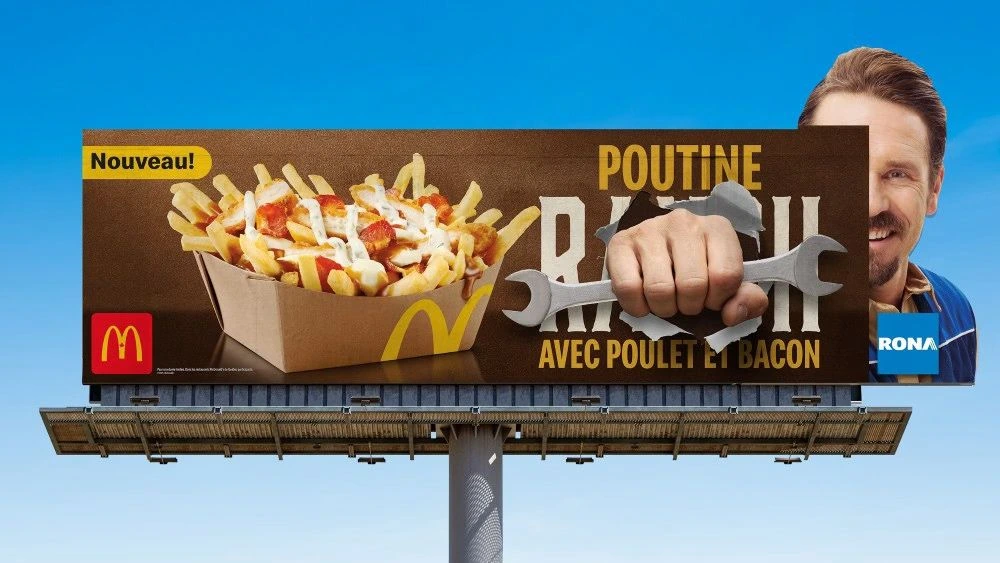
The poutine billboard is another example of RONA choosing surprise over convention.
By appearing alongside a food visual and using a wrench as part of the execution, the brand stretches its home-improvement identity into an unexpected cultural context.
That kind of Contextual OOH works because the audience has to process the crossover. The visual interruption creates curiosity before the branding resolves the joke.
For retail brands, that can be especially valuable. Familiarity is useful, but surprise is what often earns attention.
Why RONA’s OOH Work Keeps Standing Out
- The media format is often part of the creative idea.
- Product categories such as wood and paint are translated into physical experiences.
- Transit environments are used at scale rather than as isolated placements.
- Unexpected collaborations help create earned attention.
- The work remains recognisably RONA while allowing each execution to feel different.
Atlas OOH Sees a Useful Blueprint for Retail Brands
RONA’s recent work offers a valuable lesson for brands that operate in practical, functional categories.
Utility does not have to mean predictable advertising.
By using Outdoor Advertising, Transit Advertising, large-format environments and physical executions with a stronger point of view, functional brands can build more personality without losing product relevance.
The reported award recognition supports that point: unusual ideas can work locally while still earning attention internationally.
Bottom line: RONA’s recent campaigns show what happens when a retailer treats every format as an opportunity to build the idea, not merely place the logo. From metro walls to pieces of wood and unexpected billboard collaborations, the work demonstrates how creative OOH can make even practical categories feel culturally alive.
Frequently asked questions
What kinds of OOH campaigns has RONA produced recently?
The supplied examples include tactile wood-based activations, paint-focused metro takeovers, large-format transit advertising and an unexpected poutine-themed billboard collaboration.
How many awards did the work receive?
According to the supplied information, the projects earned 15 awards across competitions including the Internationalist Awards, Idéa, Festival of Media Global, MIA and the Canadian OOH Awards.
Which agencies are mentioned in the campaign work?
The user-provided information mentions creative agency partners Sid Lee and Courage.
Why do these campaigns stand out?
They use context, physical environments and unexpected ideas to make the brand more memorable than a standard retail message.
What can brands learn from RONA’s OOH approach?
Strong OOH can come from treating the format, location and surrounding environment as part of the creative idea rather than simply as media space.
Sources
- RONA
- User-provided campaign information and images.
Plan your OOH campaign
Get recommendations for markets, formats and availability based on your campaign goals.
Request a media plan
Comments
Share your take. Keep it constructive and specific.