
Street Fighter Turns Outdoor Advertising Into a Full-Contact Spectacle
Atlas OOH Sees How Street Fighter Turns Hype Into Physical Impact
Some movie campaigns settle for awareness. This one goes much harder.
Based on the supplied note and images, the Street Fighter campaign leans fully into spectacle, using large-format visuals and environmental media to make the promotion feel more like an event than a standard ad buy.
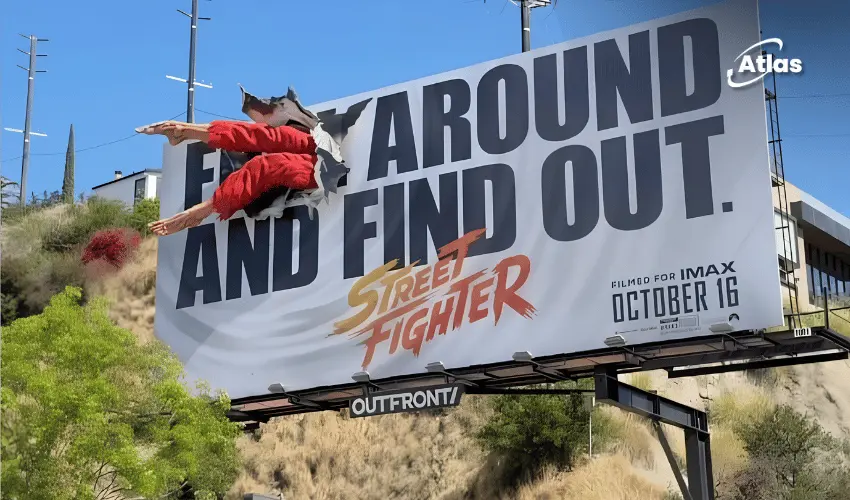
The standout description says it all: a wild billboard featuring a full flying kick bursting straight through the sign. That kind of idea matters because it does not simply advertise action — it performs action.
For Atlas OOH, this is a smart example of how entertainment brands can build stronger recall when the media execution mirrors the spirit of the franchise itself.
Instead of quietly announcing a release, the campaign behaves like Street Fighter: loud, exaggerated, confrontational and impossible to ignore.
The station takeover turns the environment into part of the story
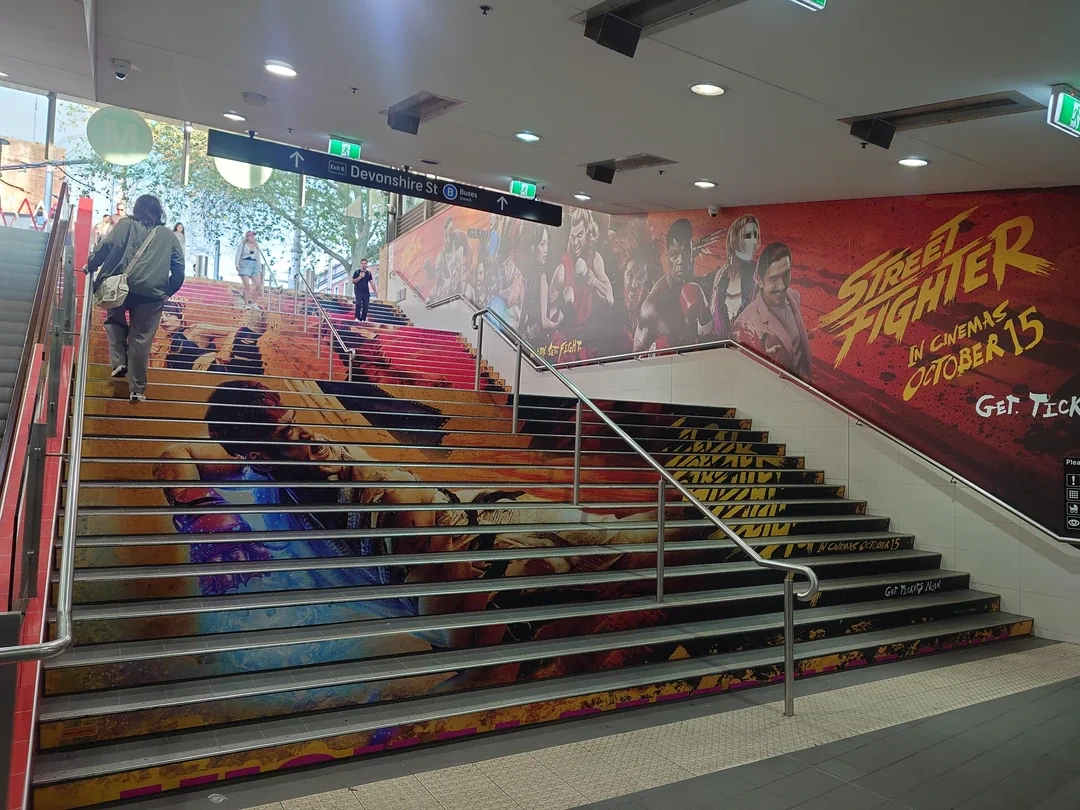
One of the strongest images in the set shows the campaign spreading across a transit stairway and adjoining walls, wrapping the entire path in Street Fighter visuals.
That choice transforms a pass-through space into a themed encounter. Commuters are no longer just walking past a poster — they are moving through the campaign.
The result is more immersive than a single billboard because the architecture becomes part of the storytelling. Steps, railings and sightlines all help build momentum, making the creative feel active rather than static.
Atlas OOH Highlights the Power of Scale in Entertainment Campaigns
Big entertainment properties need big physical expression, and that is exactly what this campaign delivers.
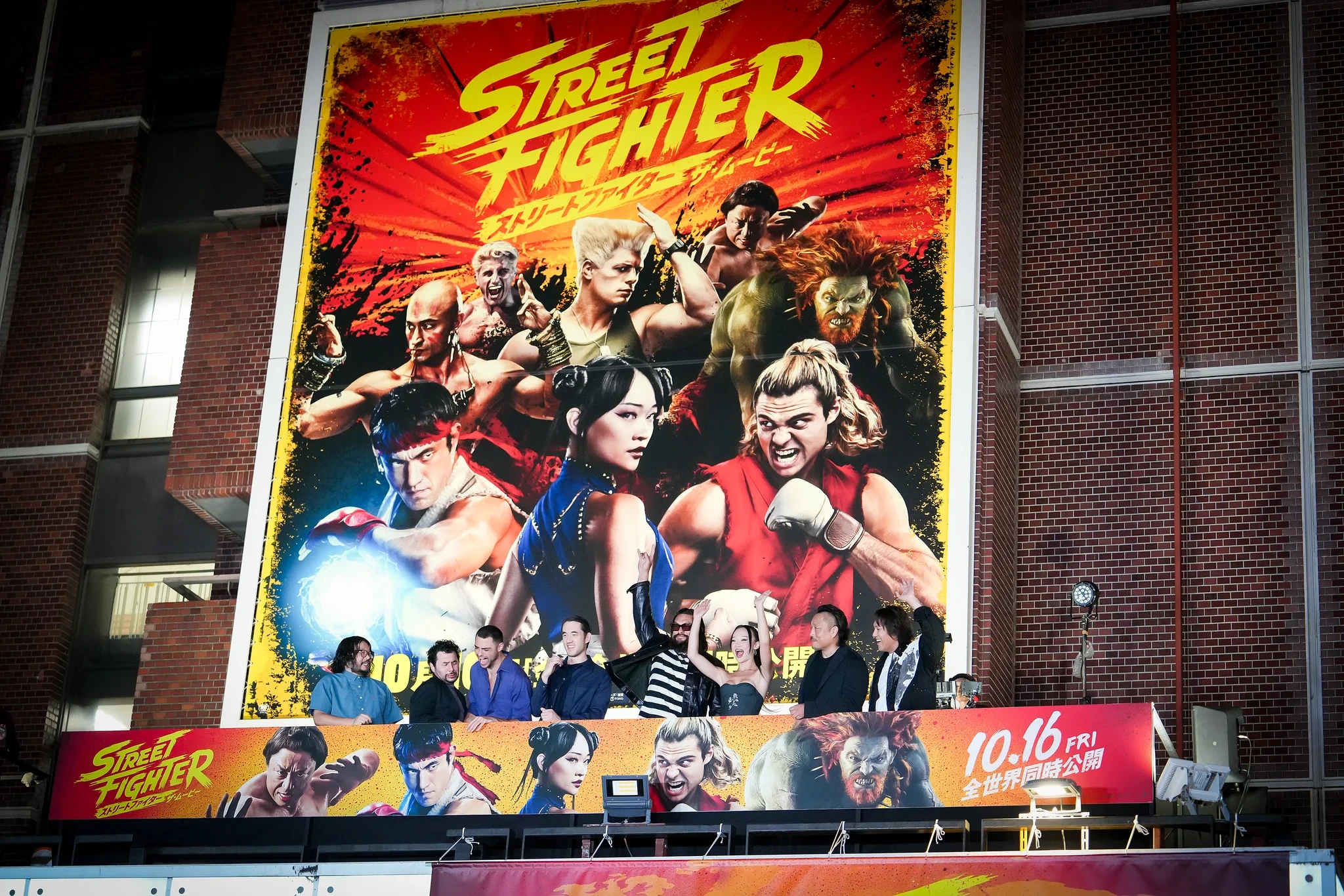
The large-format Street Fighter installation shown in the supplied images embraces wall-to-wall character presence, bold colour and dramatic composition. It is the kind of execution that feels designed not only to be seen, but to be photographed, posted and talked about.
That is an important distinction. Great entertainment OOH does not just chase reach. It also creates a secondary life through social sharing and word of mouth.
When people encounter something this oversized and theatrical, the campaign extends beyond the immediate site and starts circulating as content.
Why the flying-kick billboard idea hits so hard
The supplied description of a character bursting through the billboard is a strong reminder that the best OOH ideas often come from treating the medium as part of the concept.
Rather than using the billboard as a flat surface for key art, the idea suggests motion, force and disruption. That makes it feel more native to Street Fighter than a conventional poster ever could.
This is where the campaign becomes especially smart. It uses franchise language — impact, combat, collision and exaggeration — as the structure of the outdoor idea itself.
Atlas OOH Notes Why This Campaign Feels So Shareable
There is also a cultural layer to why this works. Street Fighter already comes with a built-in visual vocabulary that audiences understand instantly: bold characters, dynamic poses, intense confrontation and arcade-style energy.
The campaign capitalises on that language and amplifies it with scale. It does not overcomplicate the idea. It simply gives the franchise enough room to punch through the clutter.
That simplicity is part of the power. The audience gets the tone immediately, and the imagery does the rest.
For Atlas OOH, this is a useful lesson for entertainment marketing: if the property already has strong iconography, the job of OOH is to turn that iconography into an unforgettable real-world encounter.
Why this Street Fighter activation works
- It matches the franchise tone with aggressive, high-energy executions.
- It uses environment creatively, especially through the stairway takeover.
- It embraces scale, making the campaign feel cinematic and event-like.
- It invites sharing, thanks to visuals that feel made for photos and social posts.
- It turns media into message, with the billboard concept acting like an extension of the action itself.
Bottom line: Street Fighter’s outdoor push works because it does not play safe. It transforms posters, architecture and large-format media into physical extensions of the franchise. The result is the kind of entertainment OOH that does exactly what it should: stop people, impress them and make them want to talk about it.
Frequently asked questions
What makes this Street Fighter campaign stand out?
The campaign translates the franchise’s fighting energy into real physical space, using a dramatic billboard idea and an immersive staircase takeover to create impact beyond standard movie posters.
Why does the flying-kick billboard work so well?
Because it turns the core action of the franchise into the media idea itself. Instead of simply showing characters, the format feels like it is being attacked from within, making the creative more memorable.
Is this more experiential than traditional OOH?
Yes. The visuals suggest a campaign designed to surround audiences and create a sense of participation, especially through the station takeover that uses steps, walls and movement paths as part of the message.
How can entertainment brands learn from this?
By designing outdoor work that feels native to the story world. When the medium reflects the energy of the film or franchise, the campaign becomes easier to notice, remember and share.
Sources
- Supplied campaign note referencing 50 Cent on Instagram and the supplied campaign images.
Plan your OOH campaign
Get recommendations for markets, formats and availability based on your campaign goals.
Request a media plan

Comments
Share your take. Keep it constructive and specific.