
Pizza Hut’s Red Roof: A Case Study in Distinctive Brand Assets and Community Marketing
Atlas OOH Sees How Brand Heritage Can Become a Community Experience
Some brand assets are so recognizable that they can work even without a traditional ad around them. Pizza Hut’s red roof is one of those assets.
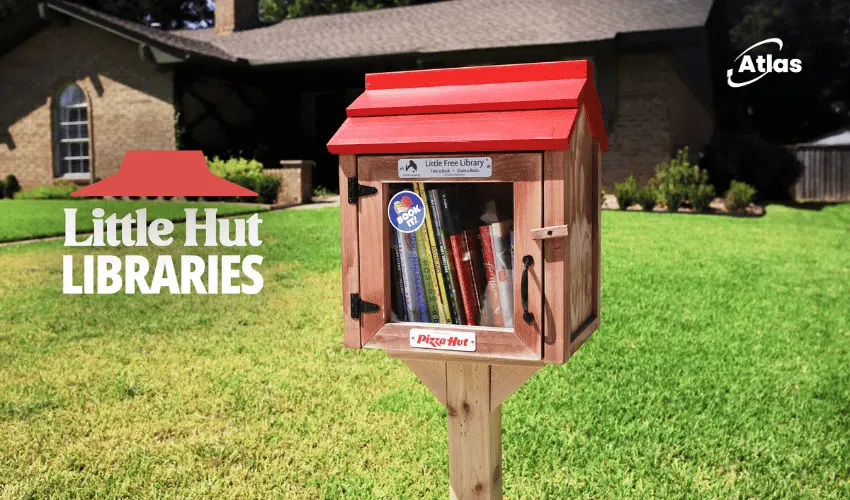
With Little Hut Libraries, Pizza Hut takes that familiar shape and turns it into a purpose-driven marketing tool: a neighborhood book exchange created in partnership with Little Free Library to drive real community brand activation.
The campaign arrives as National Book Month and National Pizza Month converge in October, creating a natural moment to connect two long-standing parts of Pizza Hut history — pizza nights and reading rewards.
For Atlas OOH, this is a strong example of how experiential marketing can use heritage not as decoration, but as the foundation of the idea itself.
The red roof becomes the medium
The most effective part of the concept is its simplicity.
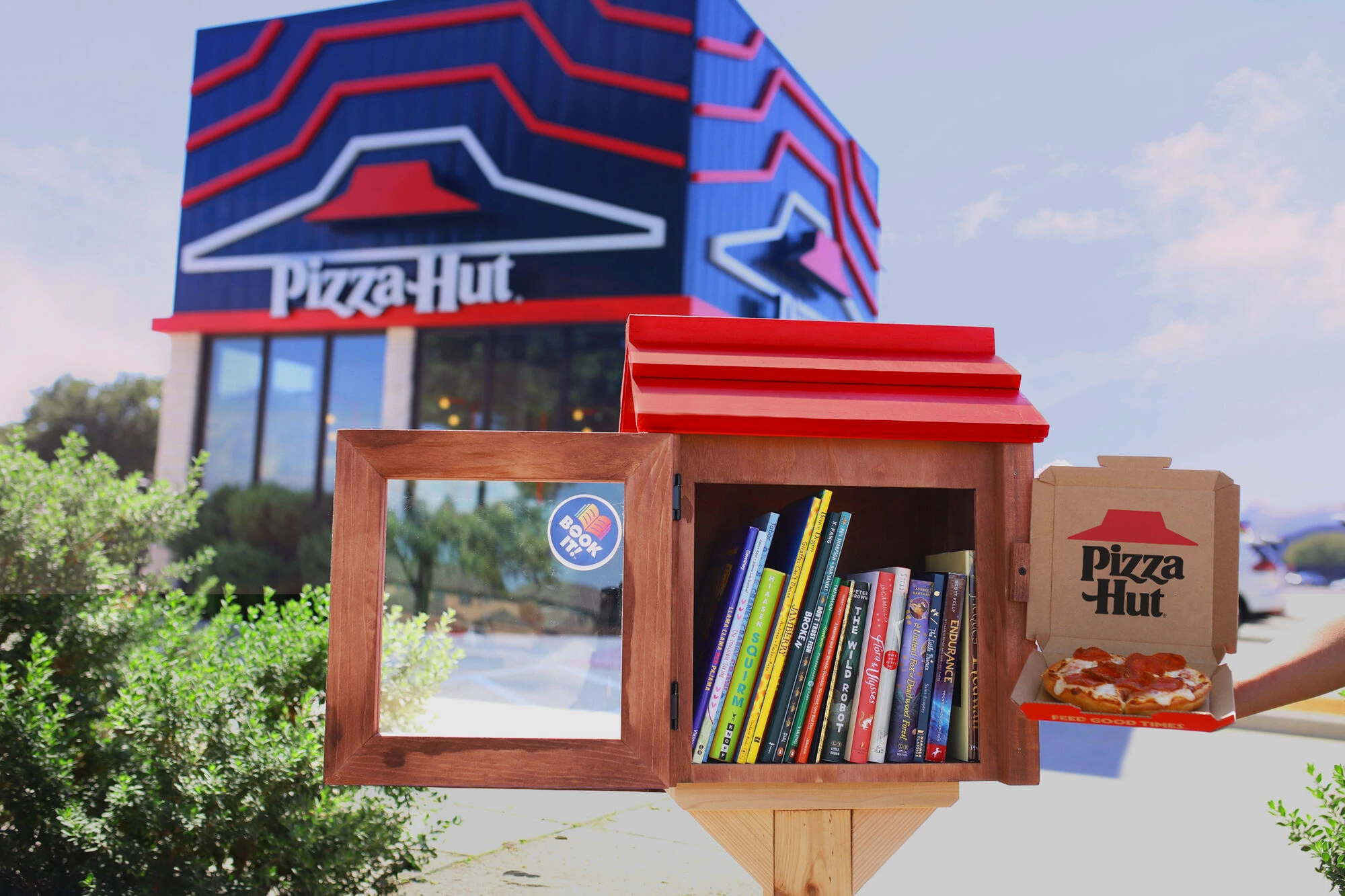
The Little Hut Libraries look like miniature Pizza Hut restaurants, complete with the unmistakable red roof. That turns the structure itself into the branding.
There is no need for a complicated explanation. People can see the object, recognize the visual language and understand immediately that Pizza Hut is behind it.
That makes the activation feel both nostalgic and functional — a small piece of brand history placed directly into a neighborhood setting.
How Experiential Marketing and Distinctive Brand Assets Drive Local Engagement
Outdoor and experiential campaigns become more memorable when they offer something people can actually use.
Here, the library is not a prop. It functions as a real book exchange, giving neighbors access to books while also carrying Pizza Hut’s visual identity into the community.
That utility gives the campaign a longer life than a one-time installation or photo opportunity. Each interaction becomes part of the brand experience.
For Atlas OOH, the lesson is clear: when a branded object has a genuine purpose, people have a reason to return to it, talk about it and remember it.
BOOK IT! gives the idea deeper emotional meaning
The campaign also works because it is not inventing a new connection between Pizza Hut and reading. That relationship already exists.
According to the supplied information, Pizza Hut has supported young readers through BOOK IT! since 1984, rewarding reading achievements with Personal Pan Pizzas for more than four decades.
Little Hut Libraries extend that idea into the physical neighborhood.
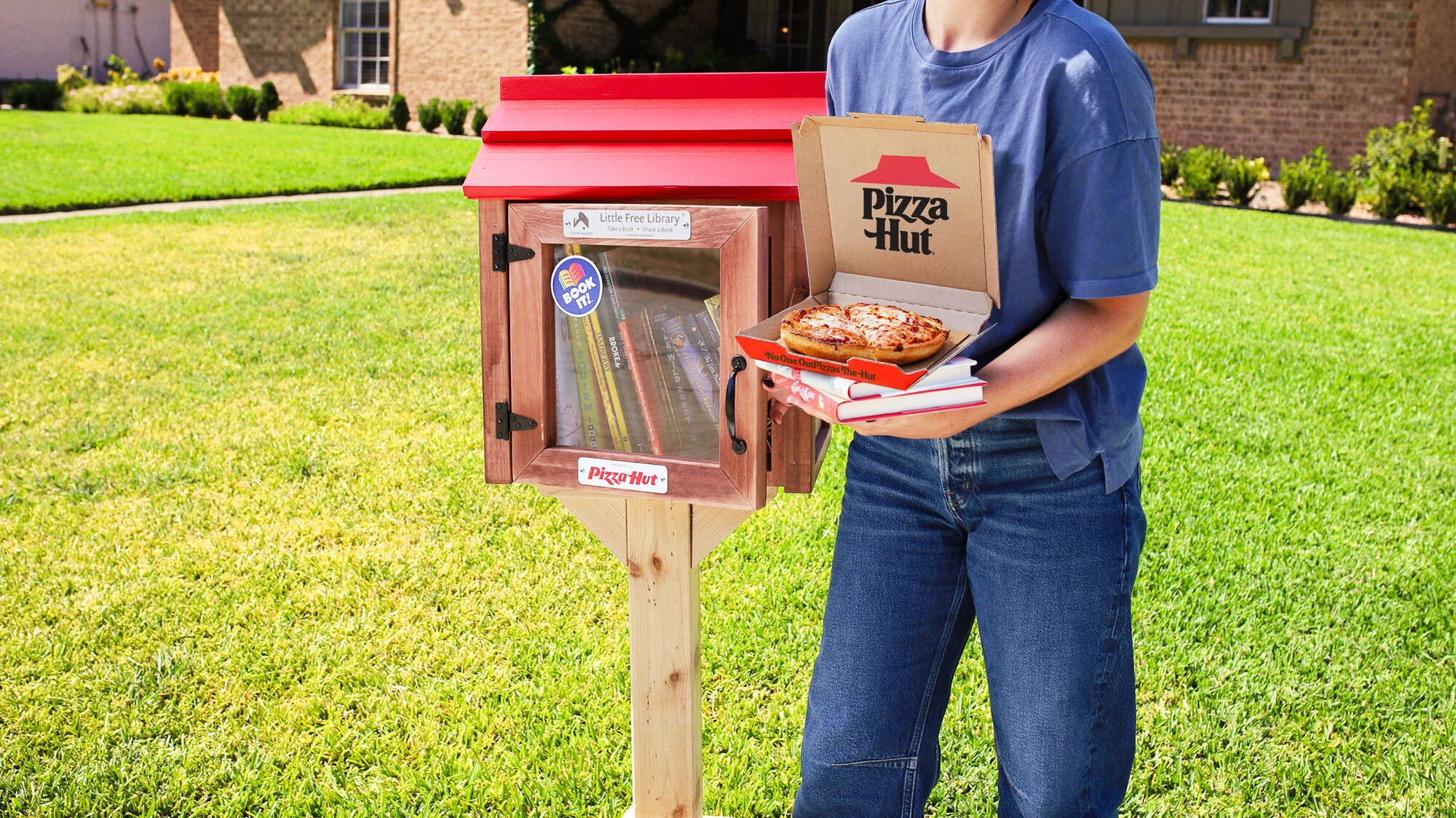
Each structure is stocked with books and, while supplies last, a limited number of Personal Pan Pizza gift cards — a direct nod to the reading-and-pizza reward system that generations already associate with the brand.
Why the collaboration with Little Free Library matters
The partnership adds credibility and purpose to the idea.
Little Free Library already has a recognizable community model built around take-a-book, share-a-book exchanges. Pizza Hut does not replace that system; it reinterprets it through one of its own most iconic design cues.
That balance is important. The activation feels branded, but the community function remains clear.
How Brand Nostalgia Marketing Converts Recognition Into Active Participation
Nostalgia is powerful, but on its own it can become passive. The Little Hut Libraries avoid that problem by turning memory into participation.
People are not simply being reminded of Pizza Hut’s older red-roof restaurants or BOOK IT! history. They are being invited to interact with those memories in a new format.
That creates a stronger emotional connection because the campaign combines familiarity with action.
For brands with decades of visual history, Atlas OOH can help translate recognizable assets into real-world experiences that feel relevant instead of retro for retro’s sake.
The activation is built to live inside neighborhoods
Another reason the campaign stands out is scale in the opposite direction.
This is not about a giant billboard or citywide takeover. The idea is intentionally small, local and distributed.
By placing the Little Hut Libraries in neighborhoods, Pizza Hut becomes part of a much more personal environment — front yards, sidewalks and shared community spaces.
That makes the campaign feel approachable and human, while still being unmistakably connected to the brand.
Why Little Hut Libraries work
- They use a highly recognizable brand asset — the Pizza Hut red roof.
- They provide real utility through free neighborhood book exchanges.
- They connect to authentic brand history through BOOK IT!
- They make nostalgia participatory rather than purely visual.
- They support community presence in a way that feels natural and useful.
Bottom line: Little Hut Libraries work because Pizza Hut is not simply revisiting its history — it is giving that history a new job. By combining the red roof, BOOK IT! and the Little Free Library model, the campaign turns brand memory into a physical community experience people can actually use.
Frequently asked questions
What are Pizza Hut’s Little Hut Libraries?
They are limited-edition neighborhood book exchanges created with Little Free Library and designed to resemble miniature Pizza Hut restaurants with the brand’s classic red roof.
Why did Pizza Hut create Little Hut Libraries?
The campaign brings together Pizza Hut’s red-roof heritage and its long-running BOOK IT! reading program while supporting easier access to books in local communities.
What is included inside the libraries?
According to the supplied information, each Little Hut Library comes stocked with books and a limited quantity of Personal Pan Pizza gift cards while supplies last.
How can someone apply for a Little Hut Library?
Consumers can apply through the Little Free Library campaign page linked in the article to request one for their neighborhood.
Sources
Plan your OOH campaign
Get recommendations for markets, formats and availability based on your campaign goals.
Request a media plan

Comments
Share your take. Keep it constructive and specific.