
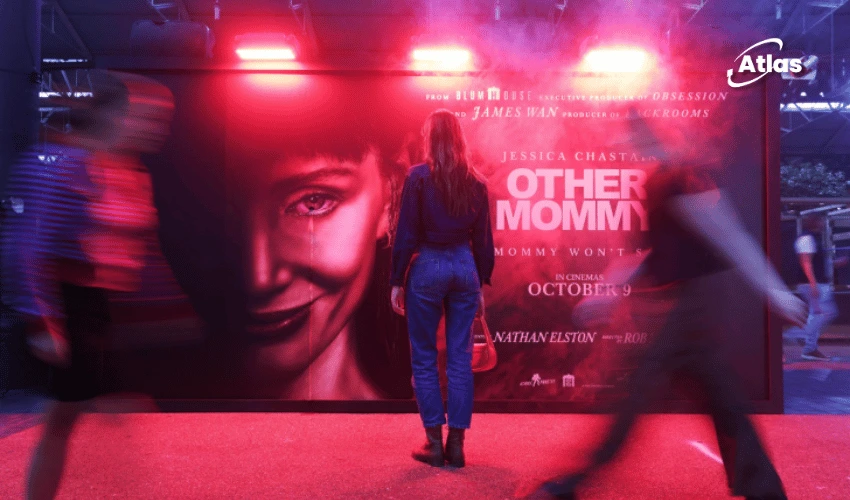
Other Mommy: A Crying Billboard Redefines Horror OOH in London
Atlas OOH Sees How a Familiar Billboard Becomes Something Unsettling
Movie-advertising campaigns usually ask audiences to look at a poster. The Other Mommy crying billboard at Spitalfields Market asks them to wonder whether the poster is looking back.
The Spitalfields Market activation starts with familiar film artwork featuring Jessica Chastain, then disrupts that expectation by making the media unit appear to react when people move through the space.
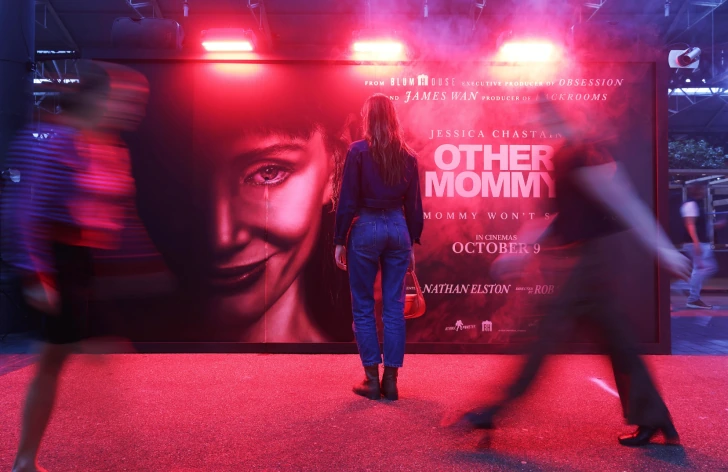
The effect is simple to understand but difficult to ignore: a giant tear forms beneath the eye while sound, red light and mist change the atmosphere around the billboard.
For Atlas OOH, this is a strong example of how experiential OOH can turn a standard entertainment placement into a physical extension of the story.
The Crying Effect Gives the Movie Artwork a Behavior of Its Own
The strongest detail is the tear.
Rather than adding a decorative special effect with no narrative connection, the campaign takes an emotional visual cue from the character and gives it movement in the real world.
That changes the billboard from a static image into something that appears to have a behavior.
For horror advertising, that matters. The discomfort does not come from showing something conventionally frightening; it comes from making something ordinary behave in a way it should not.
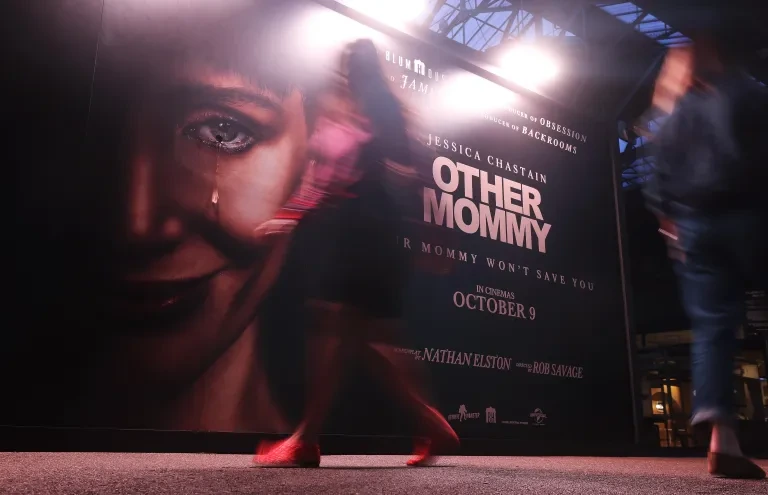
Why Spitalfields Market is the Perfect Stage for London OOH
The setting is important because the campaign depends on people moving past the media unit.
At Spitalfields Market, Londoners and tourists naturally pass through the area on foot, giving the installation a steady audience with enough proximity to notice the change in atmosphere.
That pedestrian context turns foot traffic into part of the creative mechanism. People are not simply impressions on a media plan — their presence becomes part of the scare.
Atlas OOH can help brands identify high-footfall locations where interactive media, dwell time and audience movement support the creative idea, especially for entertainment and experiential campaigns.
Mist and Red Lighting Push the Experience Beyond the Billboard Frame
The crying effect would already create a double-take, but the campaign extends the mood beyond the face itself.
Red light and mist surround the installation, making the area feel more like a small horror set than a conventional advertising site.
This is where the activation becomes especially effective as OOH. The creative no longer ends at the printed or digital edge of the media unit. The atmosphere spills into the audience’s physical environment.
How Horror OOH and Special Build Speciality Media Align
Horror depends on anticipation, surprise and the feeling that normal rules are starting to break.
Experiential OOH can recreate those same emotions in public space because the audience does not always know where the creative ends and the environment begins.
A billboard that appears to cry is effective because the viewer understands the format instantly — then sees it violate the expected behavior of that format.
For Atlas OOH, that makes interactive billboards, special builds and environmental effects particularly useful for horror, thriller and entertainment launches.
The Campaign Creates a Double-Take Built for Sharing
The supplied campaign description captures the core reaction well: if a billboard makes you question whether it is actually crying at you, you are likely to remember the movie.
That surprise also gives the execution a strong secondary life beyond the physical location.
People can photograph it, film the tear effect, capture the mist and share their reaction. The unusual behavior of the billboard becomes content in its own right.
Atlas OOH Sees Why the Timing Supports the Release
The activation appeared ahead of the film’s October 9 release.
That timing gives the outdoor execution a clear role: create intrigue, make the title memorable and place the film’s atmosphere into the city before audiences reach the cinema.
Instead of explaining the plot, the billboard delivers a small sample of the emotional experience.
Atlas OOH can help entertainment brands coordinate OOH timing around premieres, release dates, streaming launches and other cultural moments so high-impact media supports the broader launch window.
Why the Other Mommy Crying Billboard Works
- It transforms a familiar format into something that appears to have a life of its own.
- The effect connects directly to the movie rather than functioning as an unrelated stunt.
- It uses several sensory cues, including sound, mist, light and the moving tear effect.
- The pedestrian location supports interaction and gives audiences enough time to discover the activation.
- It creates naturally shareable content because the billboard’s behavior invites people to stop, record and react.
Bottom line: Other Mommy shows how movie OOH can do more than announce a title and release date. By making Jessica Chastain’s image appear to cry at passersby, the campaign turns the billboard itself into part of the horror — giving Londoners a small taste of the film before they ever enter the cinema.
Frequently asked questions
What makes the Other Mommy billboard in London different?
The billboard goes beyond static movie artwork by using eerie sound, mist and a tear effect that makes Jessica Chastain’s image appear to react to passersby.
Where was the Other Mommy billboard installed?
The supplied campaign information places the activation at Spitalfields Market in London.
How does the crying effect connect to the film?
The campaign turns the unsettling image of Other Mommy into a physical experience, reinforcing the idea that something familiar can suddenly feel disturbing or wrong.
When did the activation run?
According to the supplied information, the stunt appeared ahead of the film’s October 9 release.
Why is this an example of experiential OOH?
The audience does more than view a poster. The billboard uses environmental effects and apparent reactivity to create a physical horror moment in the path of pedestrians.
Sources
- Jessica Chastain’s ‘Other Mommy’ sheds a tear in creepy billboard - Media4Growth — M4G Bureau (2026-10-06)
Plan your OOH campaign
Get recommendations for markets, formats and availability based on your campaign goals.
Request a media plan


Comments
Share your take. Keep it constructive and specific.