

Monzo "Get Busy Living": The Global Brand Platform & London OOH Strategy
Atlas OOH Sees Why Monzo No Longer Needs to Explain What It Is
Monzo has reached a stage many challenger brands spend years trying to reach through banking advertising and london ooh: it is already famous.
The supplied Tracksuit data puts prompted awareness at roughly 80%, while Revolut has moved close behind at 79.5%.
That changes the strategic job of advertising.
When people already know the brand, more awareness alone does not necessarily create growth. The more important question becomes whether people will consider it, prefer it and eventually choose it.
For Atlas OOH, this dooh advertising milestone is exactly where high-impact OOH can move from pure fame-building into brand preference and cultural positioning.
“Get Busy Living” shifts the focus away from banking
The platform’s central idea is deliberately simple: Monzo handles the money so people can get on with life.
That is why the campaign creative does not behave like traditional banking advertising.
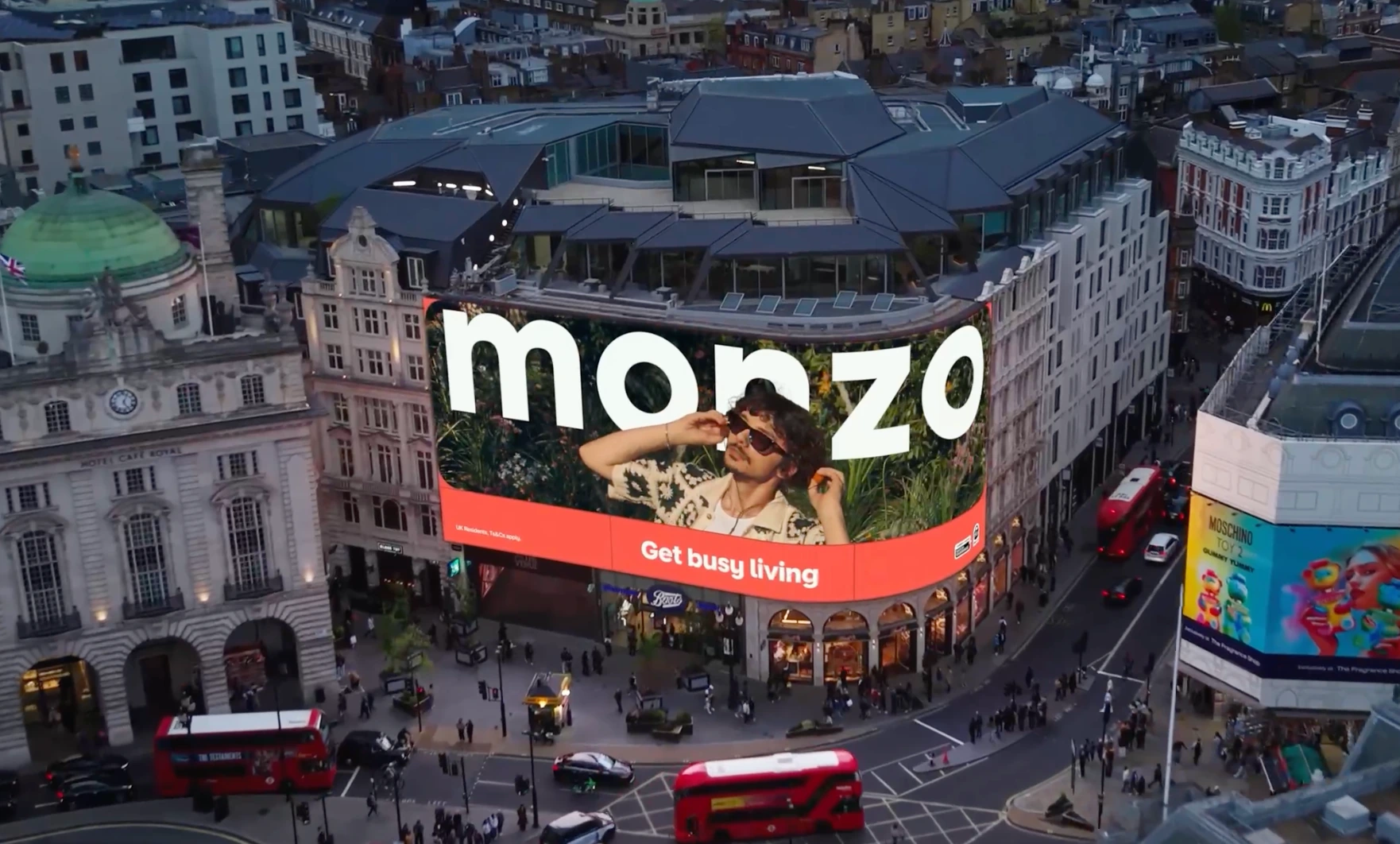
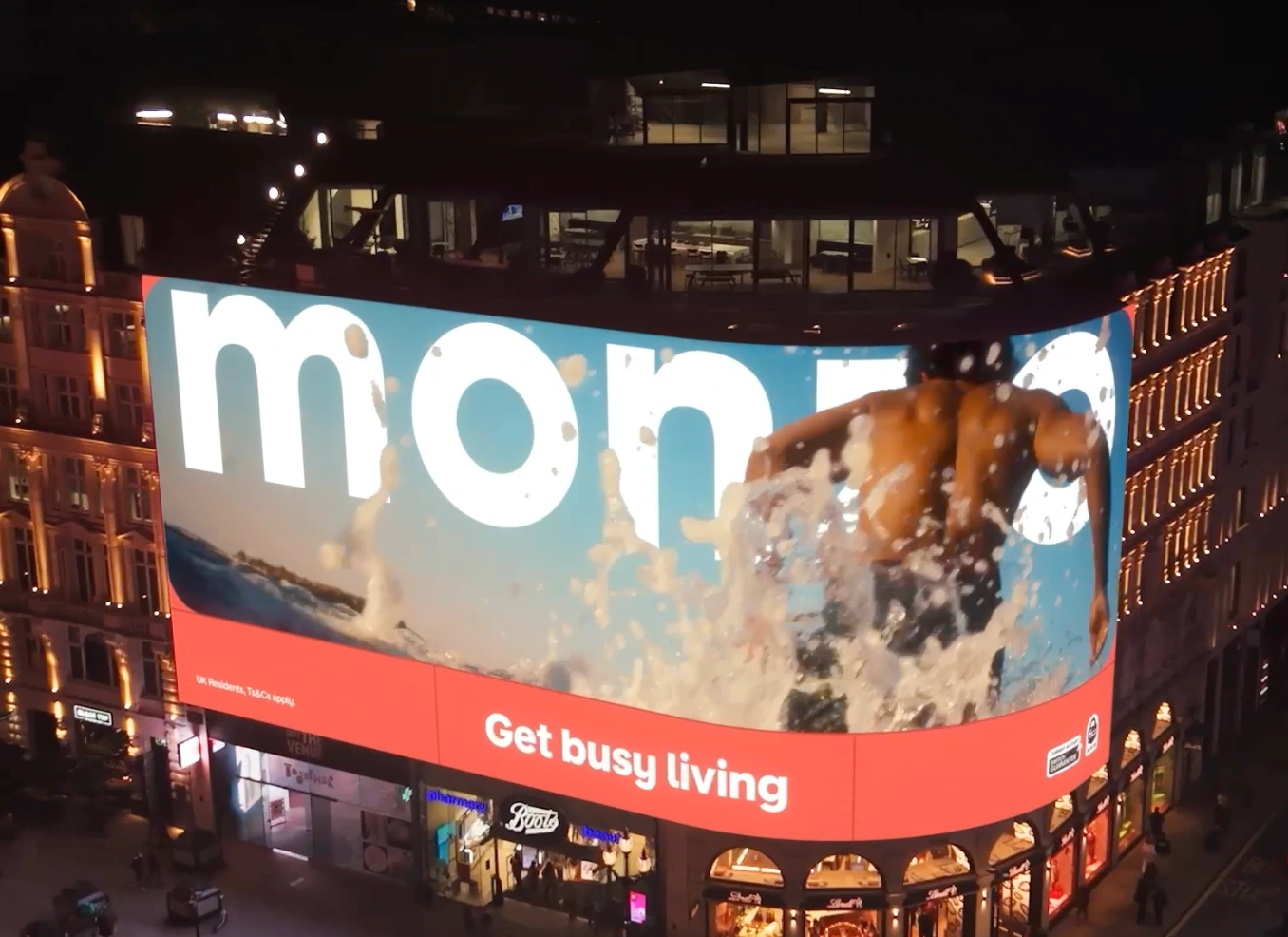
The visual world is filled with people doing things, moving, travelling, riding, enjoying hobbies and living through everyday moments. Banking recedes into the background.
This is a meaningful evolution for Monzo because it moves the brand away from challenger-bank explanation and toward lifestyle relevance.
Atlas OOH Highlights Why Piccadilly Lights Makes Strategic Sense
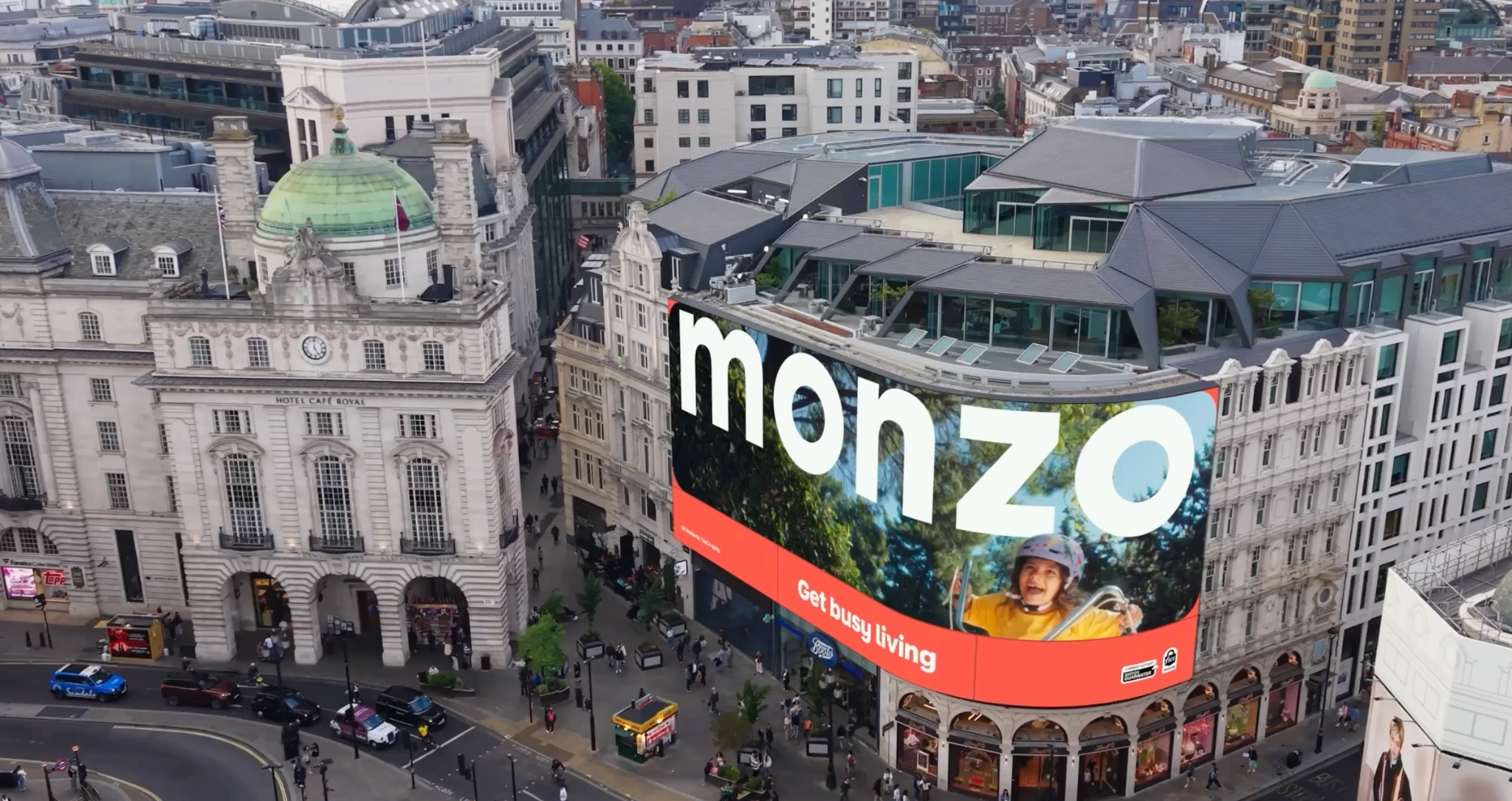
Launching on Piccadilly Lights as part of a wider piccadilly lights and dooh advertising push sends a very different signal from running a standard financial-services media plan.
The site carries scale, cultural visibility and a sense of arrival.
For a brand that already has strong awareness, that type of landmark DOOH helps reinforce stature rather than introduce the name for the first time.
Atlas OOH can help brands use landmark digital placements to amplify major platform launches, especially when the objective is to create perceived scale, confidence and cultural presence.
The funnel data shows why preference matters now
The Tracksuit numbers in the supplied material show Monzo ahead of Revolut further down the funnel.
Monzo’s consideration stands at 42.9% compared with Revolut’s 41.8%, while preference sits at 25.3% versus 22.7%.
Preference is also the Monzo metric that has moved upward this year, rising from 23.9% to 25.3%.
That makes the strategic role of Get Busy Living much clearer. It is not a campaign designed to say, “Monzo exists.” It is designed to make an already famous brand feel more emotionally desirable and more naturally part of everyday life.
Atlas OOH Notes How Lifestyle Creative Helps a Bank Feel More Human
The Piccadilly executions deliberately place real-life moments ahead of product explanation.
That is important because financial services can easily become abstract, technical or overly rational.
By centering the campaign on people rather than banking interfaces, Monzo builds a warmer brand association without losing the simplicity that made it recognizable in the first place.
For Atlas OOH, this is a useful model for financial brands that want outdoor campaigns to feel more human, lifestyle-led and culturally relevant.
Monzo’s real competition is now preference, not awareness
The supplied data also shows why the campaign matters competitively.
Revolut has nearly closed the awareness gap, moving from roughly 76% to 79.5%, while Monzo has remained around 80%.
But Monzo still leads on five of six tracked perception statements:
- Simplifies banking: 22% Monzo vs. 19% Revolut.
- Is a brand I trust: 16% vs. 15%.
- Has good customer service: 13% vs. 11%.
- Is transparent: 11% vs. 10%.
- Is for people like me: 18% vs. 16%.
Revolut leads only on innovative, at 27% versus Monzo’s 26%.
That one-point difference is revealing. As Monzo grows from disruptor into everyday bank, the brand is trading some challenger novelty for familiarity, trust and relevance.
Atlas OOH Sees Why the BMX Wallscape Adds Physical Energy
The large-format BMX creative is a particularly strong physical expression of the platform.
The rider appears to break out of a concrete skatepark environment, turning the wall itself into part of the action.
That matters because Get Busy Living is about movement and experience. A static financial-services visual would not carry the same energy.
Atlas OOH can help brands match creative ideas with formats that reinforce the campaign message, from oversized wallscapes and special builds to digital billboards and experiential media.
The campaign extends beyond visual identity
Get Busy Living is broader than OOH.
The supplied information says the platform includes ten single-shot films directed by Daniel Wolfe with BBH, Olivia Colman as a headline-grabbing presence, Monzo’s first sonic identity and its first creator ambassador programme.
The sonic system, “The Sound of Good Vibrations,” is built around the sounds inside the Monzo name itself: mmm, zzz and ooo.
This gives the platform greater consistency across formats and helps the campaign behave like a full brand system rather than just an advertising burst.
Why awareness alone is not enough
The data from other banks reinforces the point.
Starling’s awareness has reportedly stayed around 61%, while consideration fell from 27.3% to 22.9%. The supplied article also notes softer performance for Chase UK and declines in consideration and preference for Barclays.
The lesson is simple: being known is not the same as being chosen.
That is why Monzo’s campaign has a clear job. The brand already has fame. The opportunity is to turn that fame into stronger preference and preserve its conversion advantage as competitors catch up.
Why Monzo’s Get Busy Living campaign works
- It reflects the brand’s actual funnel position rather than chasing awareness it already has.
- It shifts from banking language to lifestyle language, making Monzo feel more human.
- It uses landmark DOOH to reinforce stature and cultural presence.
- It combines high-impact media with a broader brand system, including film, sound and creators.
- It supports preference, the metric that matters most as Revolut closes the awareness gap.
Bottom line: Get Busy Living is the kind of campaign a challenger launches when it is no longer really a challenger. Monzo does not need to tell the UK what it is anymore. It needs to remain the bank people actively choose. The OOH gives that ambition scale, while the lifestyle-led platform gives the brand a reason to matter beyond the app.
Frequently asked questions
What is Monzo’s Get Busy Living campaign?
It is Monzo’s first global brand platform, built around the idea that the bank handles money in the background so customers can focus on living their lives.
Where did Monzo launch the campaign?
The supplied information says the campaign launched with major OOH takeovers at Piccadilly Lights and Waterloo Motion, alongside ten single-shot films and broader brand activity.
What do the Tracksuit numbers say about Monzo?
The supplied data shows Monzo with around 80% prompted awareness, 42.9% consideration and 25.3% preference, placing it ahead of Revolut further down the funnel even as Revolut closes the awareness gap.
What is the strategic job of Get Busy Living?
The campaign appears designed less to create basic awareness and more to strengthen preference, familiarity and long-term choice among people who already know the brand.
Sources
Plan your OOH campaign
Get recommendations for markets, formats and availability based on your campaign goals.
Request a media plan

Comments
Share your take. Keep it constructive and specific.