
McDonald’s Sweden Uses Contextual DOOH to Haunt Its Former Restaurants
Contextual DOOH Turns Former McDonald’s Locations Into Halloween Media
McDonald’s Sweden is using Contextual DOOH to transform old restaurant locations into part of a Halloween story.
Instead of ignoring places the brand has left behind, the campaign treats those locations as memories that can still carry meaning for customers.
The result is an OOH Campaign where place, nostalgia and digital interaction all work together.
Location-Based Advertising Makes the Old Restaurant Sites Part of the Creative
The campaign depends on Location-Based Advertising.
Selected former McDonald’s locations across Sweden are reactivated through geofencing, allowing special offers to appear in the McDonald’s app when users approach those places.
The physical location is not just where the campaign appears—it is the reason the campaign exists.
DOOH Advertising Uses Distance as a Halloween Clue
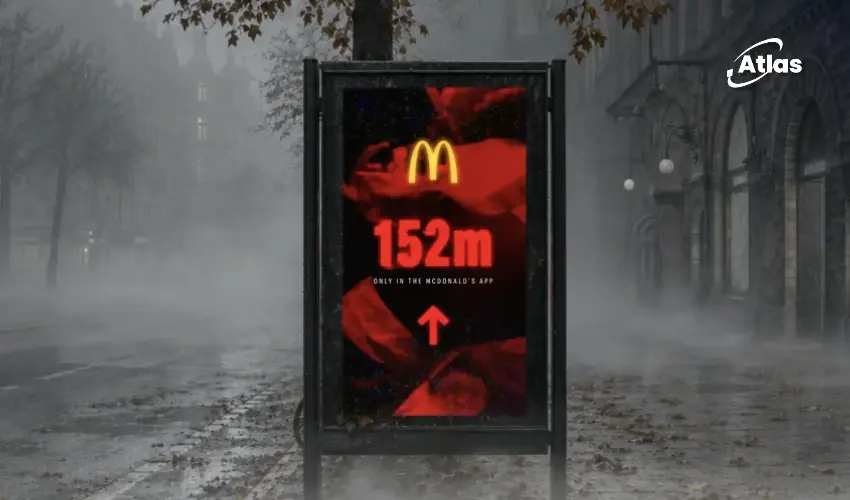
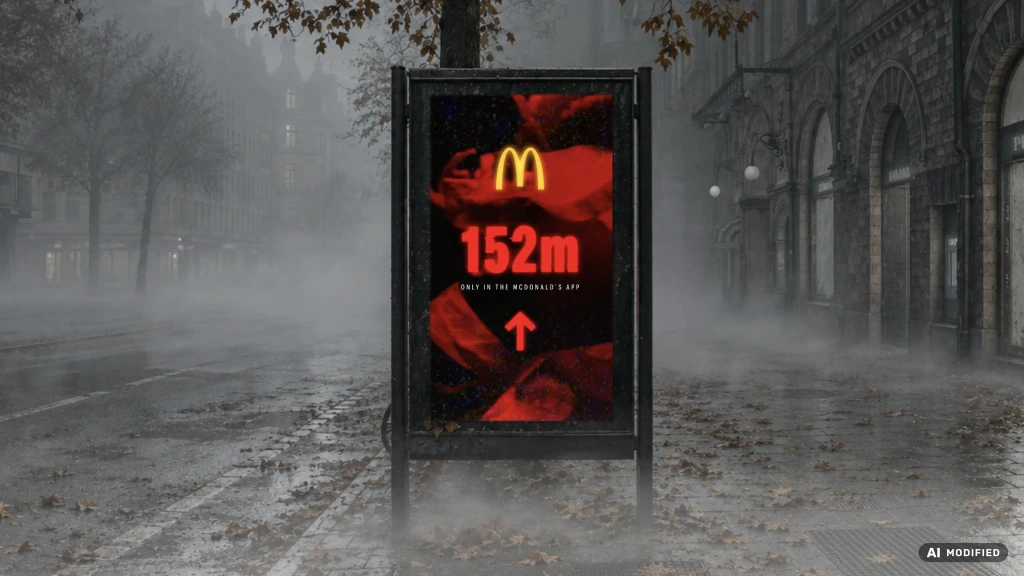
The supplied creative shows a dark Halloween execution with a large distance marker: 152m.
That simple number turns proximity into suspense.
Instead of explaining everything immediately, the DOOH Advertising encourages people to move closer and discover what is waiting nearby.
Geofencing Connects Digital Out-of-Home With the McDonald’s App
Once users approach a selected former location, the campaign can trigger an offer inside the McDonald’s app.
This creates a bridge between Digital Out-of-Home and mobile activation.
The screen or poster provides the clue, the physical location creates the context, and the app delivers the reward.
Creative DOOH Uses Memory as Part of the Brand Experience
The campaign also taps into nostalgia.
As McDonald’s Sweden notes in the supplied campaign information, many people remember specific restaurant locations from earlier moments in their lives.
By bringing those locations “back from the dead,” the Creative DOOH gives those memories a playful Halloween role.
Experiential OOH Turns a Simple Offer Into a Small Urban Adventure
Paranormal Deals has an Experiential OOH quality because people are invited to physically revisit an old location.
The campaign turns the city into part of the experience.
What might otherwise be a normal walk or commute becomes a small treasure hunt built around brand memory and proximity.
Dynamic DOOH and Mobile Activation Make the Campaign Feel Responsive
The campaign’s use of geofencing creates a sense of responsiveness even though the physical media itself may remain static.
That gives the work some of the logic of Dynamic DOOH: the audience’s location changes what happens next.
The offer appears because the person has entered a relevant geographic zone.
Outdoor Media Extends the Halloween Story Beyond the App
The campaign also runs across online video, social media, radio, cinema and Outdoor Media.
That wider media mix helps the Halloween idea feel like a larger brand world rather than a hidden app mechanic.
The OOH clues are especially important because they connect the campaign directly to physical places.
OOH Marketing Makes Old Brand Locations Valuable Again
Former restaurant sites would normally have no role in a current campaign.
Paranormal Deals changes that by turning them into location-based media assets.
This is a clever example of OOH Marketing because the brand finds new value in places it no longer occupies.
Halloween Gives the Campaign a Natural Creative Reason to “Come Back”
The timing is what makes the concept work.
Halloween gives McDonald’s permission to talk about ghosts, haunting and things returning from the past.
That cultural context makes the campaign feel playful rather than forced.
Atlas OOH Can Build Location-Based and Contextual DOOH Campaigns
McDonald’s Sweden shows how physical location can become part of a digital activation rather than simply the place where an ad appears.
Atlas OOH can help food, retail and consumer brands plan Location-Based Advertising, Contextual DOOH, Digital Out-of-Home and experiential campaigns that connect real-world places with mobile actions.
DOOH Case Study Takeaway: McDonald’s Haunts Its Own Past
As a DOOH Case Study, Paranormal Deals shows how a brand can use history, geography and mobile technology in one idea.
Former restaurants provide the locations.
DOOH provides the clues.
Geofencing provides the trigger.
The app provides the offer.
And Halloween provides the perfect creative context.
The result is an Out-of-Home Advertising campaign that turns old McDonald’s locations into interactive brand memories with a spooky new purpose.
If your brand wants to turn real-world locations into interactive media, Atlas OOH can help build an OOH strategy around proximity, context, mobile activation and creative location use.
Frequently Asked Questions About McDonald’s Sweden’s Paranormal Deals Campaign
What is McDonald’s Sweden’s Paranormal Deals campaign?
Paranormal Deals is a Halloween campaign that reactivates selected former McDonald’s restaurant locations across Sweden through geofenced app offers and supporting Digital Out-of-Home clues.
How does the geofencing work?
According to the supplied campaign information, special offers can appear in the McDonald’s app when users approach selected former restaurant locations.
How is DOOH Advertising used in the campaign?
Digital Out-of-Home placements provide clues that hint at where the mysterious offers may be hiding, helping connect the physical location with the mobile app experience.
Who created the campaign?
The supplied campaign information states that Paranormal Deals was created by McDonald’s Sweden and creative agency NORD.
Plan your OOH campaign
Get recommendations for markets, formats and availability based on your campaign goals.
Request a media plan
Comments
Share your take. Keep it constructive and specific.