
Heineken Hut Brings Experiential OOH to New Zealand’s Mountains
A Remote Taproom Turns a Brand Promise Into a Real Experience
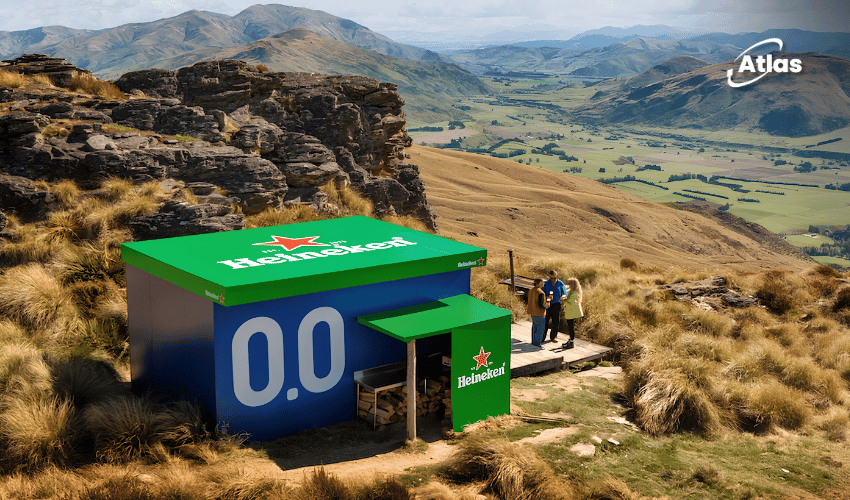
What does “available everywhere” look like when a brand takes the idea literally? For Heineken 0.0, it looks like a small green-roofed hut surrounded by enormous mountains, far from the busy bars and urban billboards that usually define drinks advertising.
Created with Special PR New Zealand, the Heineken Hut gives hikers and mountain bikers on the Welcome Rock Trail a chance to enjoy freshly poured alcohol-free beer at Slate Hut, 1,130 metres above sea level in Southland’s Slate Range. The location is more than a scenic backdrop: its remoteness is the central proof point of the campaign.
The activation is best understood as experiential outdoor marketing, rather than a conventional billboard or DOOH Advertising placement. It transforms an actual destination into the message and invites visitors to participate in it.
Heineken Hut: Experiential OOH That Rewards the Journey
For people already undertaking the trail, the surprise is simple but memorable: a taproom where they would least expect one. The converted hut offers Heineken 0.0 to adult overnight guests who book a stay, making the journey, the setting and the product experience part of the same story.
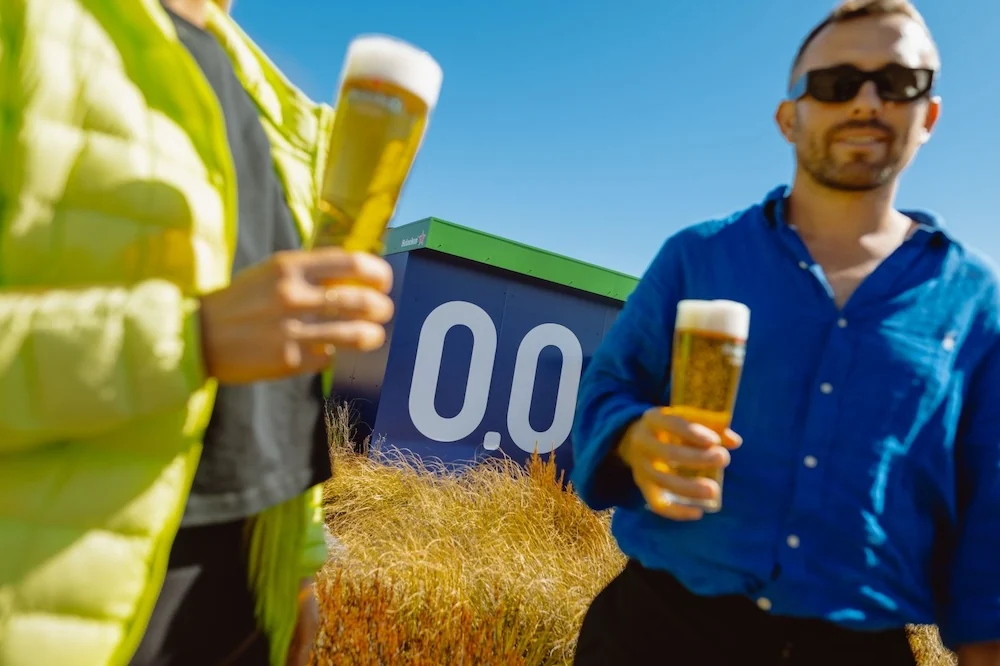
Unlike a traditional OOH Campaign built primarily to generate passing impressions, this activation creates an experience visitors can take part in, photograph and talk about afterward. Its location offers a natural reason to share the story without inventing a spectacular object unrelated to the product.
That participation-led approach is also central to Atlas OOH’s analysis of Nestlé Boost’s interactive outdoor activation, where engagement happens because people can do something with the campaign, not simply see it.
More Than 100 Taps: The Strategy Behind the Heineken 0.0 Campaign
The isolated mountain installation supports a much larger distribution announcement. DB Breweries reports that Heineken 0.0 is expanding to over 100 venues nationwide from November 2026, following a successful Auckland pilot earlier in the year. The brewer describes the rollout as New Zealand’s largest-ever distribution of alcohol-free beer on tap.
That is the strategic logic of the creative idea. If Heineken 0.0 is available even at a remote backcountry shelter, the brand suggests, finding a draft pour closer to home should feel much easier. Instead of merely communicating a list of participating venues, the campaign makes the availability promise visible through one extreme example.
According to the official DB Breweries announcement, the initiative aims to support consumers who want alcohol-free options without foregoing the social experience of a freshly poured drink.
Location-Based Outdoor Advertising Starts With the Setting
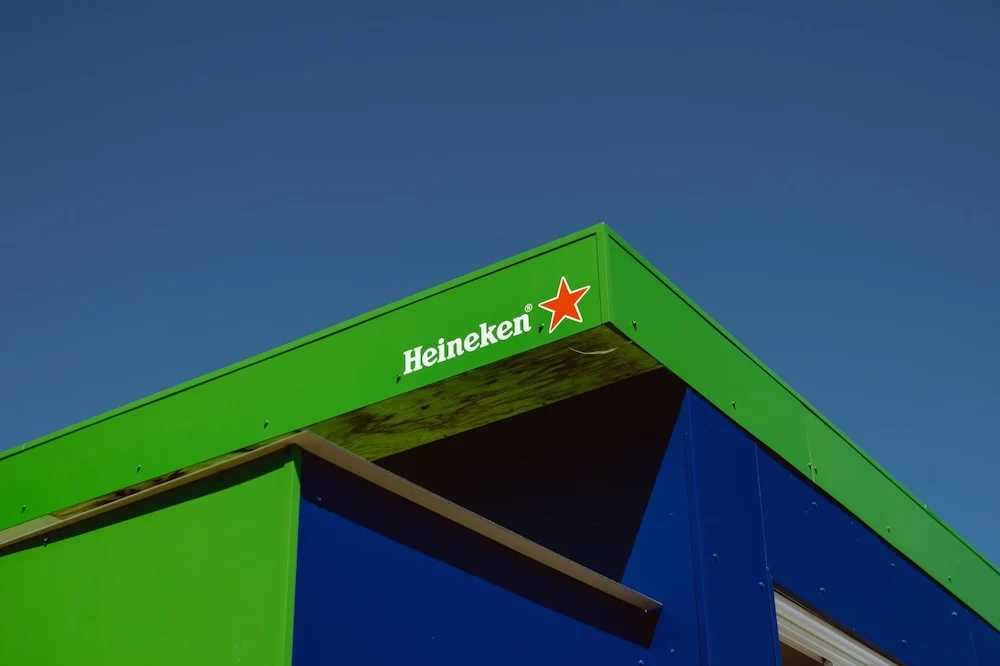
Many Outdoor Advertising campaigns begin with a media format and ask what to place on it. The Heineken Hut works in reverse: its remote location is what makes the story worth telling, while a recognisable green roof and the brand’s red star provide the visual connection to Heineken.
The high-country environment also offers an authentic local connection. Slate Hut is part of Welcome Rock, a family-run property on Blackmore Station, which has been in the O’Brien family since 1911. That heritage makes the site a genuine destination rather than a temporary scenic set built solely for advertising.
This is a form of Location-Based Advertising in which the experience and its setting communicate together. For a different example of using a consistent message in real environments, see how Coca-Cola’s New Zealand OOH campaign adapts its creative to Kiwi culture.
Creative OOH Beyond Billboards: Make the Product Part of the Story
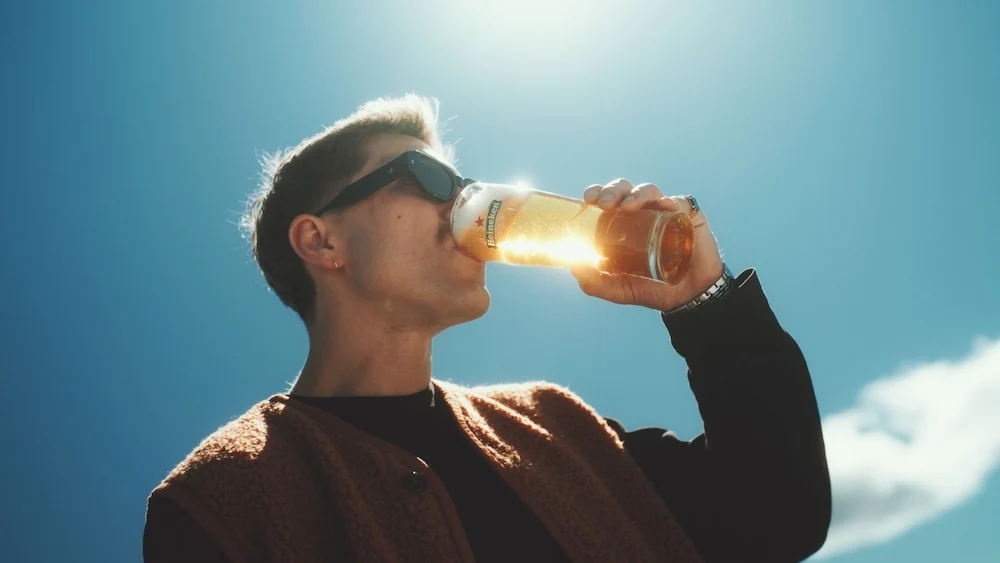
The Heineken Hut has no need for a giant Digital Billboard or a highly engineered 3D Billboard. Its memorable feature is the contrast between a familiar social ritual and the rugged outdoor landscape. The product demonstration is the activation itself.
The approach offers a useful contrast with Vocation Brewery’s Life & Death OOH campaign, which uses product-led digital street furniture and a concise headline to make its message visible in busy city environments. Both approaches build around a clear product promise, but use very different physical touchpoints.
For Atlas OOH, the wider lesson is that effective Creative OOH starts by asking what the audience should remember: a distinctive message, an unexpected place, or a first-hand encounter.
From PR-Led Activation to Wider OOH Marketing Value
Although the Heineken Hut is not a traditional paid outdoor-media buy, it is highly relevant to OOH Marketing strategy. The activation creates a physical proof point that can be amplified through photography, earned coverage, social content and complementary public-space advertising if a wider media campaign is planned.
The work is credited to Special PR New Zealand alongside Heineken and Welcome Rock. As reported in Campaign Brief’s coverage of the activation, the concept deliberately translates a nationwide availability story into a destination people can physically visit.
No independently verified attendance, sales lift, brand-recall or earned-media figures were available in the cited announcement, so this is an analysis of the creative strategy and execution, not a claim of measured campaign performance.
Explore how Atlas OOH can connect experiential ideas with relevant outdoor media formats.
What Brands Can Learn From the Heineken Hut Experience
- Turn a promise into physical evidence: the isolated taproom makes nationwide availability easy to visualise.
- Let the location do creative work: the 1,130-metre-high hut is what makes the activation remarkable.
- Keep distinctive brand assets visible: the green architecture and star connect every photograph to Heineken.
- Invite real participation: visitors can experience the service rather than simply view a campaign message.
- Separate earned experience from paid reach: experiential activations and traditional Out-of-Home Advertising can complement each other, but they are not the same format.
According to the brand’s official release, the Heineken Hut began operating on November 7, 2026, with bookings open for eligible overnight visitors through March 31, 2027. Some initial agency coverage gave an earlier January 2027 end date; the brand’s directly published schedule is used here.
Atlas OOH: Take Your Brand Beyond the Expected
The Heineken Hut shows how a creative outdoor experience can give a distribution milestone more personality. The strongest element is not its distance from the city on its own, but the strategic relationship between that distance and Heineken 0.0’s goal of making its product more widely available.
For brands exploring Experiential OOH, Street Furniture Advertising, Digital Out-of-Home or other location-led media, the takeaway is the same: build a clear idea first, then choose the environment that makes it most compelling.
Bottom line: Heineken 0.0 took the message “available everywhere” to the mountains of New Zealand. With Special PR New Zealand and Welcome Rock, a small hut became the centre of a much bigger story about product access and social connection.
Plan a location-led outdoor campaign with Atlas OOH.
Frequently Asked Questions
What is the Heineken Hut campaign?
It is an outdoor experiential activation created for Heineken 0.0 with Special PR New Zealand, transforming Slate Hut into an alcohol-free mountain taproom.
Where is the Heineken Hut located?
At Slate Hut on the Welcome Rock Trail in Southland’s Slate Range, New Zealand, 1,130 metres above sea level.
Why was the Heineken Hut created?
To bring attention to the rollout of Heineken 0.0 on tap to more than 100 New Zealand venues and show how far the brand is willing to go to make it accessible.
When is the activation running?
DB Breweries lists November 7, 2026 to March 31, 2027 for eligible overnight visitors on the Welcome Rock Trail.
Is the Heineken Hut a billboard or a DOOH campaign?
It is a physical experiential brand activation, not a documented billboard or DOOH display. Its lesson for OOH marketers is how context and participation make an idea memorable.
Sources
Plan your OOH campaign
Get recommendations for markets, formats and availability based on your campaign goals.
Request a media plan
Comments
Share your take. Keep it constructive and specific.