For decades, billboards were “set it and forget it”: one creative, one location, one flight. Today, Digital Out-of-Home (DOOH) has turned those static faces into smart, data-driven media channels that behave much more like digital display or paid social—just in the real world.
This shift is forcing media planners to rethink how they plan, optimize, and measure OOH. Here’s how the evolution from static to smart is reshaping everything.
From One-Size-Fits-All to Dynamic Canvases
Traditional OOH is powerful for reach and impact, but it’s largely fixed:
- Static creative for weeks or months
- Same message for every passerby
- Limited flexibility once the campaign is live
DOOH keeps all the strengths—scale, impact, unavoidable presence—but adds:
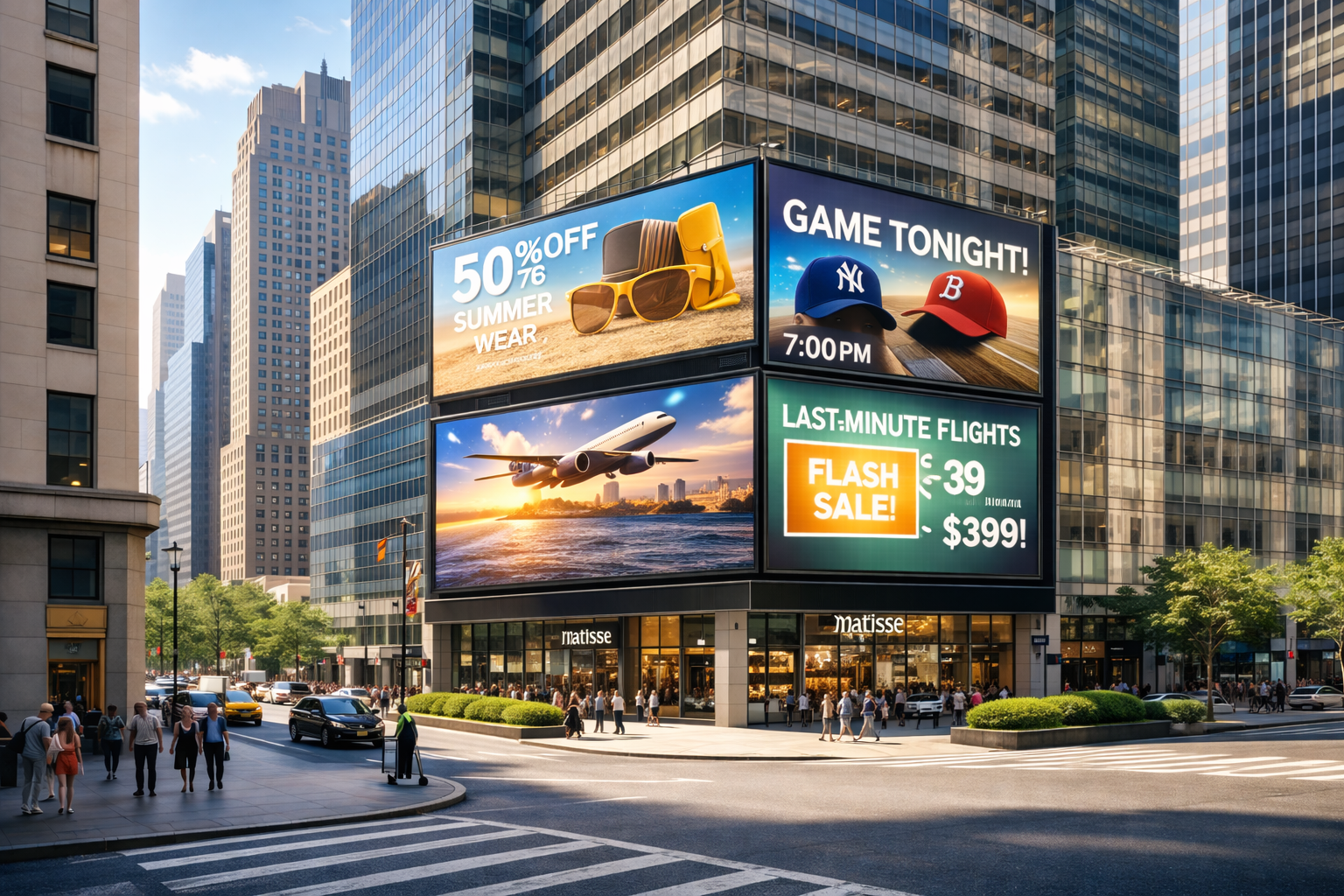
- Dynamic messaging that can change by time of day, weather, audience signals, or inventory levels
- Shorter, more flexible flights, with content that updates in minutes instead of weeks
- Digital distribution that enables test-and-learn optimization—not just “hope it works”
In short: DOOH takes the physical reach of OOH and plugs it into the logic and measurement of digital.
Key DOOH Capabilities Reshaping Media Planning
1) Real-Time Data & Triggers
DOOH screens can react to:
- Weather: Hot drinks when it’s cold, cold drinks when temperatures rise.
- Time & daypart: Breakfast offers in the morning, drive-thru deals in the evening.
- Live conditions: Traffic congestion, game scores, flight delays, and more.
For planners, this means your OOH plan is no longer just where and how many faces—it’s when and under what conditions the message should run.
2) Dynamic Creative Optimization (DCO) in the Real World
Dynamic templates allow you to update:
- Prices, product images, countdowns
- Store distances (“2 minutes away – Turn right on Main St.”)
- Localized messages for different neighborhoods
Instead of trafficking dozens of static files, planners work with rules (“If it’s raining, show umbrella creative”) and feeds (product catalogs, locations, inventory).
3) Audience-Based Buying
With mobile and location data, DOOH can be planned against audiences, not just panels:
- Select “frequent QSR visitors,” “commuters,” or “sports fans” segments
- Identify screens that over-index for those audiences
- Serve messages where those audiences are most likely to be exposed
This aligns OOH with how planners already think about paid social and programmatic display.
4) Programmatic DOOH (pDOOH)
Programmatic pipes let brands buy DOOH via DSPs—often using the same seat as other digital channels. That brings:
- Flexible budgets: Shift spend in/out based on performance or priorities
- Agile activations: Turn campaigns on/off tied to events or sales
- Unified reporting: View DOOH alongside display, video, and social
DOOH becomes another digital channel in the mix—not a separate “offline” line item.
What This Means for Media Planners
Smarter Flighting & Dayparting
Instead of booking a 4-week static flight across all units, you can:
- Concentrate impressions during peak purchase windows
- Run heavier DOOH around store openings, paydays, or key events
- Use short tactical bursts (e.g., weekend takeovers) tied to promotions
This often increases efficiency: you’re buying fewer hours, but more relevant ones.
Integrated Omnichannel Journeys
Because DOOH is digital and data-enabled, it’s easier to connect with other channels:
- Align DOOH messaging with paid search (same offer and keywords)
- Retarget exposed devices with follow-up display or social ads (where allowed)
- Drive action via QR codes, vanity URLs, discount codes, or app deep links
The media plan becomes a coordinated story: OOH builds awareness and intent; mobile and online media close the loop.
Better Attribution & Optimization
Modern DOOH partners can provide:
- Impression modeling based on mobility data
- Footfall lift studies (store visits after exposure)
- Brand lift and online behavior lift (searches, site visits, app installs)
Planners can compare DOOH’s contribution versus other channels and reallocate budget based on results—not gut feel.
Measuring Results: From Impressions to Outcomes
To move beyond “OOH is just for branding,” tie DOOH to clear KPIs. Common approaches include:
Search Lift
- Track brand/category searches in markets where DOOH is live
- Compare to control markets with no DOOH presence
Website & Landing Page Traffic
- Analyze direct/organic traffic in ZIP codes surrounding screens
- Use vanity URLs, QR codes, or UTMs on short links to capture attributed visits
App Downloads & Engagement
- Measure incremental lift in installs, registrations, or MAUs
- Combine with mobile retargeting to strengthen attribution
Store Visits & Offline Conversions
- Build exposed vs. non-exposed groups using mobility data
- Measure lift in in-store visits, purchases, or ticket scans
Full-Funnel Brand + Performance Metrics
- Pre/post surveys: awareness, consideration, preference
- Business outcomes: revenue in DOOH markets vs. control markets
When these methods are implemented together, DOOH stops being a “nice-to-have” branding line and becomes a provable driver of outcomes.
How Brands Are Using Smart DOOH Today
- QSR and delivery apps: Daypart-triggered creatives with QR codes to app downloads or order pages.
- Retailers & supermarkets: Geo-targeted promotions near stores, tracking footfall and basket changes.
- Financial/fintech: Commuter-hub DOOH, measuring site visits, account opens, and app sign-ups from exposed audiences.
- Entertainment & streaming: Countdown creatives plus retargeting to trailers and subscription offers.
Screens in the street, logic in the cloud.
Practical Steps to Add Smart DOOH to Your Media Plan
- Define DOOH’s role in the funnel: awareness only, or also search, traffic, installs, store visits?
- Choose the right signals: time, weather, events, store locations, inventory feeds.
- Build dynamic-ready creative: templates for quick swaps (prices, city names, countdowns).
- Integrate with your digital stack: DSP buying where possible; unify reporting with other channels.
- Plan measurement from day one: pick KPIs and control markets to prove incrementality.