
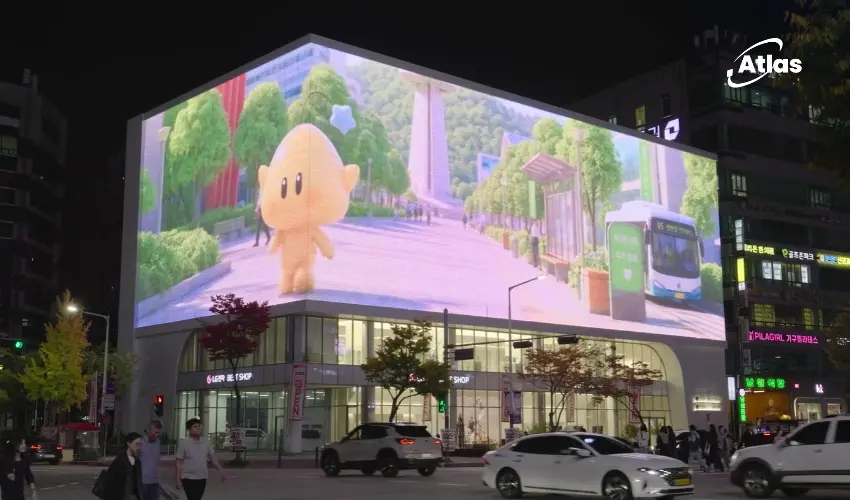
Daejeon Uses AI DOOH Advertising to Make the City of 2050 Feel Real
Creative DOOH Turns Public Policy Into a Story People Can Feel
Public policy is often communicated through statistics, administrative language and long-term targets.
“Letters from 2050” takes a different approach, using Creative DOOH and AI-generated storytelling to imagine what those policies could feel like in everyday life.
Each episode opens as a thank-you letter sent from Daejeon in 2050 to the citizens of today, shifting the communication from telling to feeling.
That makes the OOH Campaign less about explaining policy and more about helping people visualize the future they are helping build.
AI-Generated OOH Advertising Gives Civic Communication a More Human Tone
The campaign uses AI-generated characters, environments and future-city scenes to make abstract civic goals easier to imagine.
Rather than leading with targets or technical language, the work shows people living inside the outcomes.
This is a useful example of OOH Advertising working as public storytelling rather than simply public information.
Kkumdori Connects Daejeon’s Civic Identity With Future-Focused DOOH
The campaign stars Kkumdori, Daejeon’s mascot first introduced for Expo ’93.
Using a familiar civic character gives the future-focused storytelling a recognizable emotional anchor.
Kkumdori helps bridge the city’s past identity with its imagined 2050 future, making the Digital Out-of-Home feel less institutional and more approachable.
Digital Out-of-Home Makes the Future City Visible at Urban Scale
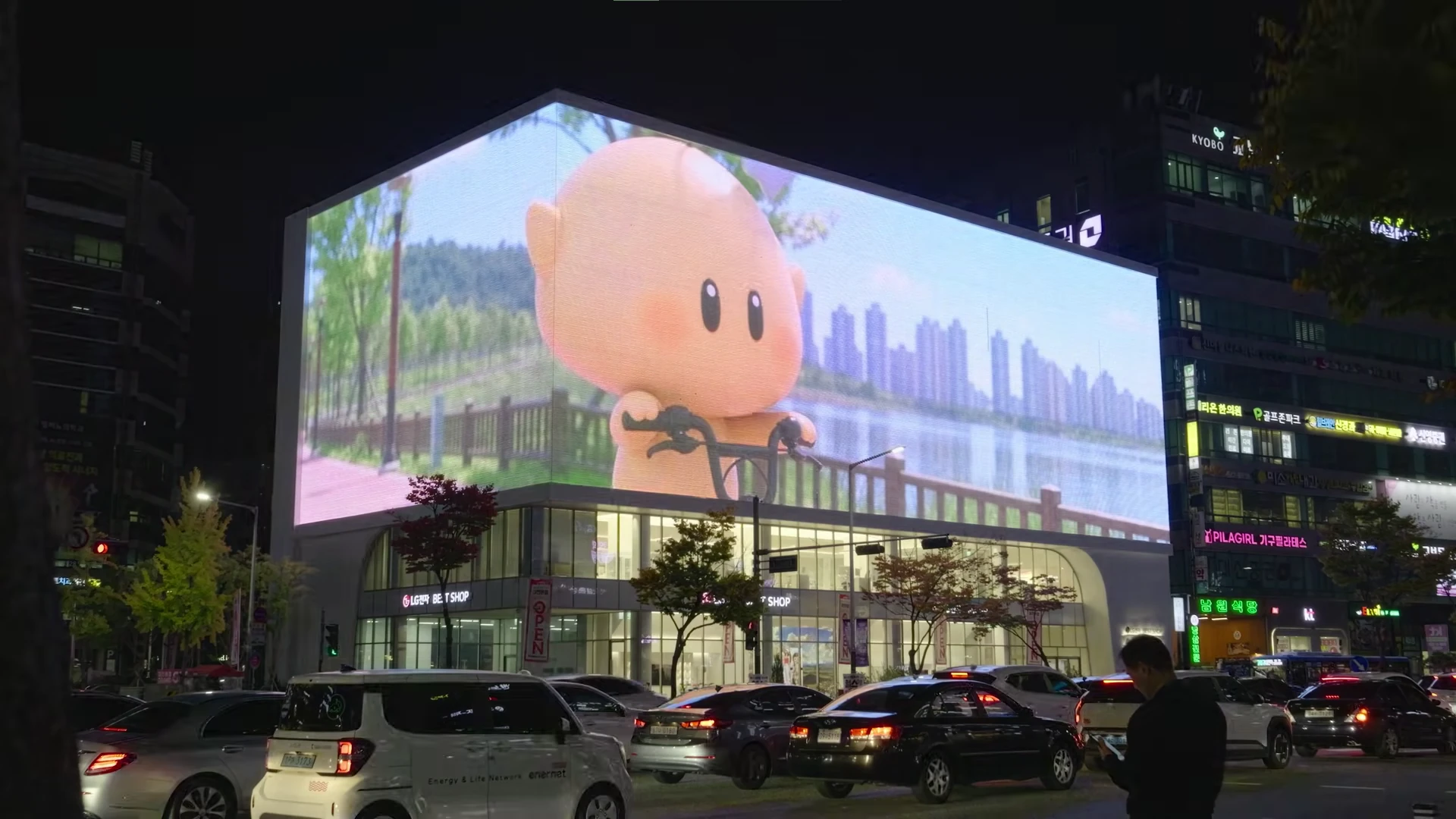
The campaign was screened on the LG Electronics media wall in Dunsan-dong, described in the supplied material as a 36:9 ultra-wide display wrapping around a 90-degree corner.
This format gives the project an advantage that a standard flat screen could not easily replicate.
Scenes can move across the left face, right face and corner, allowing the future-city imagery to feel more spatial and immersive.
That is where Digital Out-of-Home becomes part of the storytelling itself rather than simply the distribution channel.
Experiential OOH Uses the 90-Degree Corner as Part of the Narrative
The media wall is designed so that viewers on the street can experience different parts of the scene across multiple surfaces.
This makes the work a form of Experiential OOH: the public is not entering an installation, but the screen architecture changes how the story is perceived in physical space.
The 90-degree corner gives the animation depth, scale and movement, helping the future city feel closer to something happening around the viewer.
Four DOOH Stories Translate Daejeon’s Public Agenda Into Everyday Life
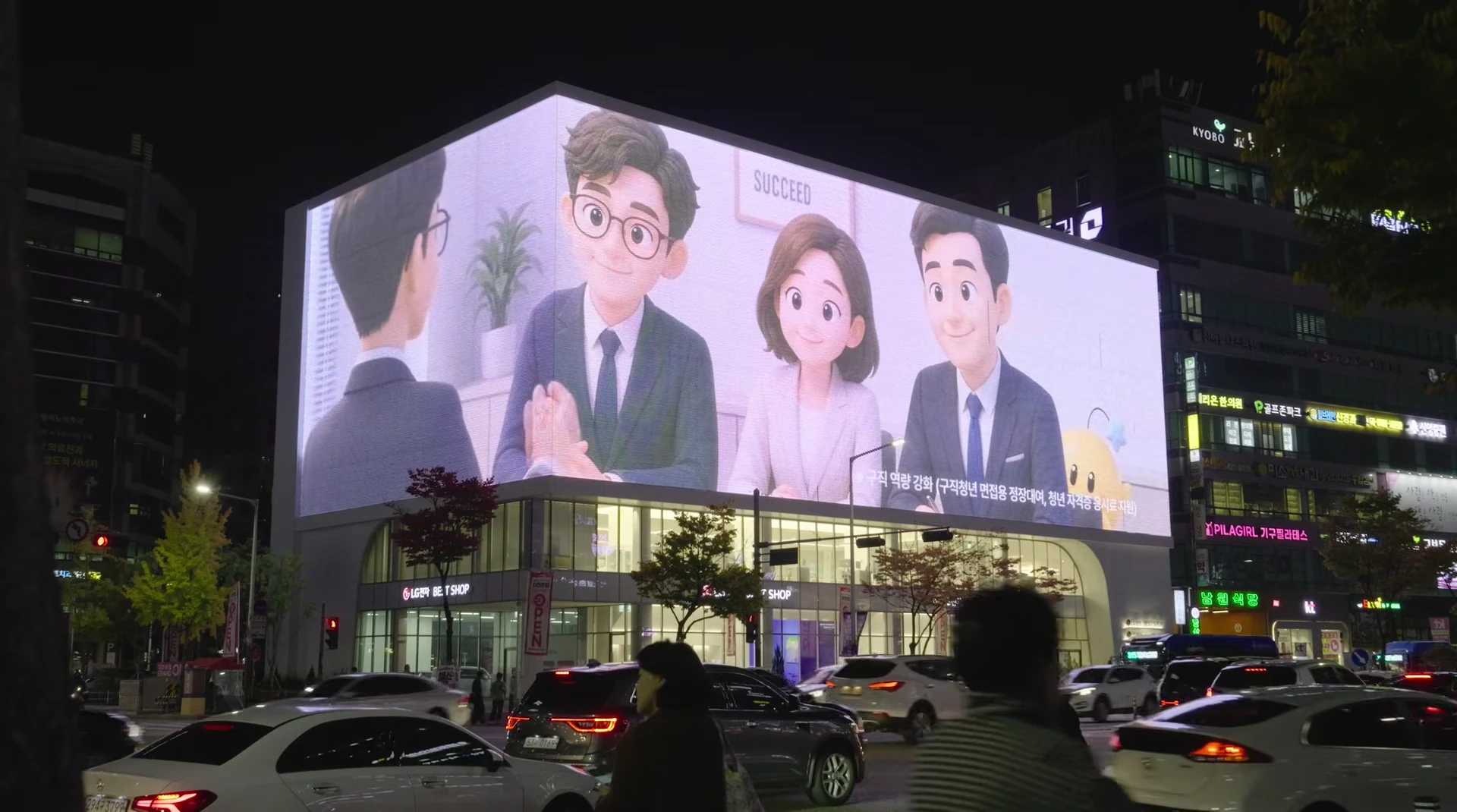
The series is divided into four themes: A Carbon-Neutral City We Build Together, A City Free of Exhaust Fumes, A City Where Young People Dream, and A City Where Imagination Became Industry.
Each chapter turns a public-policy topic into a future-life scenario, making carbon neutrality, smart mobility, youth opportunity and science-led industry easier to picture.
This demonstrates how DOOH Media can simplify complex ideas without reducing them to generic slogans.
Location-Based Advertising Connects the Future Message With Daejeon Itself
Showing the campaign in Dunsan-dong matters because the city is not simply the subject of the message—it is also the place where audiences experience it.
This makes the project a strong example of Location-Based Advertising.
The imagined future is displayed inside the present-day city, creating a direct relationship between what people see on the screen and the urban environment around them.
Digital Signage Helps Public Policy Feel Less Administrative
Large-format Digital Signage gives city communication a different tone from brochures, policy documents or standard government messaging.
Animation, characters and visual storytelling can make civic topics more accessible without requiring audiences to understand technical language first.
The campaign therefore shows how DOOH Marketing principles can also be useful in public-service communication.
AI DOOH Turns a Policy Campaign Into an Invitation to Participate
The core question behind the project is simple: What if the future could write back to us?
That framing gives people a role in the story.
The future city is presented as something built through everyday decisions made today.
This turns the campaign from a top-down policy message into an invitation to participate, which is one of the strongest qualities of the OOH Campaign.
Atlas OOH Perspective: Public-Service Messages Can Benefit From Creative DOOH
For Atlas OOH, “Letters from 2050” is a strong example of how public institutions can use Creative DOOH to communicate ideas that would otherwise feel abstract.
Large-format screens, AI-generated storytelling and location-specific media can help transform civic communication into something people are more likely to notice, understand and remember.
DOOH Case Study Takeaway: Daejeon Makes the Future Feel Present
As a DOOH Case Study, “Letters from 2050” demonstrates how AI and Digital Out-of-Home can work together to translate public policy into emotional storytelling.
Kkumdori gives the campaign familiarity.
The four episodes give the city’s priorities structure.
The 36:9 media wall gives the stories scale.
And the 90-degree corner turns the screen architecture into part of the creative.
The result is a public-service OOH campaign that makes Daejeon’s imagined future visible in the streets of Daejeon today.
If your organization wants to turn a complex civic, technology or public-service message into a large-scale DOOH Advertising experience, Atlas OOH can help build a strategy around Creative DOOH, Digital Signage and high-impact urban media.
Frequently Asked Questions About the “Letters from 2050” Daejeon DOOH Campaign
What is “Letters from 2050”?
It is a four-part AI-generated public-service campaign for Daejeon Metropolitan City that imagines thank-you letters sent from the city in 2050 to the citizens of today.
What topics does the campaign cover?
The supplied campaign information identifies four themes: carbon neutrality, a city free of exhaust fumes, a city where young people can dream, and a city where imagination became industry.
Where was the campaign shown?
The campaign was screened on the LG Electronics media wall in Dunsan-dong, Daejeon, described as a 36:9 ultra-wide display wrapping around a 90-degree corner.
How does the campaign use AI and DOOH Advertising?
AI-generated storytelling turns public-policy themes into future-life scenes, while the large corner Digital Out-of-Home screen stages those scenes across multiple faces so viewers can experience the imagined city at urban scale.
Plan your OOH campaign
Get recommendations for markets, formats and availability based on your campaign goals.
Request a media plan
Comments
Share your take. Keep it constructive and specific.