
Blue Planet III Turns Piccadilly Lights Into an Immersive DOOH Ocean Window
Immersive DOOH Advertising Brings Blue Planet III Into Central London
Blue Planet III arrived in London with a launch designed to feel bigger than a conventional television premiere.
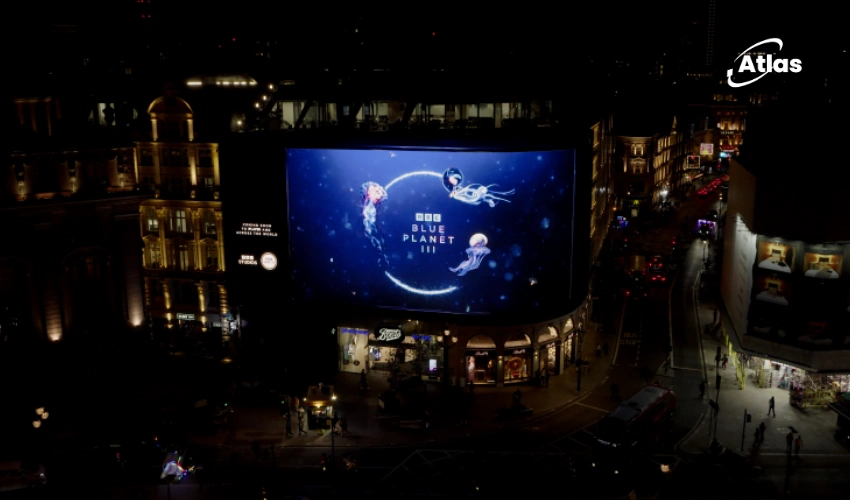
BBC Studios and Ocean Outdoor used Piccadilly Lights as a giant public canvas, turning one of London’s most recognisable Digital Billboards into an immersive extension of the series.
The result is a strong example of DOOH Advertising being used for entertainment storytelling rather than simple title promotion.
Instead of only telling audiences that Blue Planet III was coming, the Outdoor Media gave them a glimpse of its world.
Piccadilly Lights Becomes a Digital Out-of-Home Window Into the Ocean
The supplied campaign information describes the screen as a window into the ocean, filled with extraordinary marine life and dramatic underwater imagery.
That idea is particularly well suited to Digital Out-of-Home.
The scale of Piccadilly Lights allows the natural-history visuals to feel cinematic, while the curved screen creates a more enveloping viewing experience than a standard flat billboard.
Creative DOOH Turns Natural-History Footage Into Public Spectacle
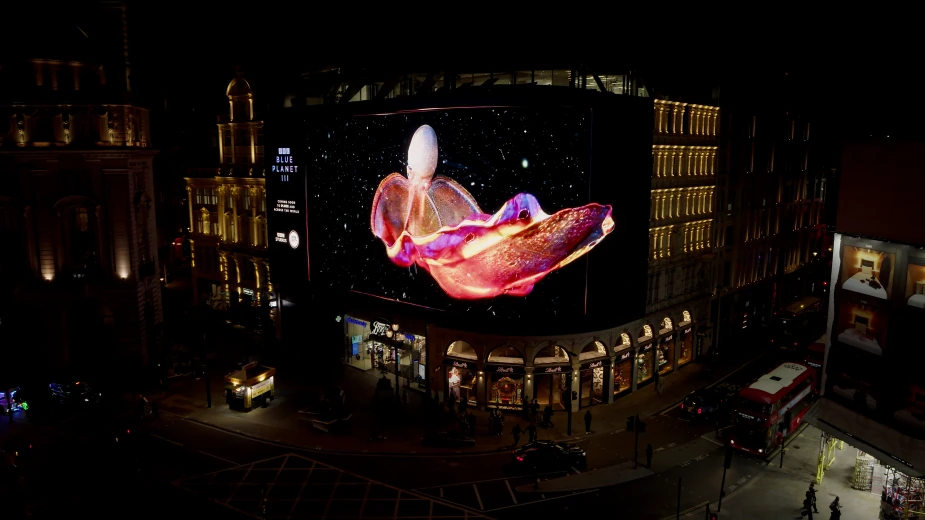
Blue Planet III depends on images that feel rare, surprising and larger than life.
That gives the campaign a natural advantage in Creative DOOH.
Marine creatures, underwater movement and extreme scale translate well to LED Billboards because the content itself already carries a sense of discovery.
The Outdoor Advertising therefore becomes part of the spectacle rather than a separate layer of promotion.
“Dive Back In” Gives the DOOH Campaign a Simple Launch Message
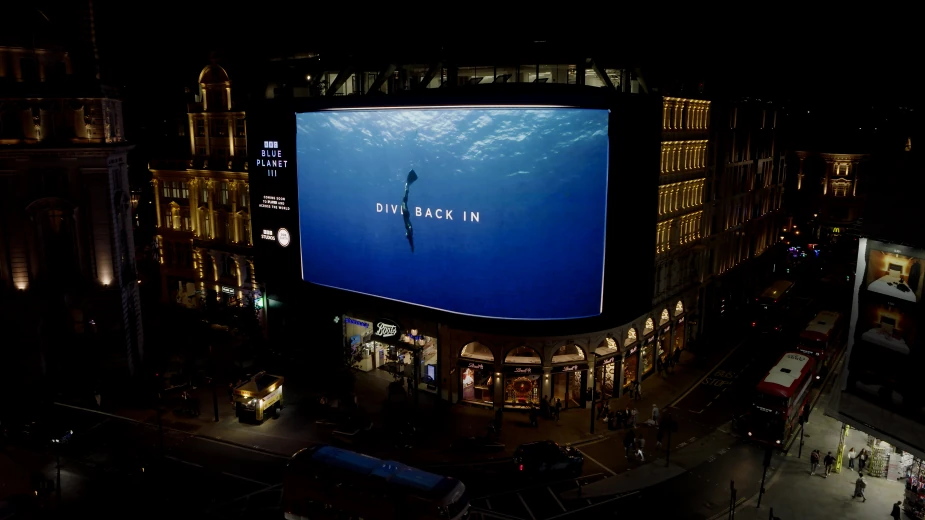
Alongside the marine visuals, the campaign uses the phrase “Dive Back In” as a direct invitation to return to the Blue Planet world.
The message is short enough to work in a busy urban environment while carrying a clear connection to the subject of the series.
This is exactly the kind of copy that works in OOH Advertising: concise, contextual and easy to understand at a glance.
Location-Based Advertising Gives the Global Premiere More Cultural Weight
Piccadilly Circus is not just another media location.
It is one of London’s most recognisable public spaces and a long-established destination for premium Outdoor Advertising.
That makes the takeover a strong example of Location-Based Advertising, where the prestige and visibility of the site become part of the campaign’s meaning.
Experiential OOH Makes the Premiere Feel Shared
The global premiere was designed as more than a private industry event.
By taking the visual world of Blue Planet III into Piccadilly Circus, the campaign created a public-facing layer around the launch.
This is where Experiential OOH becomes valuable.
People do not need a ticket to encounter the imagery. The city itself becomes part of the premiere experience.
Sir David Attenborough Gives the Launch Intergenerational Meaning
The supplied campaign information notes that Sir David Attenborough returned as narrator for Blue Planet III and shared a specially recorded message during the premiere.
His association with the franchise gives the launch a strong sense of continuity.
The first Blue Planet changed the way many audiences viewed the ocean, and the third series arrives 25 years later with that legacy already built into the brand.
Music Adds Another Layer to the Blue Planet III Brand Experience
The series also features an original score from Hans Zimmer and Bleeding Fingers Music.
The extended trailer is accompanied by “Into The Deep (Seas Cry)”, an original track created by JADE, Hans Zimmer and Thom Lukas.
This combination of sound, cinematic imagery and natural-history storytelling gives the campaign a broader entertainment identity that can extend well beyond television.
Digital Billboards Help Entertainment Campaigns Feel Like Events
One of the strengths of Digital Billboards is their ability to make a launch feel immediate and public.
For entertainment brands, the screen can become part of the event itself rather than a promotional surface outside it.
Blue Planet III uses that advantage well.
OOH Marketing Extends Blue Planet III Beyond Television
The Piccadilly Lights takeover helps Blue Planet III exist in another medium before audiences even watch the series.
That is what makes the campaign a useful OOH Marketing example.
The public experiences the visual language of the series in the city, creating recognition and anticipation before the programme returns to screens.
Atlas OOH Can Build High-Impact DOOH Advertising for Entertainment Launches
Blue Planet III shows how the right screen can transform a premiere into a city-scale public moment.
Atlas OOH can help entertainment, streaming and cultural brands plan DOOH Advertising, Digital Billboards, LED Billboards and premium Outdoor Media around launches, premieres and major cultural events.
DOOH Case Study Takeaway: Blue Planet III Turns Piccadilly Lights Into the Ocean
As a DOOH Case Study, the Blue Planet III takeover shows how entertainment brands can use Digital Out-of-Home to extend the world of a programme into public space.
The curved screen gives the imagery scale.
The marine footage creates visual spectacle.
“Dive Back In” gives the launch a simple invitation.
And Piccadilly Circus provides global cultural visibility.
The result is a DOOH Campaign that does not simply advertise Blue Planet III—it makes central London feel temporarily connected to the ocean.
If your brand wants to turn a launch into a high-impact public experience, Atlas OOH can help build an Outdoor Advertising strategy around iconic screens, immersive content and premium city locations.
Frequently Asked Questions About Blue Planet III’s Piccadilly Lights DOOH Campaign
What was the Blue Planet III Piccadilly Lights takeover?
BBC Studios and Ocean Outdoor used Piccadilly Lights in central London as part of the Blue Planet III global premiere, turning the large digital screen into an immersive showcase for marine imagery from the new series.
Why is this a strong example of DOOH Advertising?
The campaign used one of London’s most recognisable Digital Out-of-Home screens to create a large-scale public viewing moment, extending the visual world of the series into the city.
Who narrated Blue Planet III?
According to the supplied campaign information, Sir David Attenborough returned as narrator for Blue Planet III.
Who created the music for the series and trailer?
The supplied campaign information states that the series features an original score from Hans Zimmer and Bleeding Fingers Music, while the extended trailer features the original song “Into The Deep (Seas Cry)” by JADE, Hans Zimmer and Thom Lukas.
Plan your OOH campaign
Get recommendations for markets, formats and availability based on your campaign goals.
Request a media plan

Comments
Share your take. Keep it constructive and specific.