
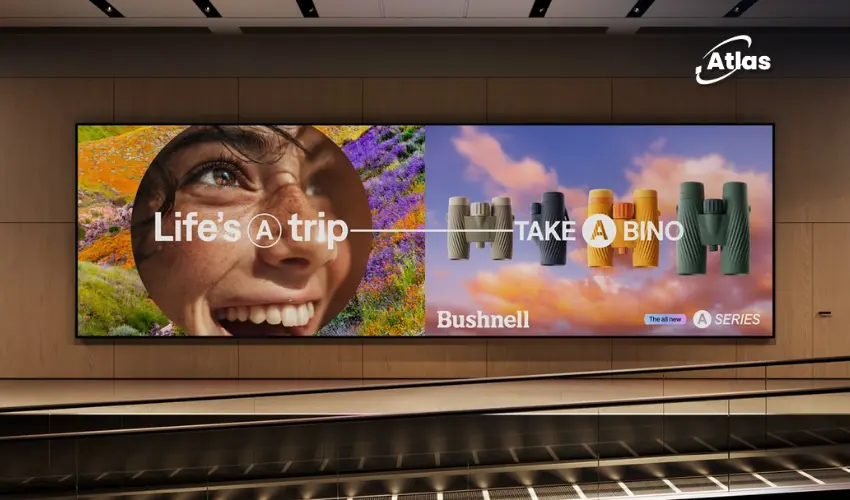
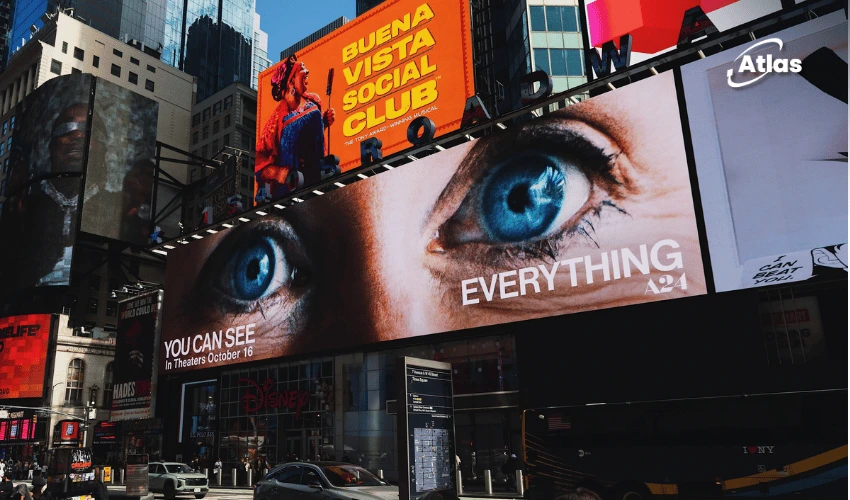
Digital billboards give advertisers the public visibility of outdoor media with more flexibility than a traditional static board. Creative can rotate, campaigns can launch faster, and some inventory can be bought with programmatic rules.
That flexibility is valuable, but it also creates choices. Buyers need to understand share of voice, loop structure, timing, creative rules, proof of play, and whether a guaranteed or programmatic buy fits the objective.
This guide explains how to plan digital billboard advertising without treating it like either a static billboard or an online banner. It has its own strengths, tradeoffs, and measurement logic.
When Digital Billboards Make Sense
Digital billboards are useful when the message may change, the campaign has a short window, or the advertiser wants to test markets before committing to a longer static plan. They also work well for weather-triggered messaging, event countdowns, retail promotions, product launches, and multi-creative campaigns.
They are not always the best choice for every objective. If a brand wants to own one exact location continuously for weeks, static may be stronger. If the brand wants flexibility, speed, and rotation, digital becomes more attractive.
Planning Table
| Use case | Digital billboard strategy | Why it works | Primary KPI |
|---|---|---|---|
| Product launch | Rotate awareness, benefit, and CTA creative | Builds recognition while testing message hierarchy | Search lift, direct traffic, landing visits |
| Retail promotion | Use daypart and location-specific offers | Matches message to shopping windows | Store visits, promo activity, sales lift |
| Event campaign | Run countdown and directional creative | Supports urgency and local movement | Ticket visits, RSVPs, QR scans |
| Market test | Compare creative and geography by market | Creates learnings before scaling | Traffic, leads, branded search |
| Contextual campaign | Trigger by weather, time, or local moment | Makes OOH feel timely and relevant | Engagement, search lift, site visits |
Digital vs Static Billboard Buying
Static billboards usually give one advertiser full presence on one face for a fixed period. Digital billboards typically rotate multiple advertisers in a loop. That means the buyer is often purchasing a share of voice rather than uninterrupted ownership.
Neither is universally better. Static can create long-term memory and location ownership. Digital can create flexibility, speed, and message variation. Many strong OOH plans combine both: static for a durable backbone and digital for bursts, updates, and testing.
Creative Rules for Digital Billboards
- Write for seconds, not minutes. Use one headline, one image, and one action.
- Design for rotation. The viewer may only catch one execution, so each creative must stand alone.
- Use contrast aggressively. Digital screens can be bright, but clutter still kills readability.
- Make motion unnecessary. If animation is allowed, it should support the idea, not carry the message.
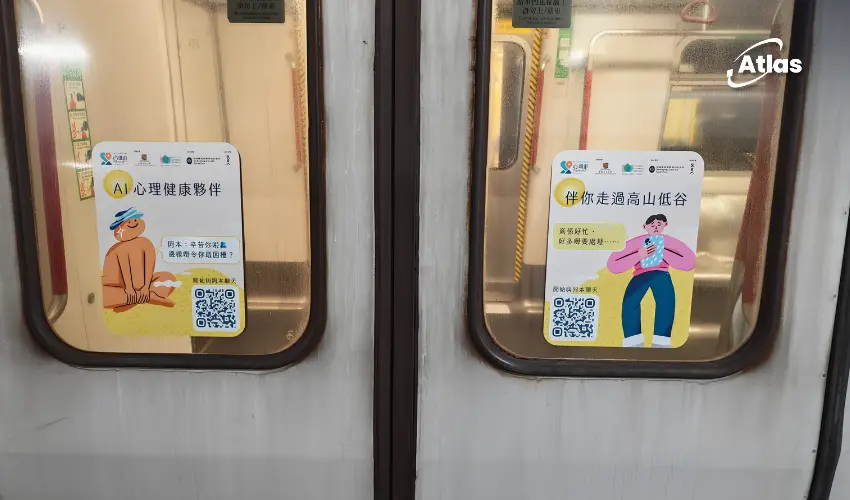
- Match CTA to speed. Use short URLs or memorable search phrases on roads; save QR codes for dwell-time environments.
Guaranteed vs Programmatic Digital Billboards
A guaranteed digital billboard buy is useful when the advertiser wants specific screens, predictable timing, or premium locations. A programmatic DOOH buy is useful when the advertiser wants rules, pacing, flexibility, or context-based activation.
For a deeper explanation of automated buying, see how programmatic DOOH works. For measurement sequencing, start with privacy-first DOOH measurement.
Market Selection
Digital billboard value depends heavily on market, corridor, visibility, traffic pattern, and availability. A premium screen in one city may be more useful than many low-relevance screens in another.
Atlas market pages can help buyers compare options in places such as Los Angeles billboards, New York billboards, Austin billboards, and Seattle billboards.
Budget and Measurement
Digital billboard pricing depends on market, location, loop structure, share of voice, campaign length, timing, demand, and whether the buy is guaranteed or programmatic. For broader pricing logic, read billboard costs in 2026.
Measurement should start with proof of play or proof of posting. Then layer in search lift, direct traffic, landing page sessions, store visits, QR or short URL activity, lead volume, and exposed-market comparison. If the campaign has several creative versions, compare outcomes by message and market.
Plan your OOH campaign
Get recommendations for markets, formats and availability based on your campaign goals.
Request a media plan
Comments
Share your take. Keep it constructive and specific.