
How Uber Won World Cup Attention Without Being an Official Sponsor
When global sporting events like the FIFA World Cup arrive, attention naturally shifts toward official sponsors. Their logos appear inside stadiums, on broadcasts, and across tournament communications.
But some of the smartest marketing doesn't happen inside the venue.
It happens everywhere else.
During the World Cup activity in Miami, Uber became one of the city's most visible brands—not because it held official sponsorship rights, but because it understood something more valuable: where fans actually spend their time.
Owning the Journey Instead of the Stadium
Rather than competing for official branding opportunities, Uber focused on becoming part of the fan experience.
Throughout Miami, the campaign appeared across multiple touchpoints:
- Aircraft banners flying above busy beaches.
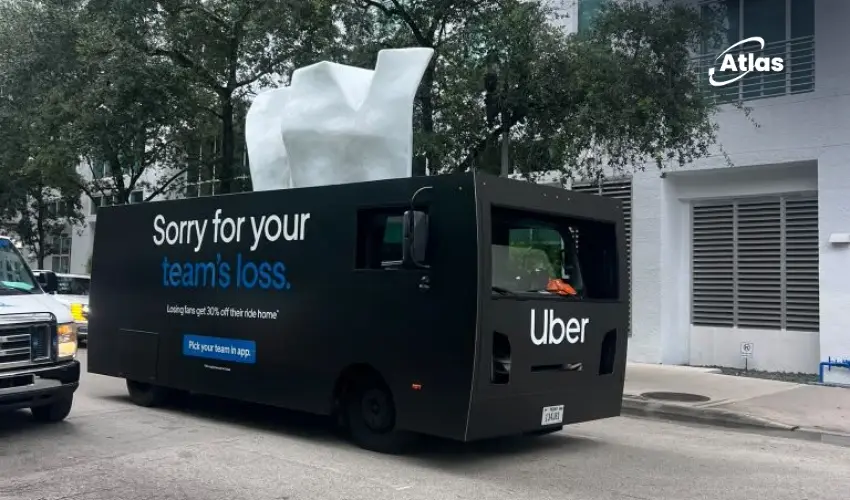
- Fully wrapped Uber vehicles promoting transportation during the tournament.
- A World Cup-themed experience inside the Uber app.
- Creative activations throughout the city.
Together, these executions positioned Uber as the brand that helped people experience the event, even without appearing inside the stadium.

Experience Beats Sponsorship
Official sponsorship provides visibility.
Experience creates participation.
Uber's campaign focused on solving a real customer need: helping thousands of visitors move around an unfamiliar city during one of the world's largest sporting events.
Instead of asking for attention, the brand became genuinely useful.
That utility transformed advertising into part of the event experience itself.
Outdoor Media Extended the Strategy
OOH played a central role in making the campaign feel unavoidable.
From airport arrivals to beaches and city streets, Uber's presence followed visitors throughout their stay.
Each placement reinforced the same message: wherever fans were heading next, Uber was already part of the journey.
The campaign illustrates how outdoor advertising becomes even more powerful when integrated with digital products and real-world services.
Thinking Beyond Official Rights
Many marketers assume the biggest events belong exclusively to official sponsors.
In reality, countless opportunities exist around the event ecosystem.
Hotels, restaurants, transportation providers, retailers, entertainment venues, and mobility platforms all interact with visitors before and after the main attraction.
Brands that understand these moments often create stronger customer relationships than those relying solely on logo visibility.
Lessons for Marketers
- Own the customer journey, not just the event.
- Use OOH to reach audiences where experiences actually happen.
- Combine physical media with digital experiences.
- Create utility instead of interruption.
- Great marketing solves real problems before promoting products.
Bottom Line
Uber's World Cup activation demonstrates that successful event marketing isn't always about official sponsorship rights. It's about understanding how people experience an event from beginning to end.
By combining outdoor advertising, mobility, and digital engagement, Uber positioned itself as an essential part of every fan's journey. The campaign is a reminder that the most effective strategies don't simply chase visibility—they create value where customers need it most.
Comments
Share your take. Keep it constructive and specific.