
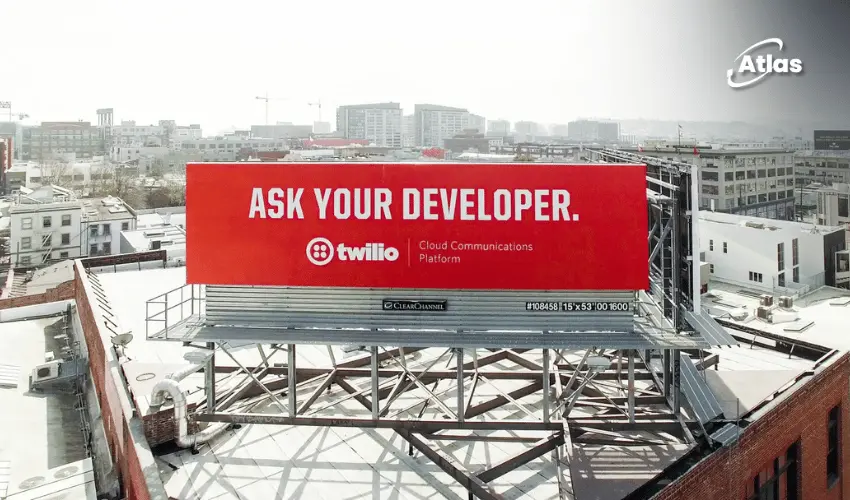
Twilio San Francisco Billboard: Turning a 65% Acquisition Cost Result Into a B2B Campaign
Atlas OOH Can Turn a Customer Success Metric Into a Powerful B2B Billboard
Twilio’s billboard off the US 101 freeway heading north toward San Francisco has been part of the company’s physical brand presence for years. After roughly seven years, Twilio replaced the previous message with something more directly tied to measurable business performance.
The refreshed creative asks a very specific question: “How can I reduce acquisition costs by 65%?”
That precision is what gives the billboard its stopping power. Instead of leading with a broad statement about communications technology or customer engagement, Twilio puts a concrete business outcome front and center.
For technology brands with complex products, Atlas OOH can help simplify technical benefits, customer results and product value into outdoor messages that remain clear at a glance.
If your next campaign has a strong customer proof point buried inside a long case study, start planning an OOH strategy that turns the strongest number into the creative idea.
Why the Twilio billboard's 65% acquisition cost figure drives B2B results
As companies place more pressure on marketing efficiency, customer acquisition costs and lifetime value have become increasingly important measures.
That makes a quantified result more compelling than a vague statement about “better customer engagement.”
The billboard does not attempt to explain every API, data workflow or targeting capability behind Twilio. It starts with the business result that a decision-maker can understand immediately.
The Twilio Segment billboard 65% result comes from a Domino’s Mexico customer story
According to the supplied Twilio material, Domino’s Mexico was managing customer interactions across many digital touchpoints as its online footprint continued to grow.
Customer information became fragmented across teams, which made it difficult for marketers to personalize campaigns around behavior and understand performance with one consistent customer view.
With Twilio Segment, Domino’s created a more unified customer profile and improved visibility into advertising effectiveness.
Twilio reports that the resulting marketing setup helped Domino’s reduce customer acquisition costs by up to 65% while also supporting stronger customer loyalty.
Atlas OOH Shows Why One Number Can Carry an Entire Technology Story
The most interesting part of the campaign is how aggressively Twilio simplifies the underlying customer story.
The full case involves data integration, audience development, campaign measurement, personalization and revenue performance. None of that complexity appears on the billboard.
Instead, the outdoor message reduces everything to one outcome that invites a second question: how?
That is particularly useful in a freeway environment, where the audience only has a few seconds to understand the creative.
For Atlas OOH, the lesson is straightforward: complex technology does not automatically require complex OOH. The billboard can create curiosity while the website, sales team or case study delivers the detail.
Domino’s also reported stronger acquisition and retention conversions
The customer story includes additional results beyond the 65% acquisition-cost reduction.
The supplied Twilio source says that using Segment data to inform Facebook campaigns produced a 23% incremental increase in conversions for customer acquisition and a 16% incremental increase in conversions for customer retention.
Those results give additional context to the billboard. Twilio is positioning customer data and engagement infrastructure as a way to improve the efficiency of marketing decisions, rather than only as a communications utility.
A 700% ROAS result strengthens the performance story
The source also states that Domino’s used Twilio Engage to create more personalized audience groups.
According to Twilio, that work increased return on ad spend by 700% while also contributing to higher revenue and incremental orders across paid and owned e-commerce channels.
This broader performance context helps explain why the new billboard focuses on a result rather than on product features. The campaign is effectively using customer evidence as the brand message.
Twilio has a history of simplifying technical ideas in public media
The current US 101 execution also fits Twilio’s broader approach to large-format advertising.
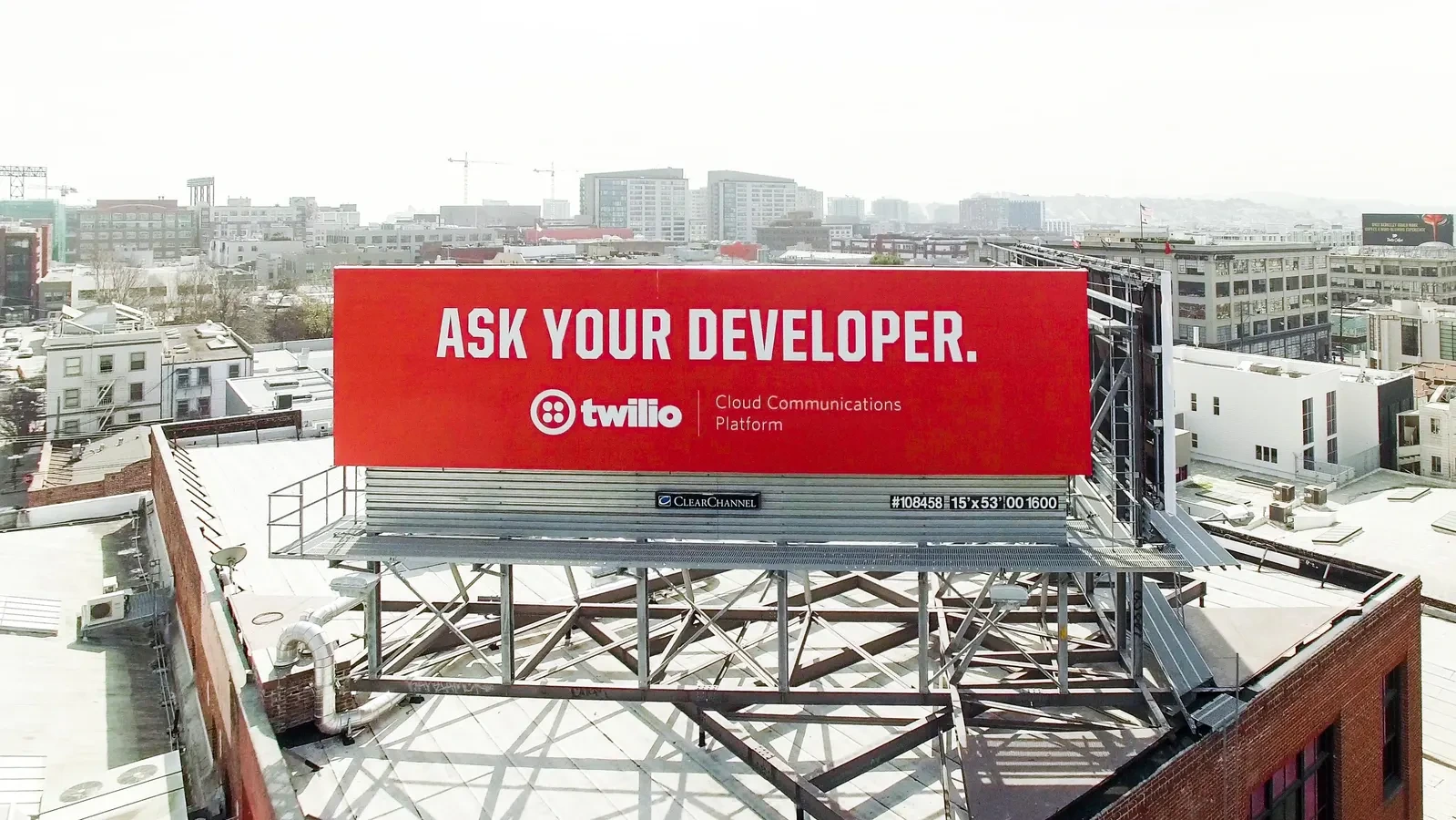
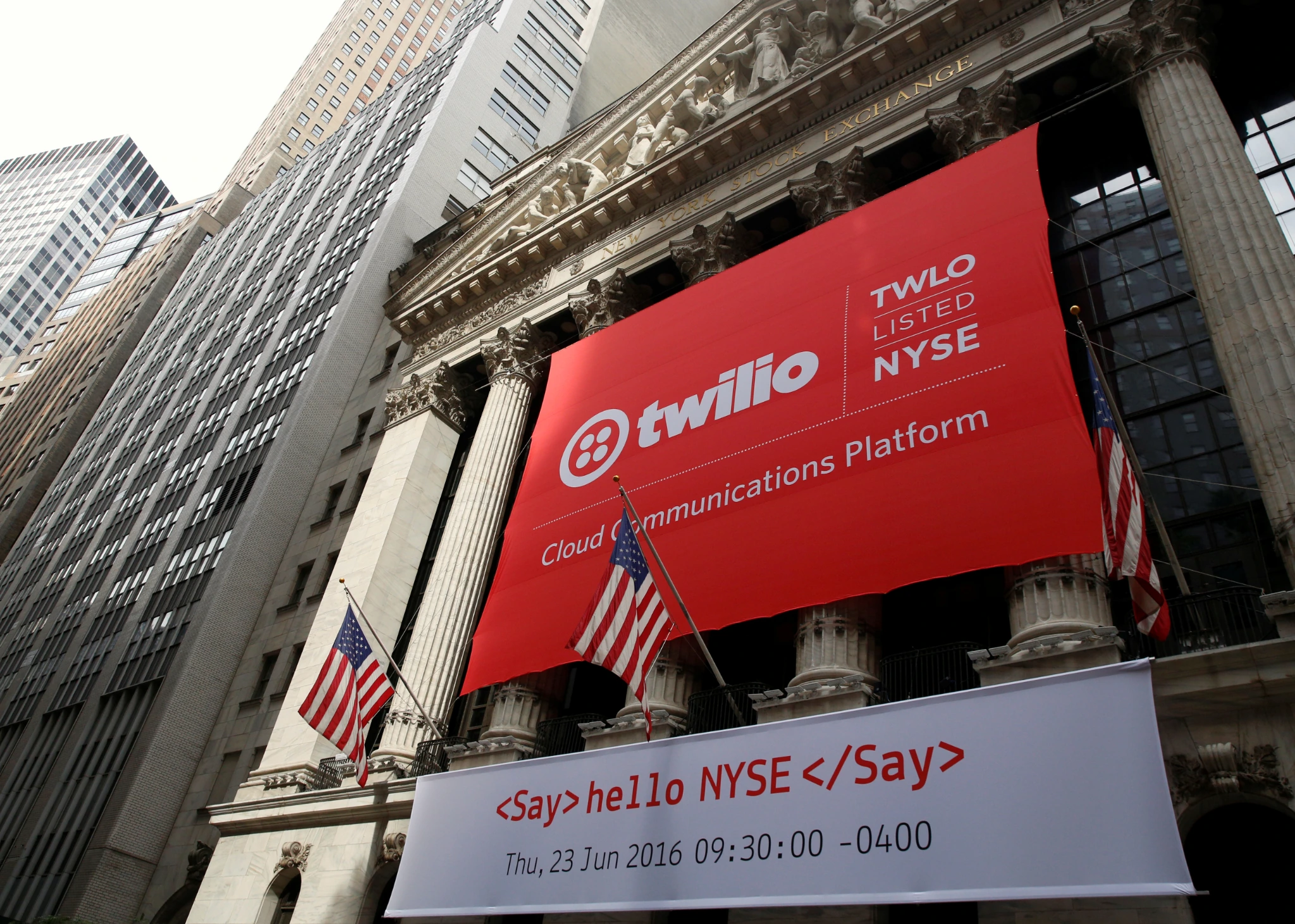
Previous work such as “Ask Your Developer” transformed a technical proposition into a short cultural phrase. Other brand moments have used large physical media to make cloud communications feel more tangible and visible.
The new billboard keeps the simplicity but changes the focus from developer identity to measurable marketing performance.
Why this Twilio OOH campaign works so well for B2B advertising
The execution is effective because several elements are aligned:
- a specific business problem rather than a generic technology promise,
- a measurable customer result that creates curiosity,
- minimal copy that works in a high-speed roadside environment,
- and an established media location already associated with the brand.
For a platform as broad as Twilio, the restraint is a strategic advantage.
Atlas OOH Can Help Technology Brands Make Complex Value Simple
Twilio’s billboard demonstrates that B2B outdoor advertising does not need to explain an entire platform to be useful.
By leading with one strong customer outcome, the campaign gives decision-makers a reason to investigate while keeping the roadside message fast and memorable.
If your brand has a case study, performance figure or customer result that deserves a larger stage, Atlas OOH can help turn it into billboards, DOOH and other high-impact formats built for public visibility.
Bottom line: Twilio converts a detailed customer-engagement case into one provocative question, showing how complex B2B technology can become effective outdoor creative when the communication starts with the result.
Frequently asked questions
What does Twilio’s refreshed US 101 billboard say?
The billboard asks, 'How can I reduce acquisition costs by 65%?' and uses that result as the central creative hook.
Where did the 65% figure come from?
According to the supplied Twilio source, Domino’s Mexico reduced customer acquisition costs by up to 65% after using Twilio Segment to unify customer data and improve campaign effectiveness.
What other results were reported in the Domino’s case?
The source states that Domino’s saw a 23% incremental increase in conversions for customer acquisition, a 16% incremental increase for customer retention, and a 700% increase in return on ad spend using Twilio Engage.
Why does the billboard work as B2B OOH?
It compresses a detailed technology and customer-success story into one measurable business question that can be understood in seconds.
Sources
Plan your OOH campaign
Get recommendations for markets, formats and availability based on your campaign goals.
Request a media plan
Comments
Share your take. Keep it constructive and specific.