
Toy Story 5 Turns Billboards Into a Playful Battle for Attention
For nearly three decades, the Toy Story franchise has brought toys to life through imaginative storytelling and unforgettable characters. For the launch of Toy Story 5, Disney and Pixar extended that storytelling beyond the screen and into the streets.
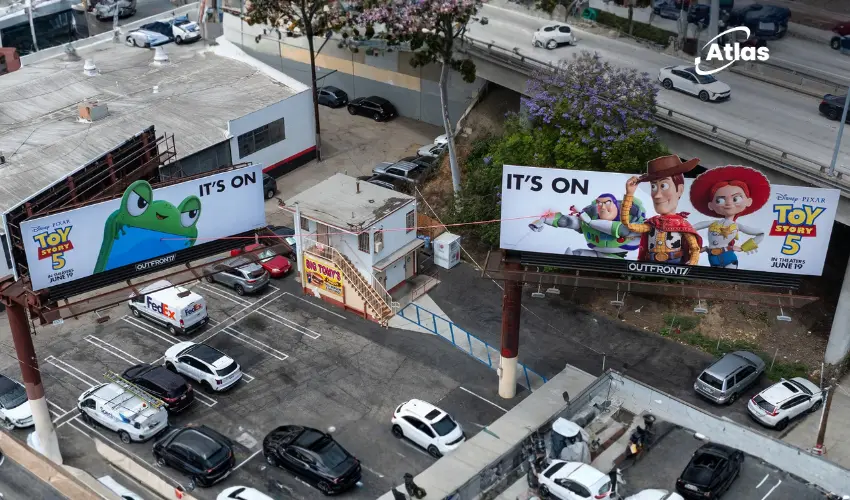
Rather than relying on a single promotional image, the campaign transformed outdoor media into an interactive narrative experience. Dubbed "the battle between billboards," the execution introduced audiences to a new threat facing the beloved characters: the lilypad.
The result was a campaign that felt less like advertising and more like a scene pulled directly from the Toy Story universe.

Turning Multiple Billboards Into One Story
Most outdoor campaigns treat each billboard as an independent message. Disney and Pixar took a different approach by allowing multiple placements to interact with one another.
The campaign created the illusion of a conflict unfolding across separate billboards, with characters reacting to the arrival of the mysterious lilypad.
By connecting the placements visually and narratively, the campaign encouraged audiences to view the entire installation as a single story rather than a collection of advertisements.
Why Narrative OOH Works
Storytelling has always been one of Disney and Pixar's greatest strengths, making the outdoor execution feel like a natural extension of the brand.
Instead of simply announcing the film's release, the campaign introduced intrigue, humor, and character interaction. Viewers were invited to discover what was happening rather than simply absorb promotional information.
This approach creates a stronger emotional connection because audiences become participants in the story, even during a brief moment of exposure.
When outdoor advertising sparks curiosity, people spend more time engaging with the creative and are more likely to remember it afterward.
Using OOH as an Extension of the Film
One of the campaign's biggest strengths is that it captures the spirit of the franchise itself.
Toy Story has always centered around ordinary objects becoming larger-than-life characters and obstacles. By turning a seemingly harmless lilypad into a formidable new enemy, the campaign immediately communicates the playful imagination audiences expect from the series.
The outdoor execution doesn't simply advertise the movie—it previews the tone and creativity of the experience waiting inside the theater.
Lessons for Entertainment Marketing
The campaign demonstrates several principles that entertainment marketers can apply beyond film releases:
- Create narrative, not just awareness: Story-driven campaigns generate stronger engagement.
- Use multiple placements as one canvas: Connected billboards can create larger, more memorable experiences.
- Extend the product into the media: The campaign feels like part of the movie itself.
- Reward attention: Audiences discover more when they spend time with the creative.
As outdoor advertising becomes increasingly competitive, campaigns that offer entertainment rather than simple exposure are often the ones people remember.
The Future of Franchise OOH
Major entertainment brands have a unique advantage in outdoor advertising: they already possess worlds, characters, and stories that audiences care about.
Campaigns like this show how those assets can be used to transform media placements into immersive experiences. Rather than treating OOH as a final promotional channel, brands can use it as another chapter in the story.
When executed well, outdoor advertising becomes more than media—it becomes part of the entertainment.
Bottom Line
Disney and Pixar's Toy Story 5 billboard battle demonstrates how outdoor advertising can become an extension of storytelling rather than simply a promotional vehicle. By turning billboards into active participants in the narrative and introducing audiences to the film's newest enemy, the campaign delivers a playful experience that captures the imagination long before audiences enter the theater.
It's a reminder that the best OOH campaigns don't just tell people about a story—they invite them into one.
Comments
Share your take. Keep it constructive and specific.