
Times Square OOH Billboards Pause for 9/11 Moment of Silence
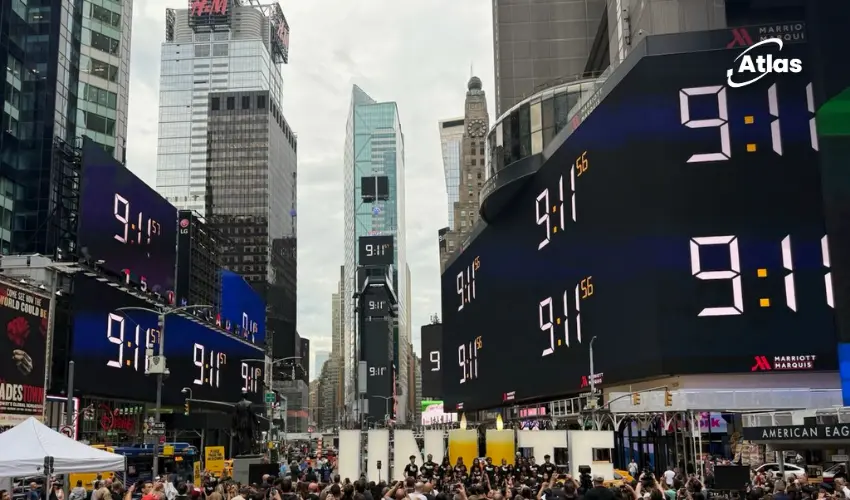
On the morning of September 11, more than 30 digital billboards across Times Square paused their usual advertising to mark the 25th anniversary of the 9/11 attacks.
At 9:11 a.m., the screens simultaneously displayed a commemorative message during a one-minute National Moment of Silence, creating a rare and powerful pause in one of the most commercially active media environments in the world.
The observance was organized by the nonprofit 9/11 Day, with support from the Times Square Alliance and The Broadway League, alongside participation from leading companies across the out-of-home industry.
It was a reminder that OOH does not only have the power to deliver campaigns. It also has the power to bring people together in shared public space.
A Pause Across Times Square Digital Billboards
Times Square is known for constant motion.
Its digital billboards usually compete through brightness, scale, movement and message frequency. Brands appear, change, animate and repeat across some of the most visible media surfaces in the world.
That is what made this moment feel so different.
The tribute was not defined by more noise. It was defined by silence. The power came from interruption, restraint and collective participation.
For one minute, the screens did not ask people to buy, watch, click, visit or remember a brand. They asked people to remember people.
OOH as a Civic Platform
Out-of-home media is unique because it lives in public.
Unlike ads that appear privately on individual devices, billboards and digital screens are shared by everyone moving through the space. They are part of the visual architecture of a city. In places like Times Square, they shape the atmosphere of the public square itself.
That gives OOH a civic role when used with care.
In this case, Times Square's digital network became a public platform for remembrance. The synchronized pause allowed people in the area to experience the same message at the same time, creating a collective moment that would have been difficult to replicate through fragmented digital channels alone.
The effect was simple but meaningful: the screens became part of the act of tribute.
Why the 9/11 Tribute Matters for the OOH Industry
The OOH industry often measures success through reach, impressions, location quality and creative visibility.
Those metrics still matter. But this observance highlights another form of value: the ability to convene public attention.
When more than 30 screens pause together, the medium itself becomes the message. The industry demonstrates that its infrastructure can be used not only for commercial communication, but also for shared reflection and community recognition.
This is especially important in a place like Times Square, where the scale of the media landscape carries symbolic weight. A pause there feels bigger because the location is globally recognized as a center of energy, advertising and public spectacle.
A Collective Industry Effort
The observance was supported by a broad group of organizations, agencies and media partners.
9/11 Day organized the moment as part of its wider mission to encourage remembrance through service and unity. Times Square Alliance and The Broadway League helped support the public setting, while INNOCEAN USA and David&Goliath helped coordinate the creative and media effort.
Participation from OOH companies across the Square made the tribute possible at scale.
That matters because the idea depended on synchronization. A single billboard could have shown a respectful message, but dozens of screens pausing together created a collective statement.
The coordination is part of what made the gesture feel significant. It showed the industry acting as one system for a moment that was bigger than any individual media owner, brand or placement.
Remembering Through Public Space
Public remembrance often depends on shared places.
Memorials, ceremonies, plazas, museums and city streets help communities make meaning together. OOH can support that process because it exists where people gather, pass through and experience the city collectively.
For the 25th anniversary of 9/11, the Times Square pause created a moment of reflection within the daily flow of New York.
People did not need to be inside a formal ceremony to encounter the tribute. The message met them in the middle of the city, during movement, work, travel and routine.
That public accessibility is one of OOH's most important strengths in civic communication.
From Advertising Space to Shared Attention
The most notable part of the observance is that it used advertising space by temporarily not advertising.
In a media environment built around attention, the decision to pause becomes meaningful. It signals that some moments require a different kind of communication.
The screens still communicated, but they did so with simplicity and restraint. The message did not need elaborate motion or complex storytelling. The synchronized silence provided the emotional structure.
That is an important lesson for purpose-led campaigns. Not every meaningful use of media requires more words, more imagery or more spectacle. Sometimes the most powerful creative decision is knowing when to hold back.
Why the Observance Works
- It uses the symbolism of Times Square: Pausing advertising in one of the world's most visible media environments gives the tribute added weight.
- It creates collective attention: More than 30 digital billboards showing the message at the same time turned individual screens into one shared public platform.
- It respects the moment: The creative power came from silence, restraint and remembrance rather than spectacle.
- It shows the civic role of OOH: Public screens can support communities during moments of reflection, unity and service.
- It required industry coordination: Media owners, agencies, nonprofits and civic partners worked together to make the synchronized tribute possible.
- It connects remembrance with service: The observance aligned with 9/11 Day's broader mission to honor lives lost and those who responded through acts of unity and good deeds.
- It proves that silence can be a message: In a high-noise media environment, pausing can create more impact than adding another ad.
What Marketers Can Learn From Purpose-Driven OOH
The Times Square 9/11 Moment of Silence offers an important lesson for brands and media organizations: purpose-driven communication must match the emotional weight of the context.
A memorial tribute is not a normal campaign. It requires humility, clarity and care. The role of media is not to dominate the moment, but to serve it.
That is why this observance worked. It did not overcomplicate the message or turn remembrance into a branded spectacle. Instead, it used the collective visibility of Times Square to make space for reflection.
For marketers, the lesson is that restraint can be strategic. When the subject is serious, the strongest creative choice may be the simplest one.
The campaign also shows that industry infrastructure has community value. Media networks, when coordinated, can create public rituals that reach people outside traditional ceremony spaces.
The OOH Lesson
OOH is powerful because it is shared.
A billboard can be seen by thousands of people at once. A digital network can synchronize messages across a public environment. A famous media district can turn a local moment into something nationally and globally visible.
That shared quality gives OOH a role that private media cannot always play.
On September 11, the Times Square digital billboards did not compete for attention. They aligned attention. That alignment turned the screens into a collective act of remembrance.
For the OOH industry, this is a meaningful example of how media assets can serve the public good. The same platforms used every day for entertainment, commerce and cultural launches can also support reflection, unity and civic memory.
Why It Matters for Public Service Campaigns
Public service campaigns often need both visibility and trust.
They need to reach people at scale, but they also need to feel sincere. OOH can help when the placement, timing and creative behavior are aligned with the message.
This tribute had all three.
The placement was Times Square, a globally recognized public media environment. The timing was 9:11 a.m. on the 25th anniversary of the attacks. The creative behavior was a pause from normal advertising.
Together, those elements created a message that was clear without needing to be loud.
That alignment is what purpose-driven OOH should aim for: not just visibility, but meaningful visibility.
Bottom Line
The Times Square 9/11 Moment of Silence shows what can happen when the OOH industry uses its reach for remembrance.
Organized by 9/11 Day with support from civic, creative and media partners, the observance transformed more than 30 digital billboards from advertising surfaces into a shared public tribute.
In a place known for constant light and motion, the most powerful act was to pause.
For one minute, Times Square became quieter, more unified and more reflective.
It was a reminder that outdoor media can do more than capture attention. Sometimes, it can help a city remember.
Frequently asked questions
What happened in Times Square for the 25th anniversary of 9/11?
More than 30 digital billboards across Times Square paused their usual advertising at 9:11 a.m. for a one-minute National Moment of Silence honoring the 25th anniversary of 9/11.
Who organized the Times Square 9/11 Moment of Silence?
The observance was organized by the nonprofit 9/11 Day, with support from the Times Square Alliance, The Broadway League, INNOCEAN USA, David&Goliath and participating OOH media partners.
Why is this important for the OOH industry?
The action showed that OOH screens can serve a civic purpose, using public visibility not to sell, but to create a shared moment of remembrance.
How many Times Square billboards participated?
More than 30 participating Times Square displays simultaneously featured a commemorative message during the Moment of Silence.
What does 9/11 Day promote?
9/11 Day promotes the September 11 National Day of Service and Remembrance, encouraging people to honor the victims and responders through unity, service and good deeds.
What can marketers learn from this observance?
The observance shows that purpose-driven OOH is most powerful when the medium respects the moment, the message is simple and the industry acts collectively.
Sources
- Talon America - Talon America (2026-09-11)
Plan your OOH campaign
Get recommendations for markets, formats and availability based on your campaign goals.
Request a media plan

Comments
Share your take. Keep it constructive and specific.