
The Warhol Lets Memory Do the Advertising
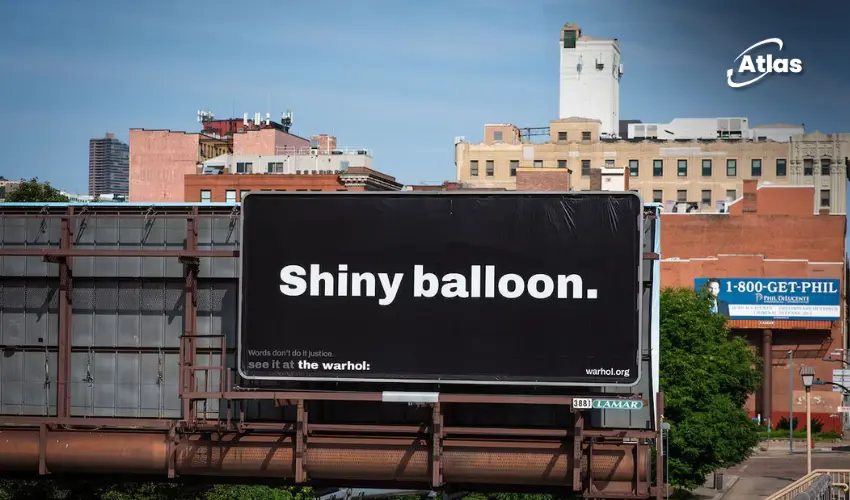
The Andy Warhol Museum has launched a minimalist out-of-home and digital campaign that does something unexpected for an art institution: it advertises famous artworks without showing the art.
Created by BarkleyOKRP, See It at The Warhol uses short, blunt clues such as “Soup can.” to reference Warhol's work through language alone.
Other executions reduce familiar images to simple references, including balloons and cows.
Recognition Becomes the Creative Mechanism
The campaign works because Warhol's imagery is already deeply embedded in popular culture.
By withholding the image, the ads ask the audience to do the final step: remember the artwork.
That makes recognition the real media device.
People who know the reference immediately picture the work. People who do not know it are given a reason to visit the museum and see it for themselves.
Words Don’t Do It Justice
Each execution closes with the line:
The line completes the logic of the campaign.
The words are intentionally incomplete. They point toward the artwork while admitting that language can only go so far.
Why the Campaign Works
- It uses subtraction: Removing the artwork makes the viewer more aware of how recognizable it is.
- It rewards memory: The campaign lets audiences feel smart when they decode the reference.
- It fits Warhol: The simplicity, repetition and cultural familiarity connect naturally with his Pop Art legacy.
- It creates curiosity: The campaign gives people a reason to see the work in person.
- It follows a broader trend: Recognition-by-reduction is becoming a powerful way for brands and institutions to activate distinctive assets.
The OOH Lesson
Outdoor advertising does not always need to show everything.
Sometimes, the strongest creative move is to remove just enough information that the audience has to participate.
The Warhol's campaign shows how a few words can trigger a complete visual memory, especially when the subject is already part of shared culture.
Bottom Line
See It at The Warhol proves that a museum campaign can create attention by showing less, not more.
By reducing Warhol's most iconic works to short textual clues, the campaign turns public memory into the billboard itself.
Words may not do the art justice, but they can make people want to see it.
Plan your OOH campaign
Get recommendations for markets, formats and availability based on your campaign goals.
Request a media plan
Comments
Share your take. Keep it constructive and specific.