
Hulu Turns a Melrose Avenue Storefront Into a Living Dollhouse for The Testaments
Some entertainment campaigns promote a series by showing audiences its characters or release information.
Others invite people to step into its world.
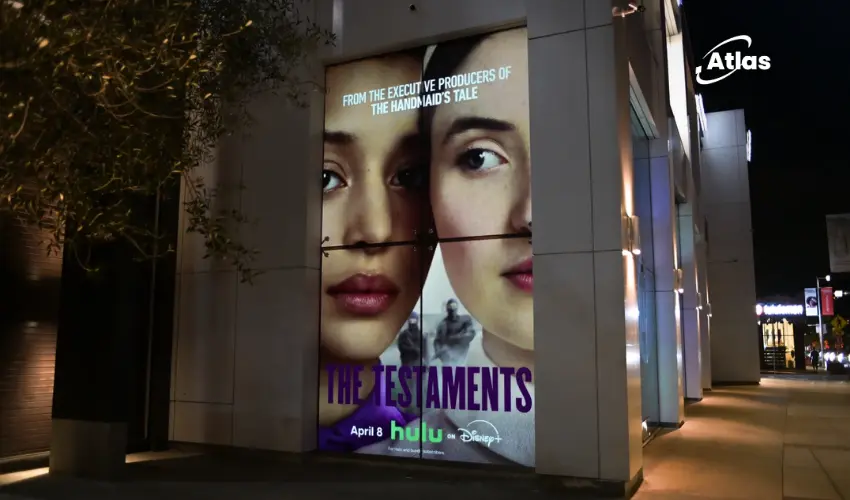
For The Testaments, Hulu partnered with Publicis and Visual Feeder to transform a prominent Melrose Avenue storefront into a cinematic, projection-based dollhouse.
The installation combined large-scale window graphics, architectural projection and animated content to create the illusion of a living environment unfolding behind the glass.

Turning a vacant storefront into media
Empty retail spaces are often treated as inactive parts of the urban landscape.
This activation reimagined the storefront as a complete entertainment medium.
Rather than placing a poster inside the window, the campaign used the full depth, architecture and transparency of the space to create a layered visual experience.
The result felt closer to a theatrical set than a conventional advertisement.
A dollhouse built room by room
The activation was designed as a series of individual rooms viewed through the storefront.
Each area appeared to contain its own movement, imagery and narrative detail, allowing audiences to observe multiple parts of the fictional world at once.
Animated visuals travelled across the installation, helping the separate rooms feel connected and alive.
This created the illusion of a dollhouse that was continuously changing behind the glass.

- Multiple rooms created depth: The audience could explore several visual layers within one storefront.
- Animation created life: Motion made the environment feel active rather than staged and static.
- The glass created distance: Passersby could observe the world without entering it.
- The architecture framed the story: Windows and structural divisions became part of the composition.
Why the dollhouse idea fits The Testaments
The dollhouse format was not only visually striking.
It reflected themes central to the series, including surveillance, control and confinement.
A dollhouse presents rooms and people as objects to be observed. The viewer can see inside, but the characters appear contained within a controlled environment.
This created a strong connection between the physical installation and the emotional tension of The Testaments.
Creating a feeling of voyeurism
The storefront encouraged audiences to look through the glass and observe the activity inside.
That viewing relationship created a deliberate sense of voyeurism.
Passersby were placed in the position of watching private spaces from the street, reinforcing the campaign’s themes of observation and restricted freedom.
The experience felt intimate because viewers were close to the rooms, but unsettling because they remained separated from them by the window.
Projection as cinematic storytelling
Projection technology allowed the campaign to introduce movement, transitions and visual tension without replacing the physical installation.
The projected content worked together with the window graphics and constructed environment, creating a hybrid between physical set design and digital animation.
This gave the storefront a cinematic quality.
Scenes could shift, figures could appear and disappear, and light could move from one room to another without changing the structure itself.
Why motion mattered at street level
Melrose Avenue is a visually active environment filled with retail, fashion, restaurants and urban advertising.
Motion helped the activation compete for attention within that busy streetscape.
Someone walking or driving past might first notice a change in light or movement before understanding the full dollhouse concept.
That initial visual disruption encouraged people to stop, look more closely and spend additional time with the installation.
- Movement attracted the first glance.
- Layered rooms rewarded closer observation.
- The story encouraged longer dwell time.
- The unusual format encouraged filming and sharing.
Extending the series beyond the screen
The Testaments is primarily experienced through television and streaming.
The Melrose Avenue installation gave the series a physical presence within Los Angeles.
Audiences did not need to open an app or watch a trailer to encounter the campaign. The fictional world appeared directly within a real urban environment.
This shift from screen to street made the launch feel more tangible and culturally visible.
An intimate experience in a public setting
The activation balanced large-scale visibility with close observation.
From a distance, the illuminated storefront functioned as a prominent advertising installation.
At street level, audiences could examine smaller details within each room and interpret the relationship between the visuals.
This allowed the campaign to operate at two scales:
- Urban scale: The glowing storefront captured attention along Melrose Avenue.
- Human scale: Detailed rooms encouraged pedestrians to approach and investigate.
The combination made the experience feel both cinematic and personal.
Architectural projection instead of a flat screen
The campaign did not treat projection as a replacement for a conventional digital display.
Instead, the content was designed around the existing architecture.
Window divisions, interior rooms and physical surfaces gave the animations structure and depth.
This helped the projected imagery feel integrated with the location rather than simply displayed inside it.

Vacant retail as immersive media architecture
One of the most important ideas behind the activation was the conversion of unused retail space into a temporary media environment.
A vacant storefront already offers several useful features:
- Large windows for public visibility.
- Interior depth for layered storytelling.
- Existing architectural divisions.
- Street-level proximity to pedestrians.
- Enough space for projection and scenic fabrication.
By activating those elements, Hulu turned a normally inactive property into immersive media architecture.
Plan your OOH campaign
Get recommendations for markets, formats and availability based on your campaign goals.
Request a media plan
Comments
Share your take. Keep it constructive and specific.