
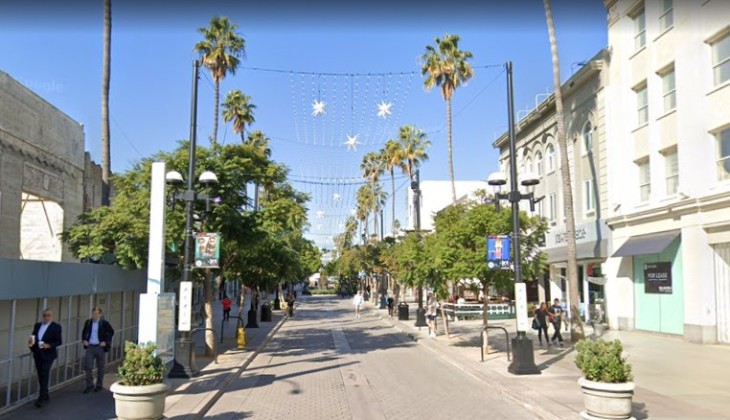
Quick answer: Santa Monica advanced a Digital Display District enabling up to 16 large-format digital displays around Third Street Promenade and Santa Monica Place—each capped at 1,000 sq ft and approved through individual development agreements. (Sources: City of Santa Monica, Santa Monica Mirror, Santa Monica Daily Press)
Why this is worth watching
Santa Monica’s decision is a clean example of how cities are rewriting the “rules of digital” when downtown recovery, public experience, and revenue strategy collide. This isn’t a free-for-all expansion of signage—it’s a structured framework for premium urban DOOH.
What was approved
The ordinance establishes a district spanning core downtown retail corridors, with a hard limit of 16 displays. Importantly, the district doesn’t automatically greenlight installations: each display must clear a separate approval track via an individual development agreement.
Why this is bigger than “adding screens”
The real story is governance. Santa Monica is effectively building a playbook for “premium digital” that’s defined by:
- Controlled geography (a defined downtown zone)
- Controlled scale (1,000 sq ft caps)
- Negotiated agreements (each display approved individually)
When digital is managed this way, it behaves less like scattered inventory and more like a curated, long-term media product—one designed to be stable enough for planners to treat as a persistent, high-visibility layer.
What it could mean for media planning
If more cities move toward district-based frameworks, planners will increasingly buy DOOH inside defined impact zones—areas where:
- inventory is scarce (limited supply)
- visibility is predictable (consistent sightlines and context)
- approvals imply longevity (more stable than short-term pop-up inventory)
Plan your OOH campaign
Get recommendations for markets, formats and availability based on your campaign goals.
Request a media plan

Comments
Share your take. Keep it constructive and specific.