
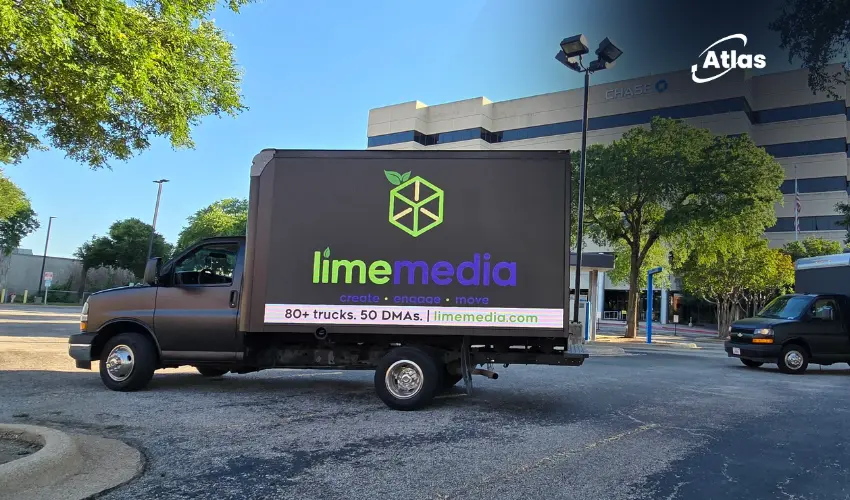
What the OOH Industry Got Right in Dallas
The conversations coming out of Dallas revealed something larger than a typical industry conference. As artificial intelligence floods digital channels with endless automated content, marketers are rediscovering the value of physical presence.
That tension between digital saturation and real-world visibility became one of the defining themes of the 2026 OAAA OOH Media Conference. Across panels, presentations, and brand discussions, one message remained consistent: people still trust and remember experiences they encounter in the physical world.
For the OOH industry, that shift creates a major opportunity. Brands are no longer treating billboards, transit media, and experiential activations as secondary awareness tools. They are becoming central parts of measurable marketing systems.
AI is making physical advertising more valuable
One of the most discussed topics in Dallas was the growing relationship between AI and out-of-home advertising. As generative content becomes easier and cheaper to produce online, physical media gains something increasingly rare: authenticity.
Unlike digital ads that can be skipped, filtered, or endlessly duplicated, OOH occupies real space and demands real attention. That visibility creates credibility in ways many digital environments no longer can.
The industry is also beginning to integrate AI into campaign planning itself — from audience analysis and route optimization to dynamic creative updates and performance forecasting. Instead of replacing OOH, AI is helping make campaigns smarter and more adaptive.
OOH is no longer just top-of-funnel media
Another major theme from Dallas was measurement. Modern OOH campaigns are increasingly tied to performance metrics traditionally associated with digital advertising.
Brands are now using tools like GPS verification, web traffic correlation, footfall studies, device ID retargeting, and search lift analysis to connect physical exposure with measurable business outcomes.
This changes how marketers evaluate OOH. Instead of viewing billboards as awareness-only channels, advertisers are treating them as performance amplifiers that strengthen the effectiveness of search, social, retail, and digital campaigns.
The idea of the “multiplier effect” appeared repeatedly throughout the conference. Strong OOH campaigns do not work in isolation — they increase the efficiency and trust of surrounding media channels.

Measurement requires a different mindset
One important takeaway from the conference was that OOH cannot always be judged using the same attribution logic as short-term digital campaigns.
Some brands shared examples where campaigns initially appeared underwhelming when measured only through direct ROI. But when marketers evaluated search behavior, store visits, branded queries, and long-term brand lift, the impact became much clearer.
This reflects a broader shift happening across the industry. OOH works through visibility, repetition, and cultural presence — effects that often influence customer behavior over time rather than through immediate clicks.
The rise of short, high-impact OOH moments
Dallas also highlighted how campaign structures are evolving. Rather than relying exclusively on long-duration billboard placements, some brands are focusing on shorter, high-impact OOH moments designed to dominate attention quickly.
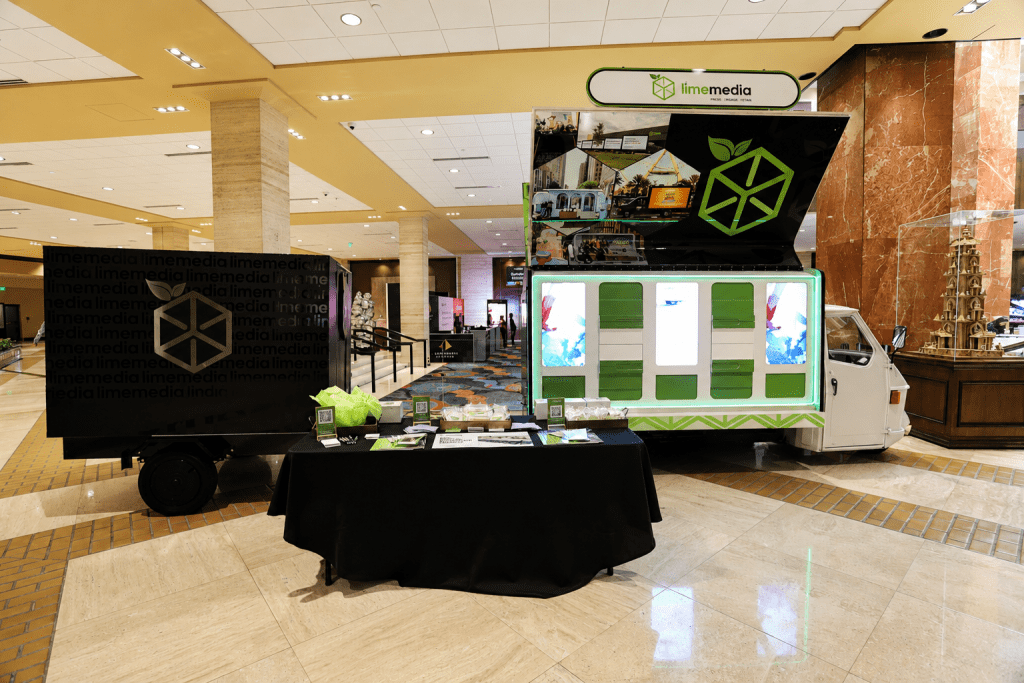
This strategy aligns particularly well with mobile LED trucks, DOOH networks, and experiential activations that can move across markets in real time.
Instead of static campaigns running for months, brands increasingly want flexibility: faster launches, contextual creative, market-specific messaging, and rapid cultural relevance.
- Shorter campaign bursts: designed to create immediate cultural attention.
- Dynamic creative systems: messaging adapts by time, location, or event.
- Integrated measurement: connecting exposure with digital behavior.
- Audience intelligence: using mobility and behavioral data to improve planning.
Why Dallas mattered for the future of OOH
The conference reinforced that OOH is evolving into a more connected, measurable, and technology-enabled medium without losing its core strength: physical presence.
That combination may be what makes the channel especially valuable today. Consumers increasingly ignore digital overload, but real-world media still creates scale, visibility, and cultural legitimacy.
For agencies and brands, the takeaway from Dallas was clear: OOH is no longer a supporting format sitting outside the media strategy. It is becoming part of the center of the marketing ecosystem.
Bottom line
The conversations in Dallas reflected an industry moving beyond traditional definitions of outdoor advertising. AI, data, and measurement are reshaping how campaigns are planned, but the real power of OOH still comes from its ability to exist in public space where audiences cannot simply scroll away.
As media environments become more fragmented and automated, the brands that invest in meaningful physical visibility may gain something increasingly difficult to buy online: attention people actually remember.
Comments
Share your take. Keep it constructive and specific.