
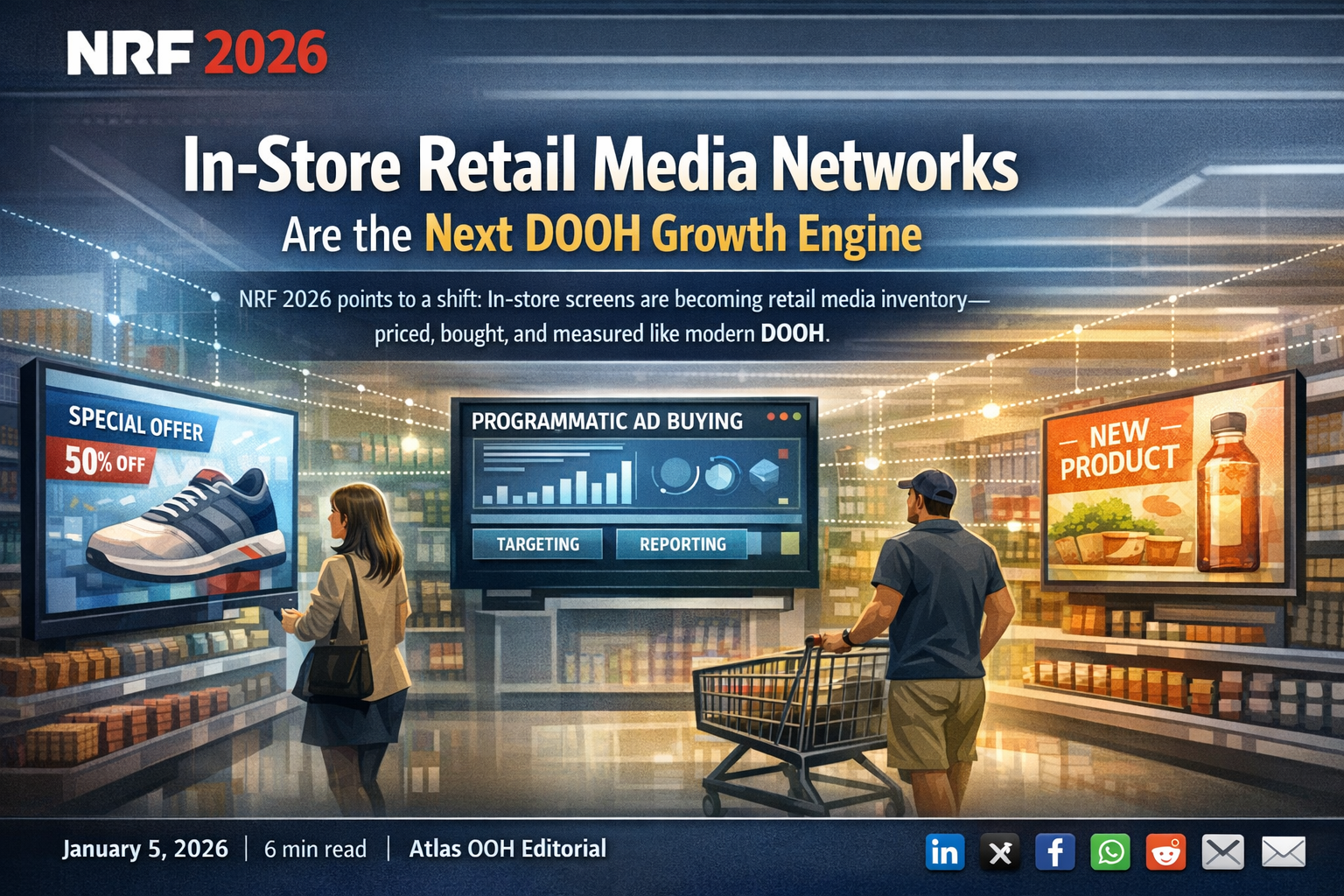
In-store screens are no longer “signage”—they’re inventory.
Retail has always had media. It just didn’t look like media. Endcaps, posters, wobblers, aisle signage—those were paid access points sold through trade budgets. Now, NRF 2026 is making one thing clear: digital screens inside stores are becoming a formal retail media network— priced, bought, and measured like advertising inventory.
Why this matters for DOOH in 2026
This isn’t “just retail.” It’s a structural shift in how brands buy the last mile of attention. In-store retail media networks create a bridge between:
- Off-site demand generation (OOH/DOOH, CTV, social)
- On-site conversion moments (in-store screens at shelf proximity)
If classic DOOH wins the street, retail DOOH wins the aisle—where intent is strongest.
The new playbook: store surfaces priced on impressions, not inches
The narrative around monetizing screens aligns with a broader shift: digital retail surfaces are increasingly treated like measurable media, not just fixtures.
- Inventory becomes audience-based
- Buyers expect reporting standards
- Networks move toward programmatic pipes
- Measurement moves closer to incrementality and sales lift
What brands should do now
1) Plan “approach → entrance → aisle” as one media journey
- City DOOH to drive awareness and search
- Near-store OOH to drive visitation and timing
- In-store DOOH to close with reminders, offers, and reinforcement
2) Align creative by funnel stage
In-store is not where you explain your brand story. It’s where you:
- Reduce choice friction
- Reinforce trust
- Trigger purchase
3) Standardize measurement expectations
As retail DOOH grows, buyers will demand consistent definitions and reporting. Shared frameworks keep the market scalable.
Plan your OOH campaign
Get recommendations for markets, formats and availability based on your campaign goals.
Request a media plan
Comments
Share your take. Keep it constructive and specific.