
Nike Turns Champs-Élysées Into a Living Icon With Giant Swoosh Installation
In Paris, the line between retail space and cultural landmark continues to blur.
Nike’s latest installation on the Champs-Élysées demonstrates just how far experiential branding has evolved.
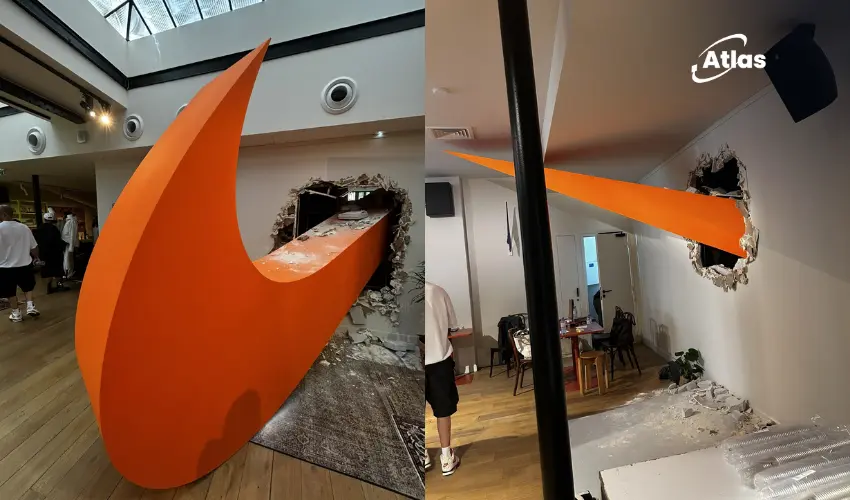
A monumental Swoosh appears to break through the showroom wall, turning the building itself into a living expression of the brand.

When a Logo Becomes Architecture
Traditionally, logos exist on surfaces.
In this case, the logo becomes the surface.
The oversized Swoosh extends beyond the constraints of the building, transforming the facade into a sculptural statement that dominates the streetscape.
More than decoration, it functions as a dynamic cultural signal.
A Living Identity That Changes With Culture
One of the most distinctive aspects of the installation is its responsiveness.
The Swoosh changes color in response to cultural and sporting events, allowing it to reflect real-time moments and shared global attention.
This transforms the structure from a static icon into a living, evolving presence.
The House of Innovation as an Experience
The installation is part of Nike’s broader House of Innovation concept, a 2,400 m² space designed to merge personalization, storytelling, and technology.
Rather than functioning as a traditional retail store, it operates as an immersive environment where visitors interact with the brand at multiple levels.
From customization to digital integration, every element is designed to extend the brand experience beyond purchase.
Why It Works in OOH Terms
Although this is a retail environment, its impact functions like outdoor advertising at scale.
The installation is visible, shareable, and designed to dominate its urban context.
It naturally generates social amplification, with the Swoosh becoming a recognizable visual anchor across platforms like Instagram and Facebook.
From Storefront to Cultural Symbol
Nike’s strategy reflects a broader shift in brand communication.
Physical spaces are no longer just points of sale—they are media platforms in their own right.
By turning architecture into communication, the brand ensures continuous visibility without relying solely on traditional media buys.
What Brands Can Learn
- Retail spaces can function as permanent OOH media assets.
- Architectural branding increases organic visibility and social sharing.
- Dynamic identity systems create ongoing cultural relevance.
- Experiential retail strengthens both brand perception and engagement.
Bottom Line
Nike’s Champs-Élysées installation shows how modern branding extends far beyond advertising campaigns.
By merging architecture, cultural responsiveness, and iconic identity, the Swoosh becomes more than a logo—it becomes part of the city itself.
It’s a powerful example of how experiential retail can operate as one of the most effective forms of OOH storytelling today.
Plan your OOH campaign
Get recommendations for markets, formats and availability based on your campaign goals.
Request a media plan

Comments
Share your take. Keep it constructive and specific.