
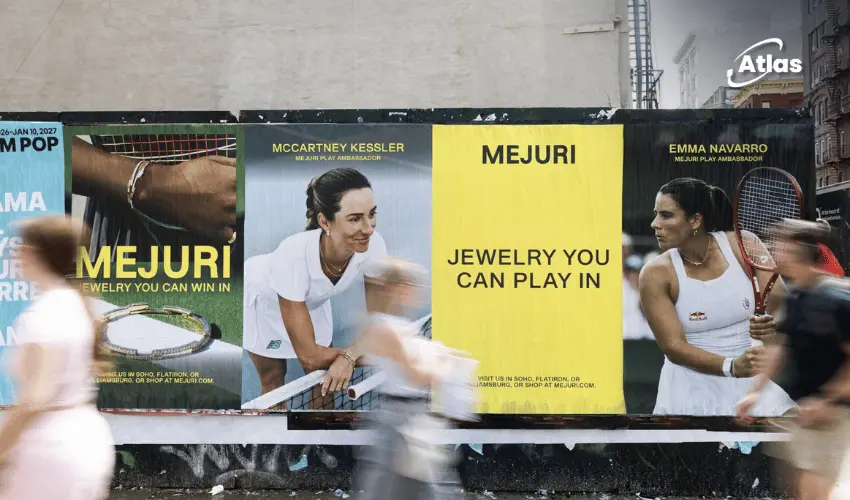
Mejuri Serves Up a Timely OOH Campaign Ahead of the US Open
Some of the best contextual campaigns do not need to create the conversation.
They simply know exactly when to join it.
Mejuri’s latest New York OOH campaign arrives as attention turns toward the US Open, bringing the jewelry brand into a period when tennis becomes much more than a sporting event.

For several weeks, the tournament influences fashion, celebrity culture, nightlife, hospitality and social conversation across the city.
That gives Mejuri a natural cultural moment to work with.
Timing is part of the media idea
A billboard does not exist independently from what is happening around it.
The same creative can feel significantly more relevant when it appears at the right moment.
By aligning the campaign with US Open season, Mejuri benefits from an audience already primed to notice tennis-related references and aesthetics.
The US Open is bigger than tennis
Major sporting events increasingly behave like cultural platforms.
The US Open is a strong example.
People follow the matches, but they also pay attention to what players wear, which celebrities attend, where people gather and how brands participate in the moment.
That creates space for fashion, beauty, hospitality and jewelry brands to join the conversation without needing to become traditional sports advertisers.
Why Mejuri fits the moment
Jewelry and tennis may not appear directly connected at first.
But the broader cultural environment surrounding the US Open makes the relationship more natural.
The event combines performance with style.
Players arrive with increasingly visible fashion identities, spectators treat the tournament as a social occasion and New York itself becomes part of the spectacle.
Mejuri can therefore enter through the lifestyle side of tennis rather than the technical side of the sport.
New York becomes part of the creative context
The city itself gives the campaign another layer.
During US Open season, tennis imagery and conversation spread far beyond Flushing Meadows.
Hotels, restaurants, fashion districts and social spaces across New York experience increased activity around the event.
An outdoor campaign can participate in that broader atmosphere without needing to appear directly inside the tournament grounds.

OOH captures audiences between moments
People may watch tennis on television or follow scores on their phones.
OOH reaches them between those interactions.
On the commute.
Walking to dinner.
Shopping.
Moving between neighborhoods.
This allows Mejuri to maintain a physical presence while US Open conversation moves across digital and real-world environments.
Fashion brands benefit from simple outdoor creative
Jewelry advertising is particularly well suited to clean OOH.
Strong photography, recognizable styling and limited copy can communicate quickly without overwhelming the product.
When a campaign also contains a timely cultural reference, the creative can remain restrained because audiences already provide some of the context themselves.
The value of being nearby rather than official
Brands often assume they need major sponsorship rights to participate around a sporting event.
But cultural relevance can also come through intelligent timing, location and creative language.
A well-placed city campaign can benefit from the increased attention surrounding the event while maintaining the brand’s own identity.
For lifestyle brands, this can sometimes feel more natural than forcing a traditional sports sponsorship message.
Sports moments create temporary media ecosystems
The US Open changes the advertising environment around New York.
More brands talk about tennis.
More visitors arrive.
More social content is produced.
Specific neighborhoods and transportation routes experience different patterns of movement.
This creates what can effectively be treated as a temporary media ecosystem.
The smartest campaigns plan around that ecosystem rather than treating the tournament as one isolated venue.

Plan your OOH campaign
Get recommendations for markets, formats and availability based on your campaign goals.
Request a media plan
Comments
Share your take. Keep it constructive and specific.