
McDonald’s and Meituan Turn Drone Delivery Into a Waterfront Brand Experience in Shanghai
Atlas OOH Looks at How Utility Can Become Visibility
Not every memorable brand activation begins with a billboard or a screen. Sometimes the strongest public-facing experience starts with a useful service that people can witness in real time.
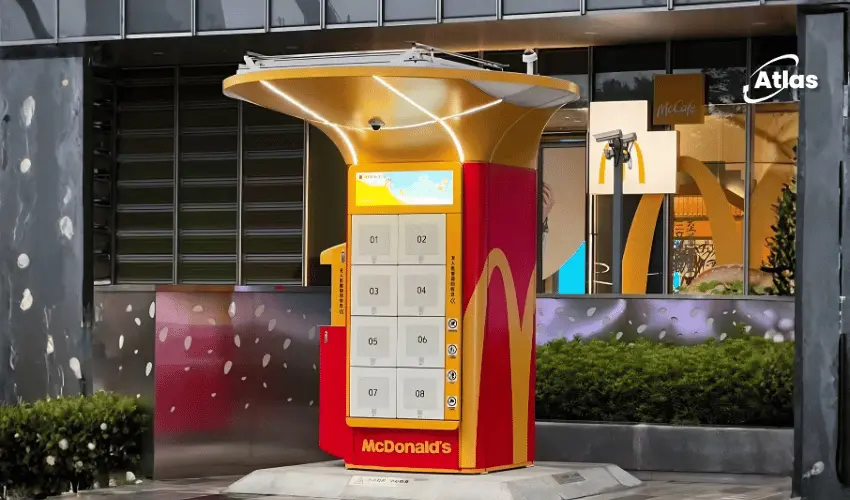
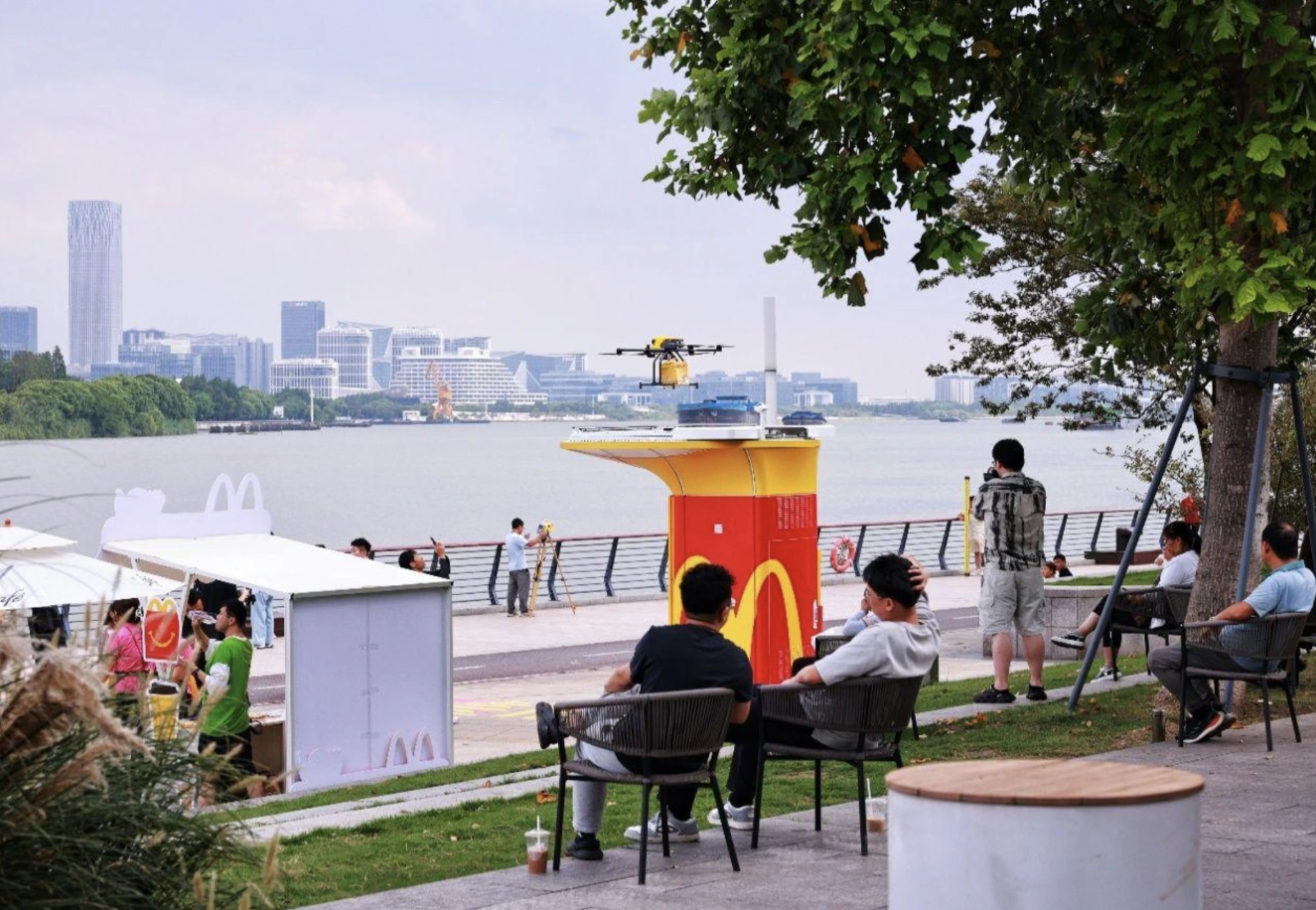
That is what makes this McDonald’s and Meituan pilot so interesting. Along Shanghai’s scenic West Bund, drone deliveries are not hidden behind the scenes. They land at visible kiosks placed in a high-footfall public space, turning fulfillment into a branded moment.
For Atlas OOH, this is a strong example of how logistics, retail infrastructure and outdoor presence can merge into one idea.
The result is not just fast delivery. It is a visible, highly photographable piece of brand experience that naturally attracts attention from office workers, tourists and joggers moving through the waterfront every day.
How the Shanghai drone delivery service works
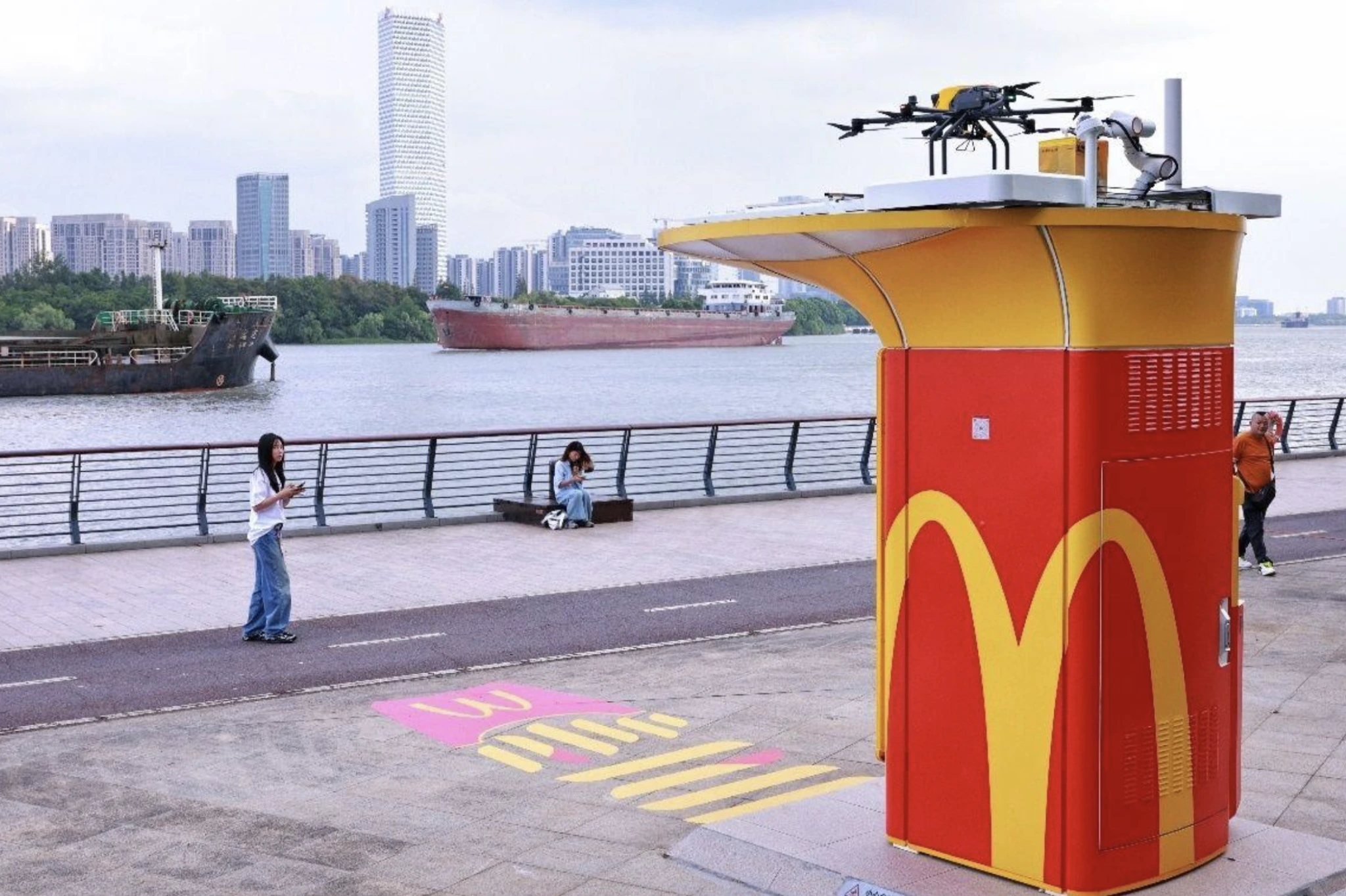
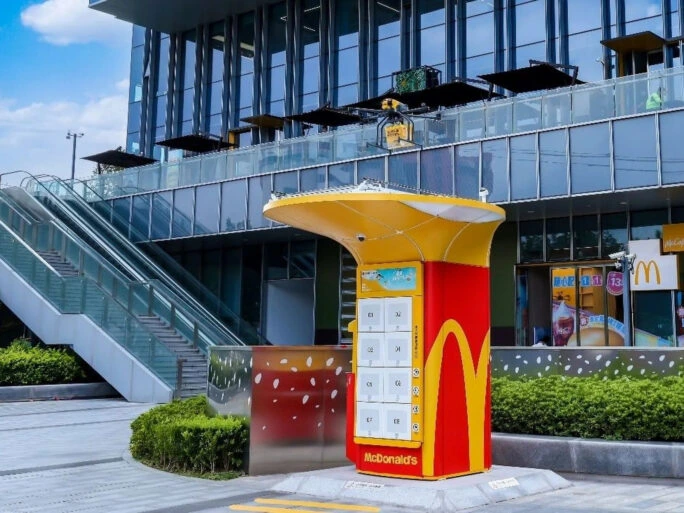
According to the supplied information, customers place their order through a smartphone. A custom drone then carries the food in a paper bag to a landing pad mounted on top of a McDonald’s-branded kiosk.
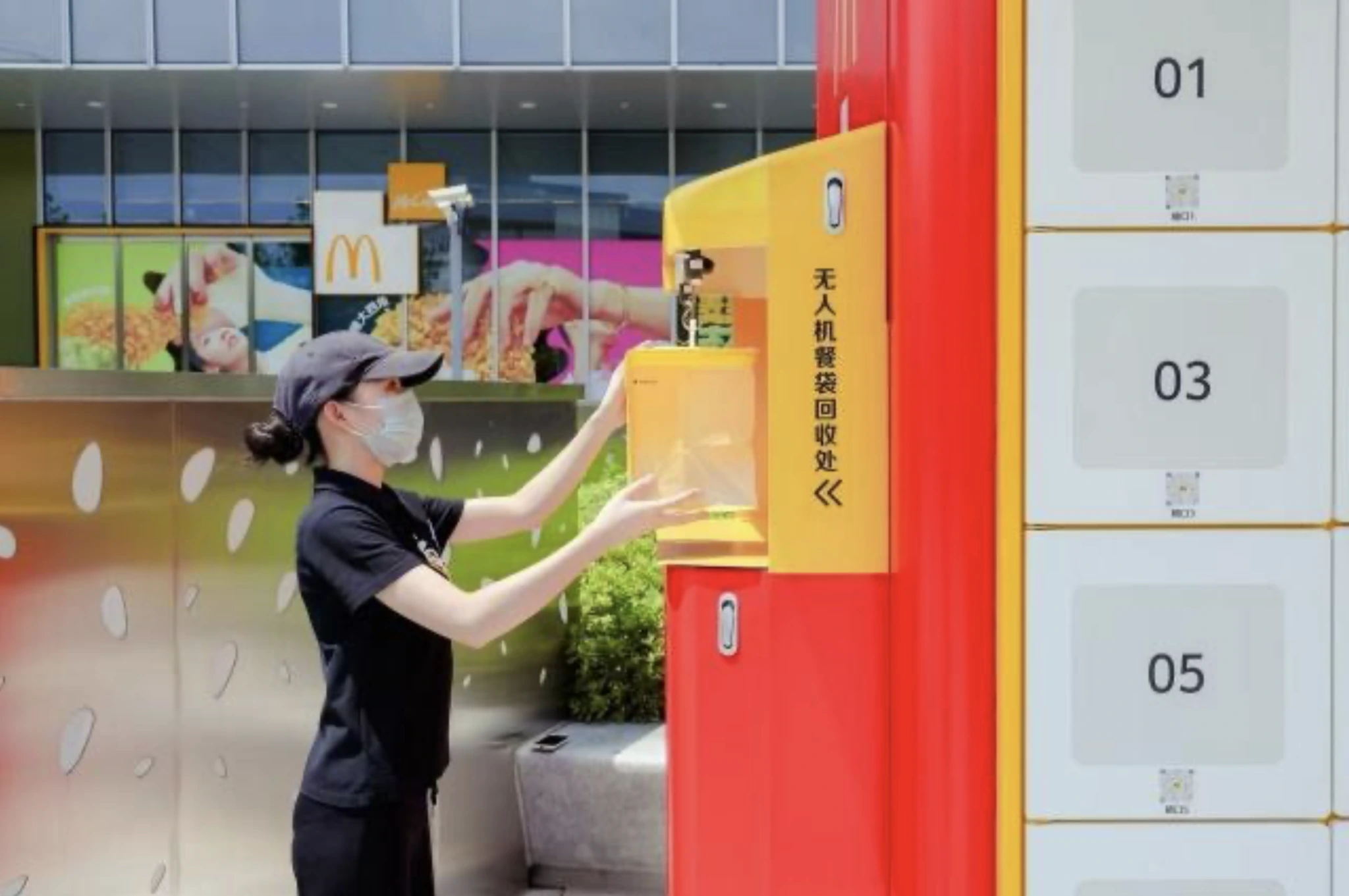
From there, an articulated robotic arm receives the order and places it into a collection box inside the unit. The customer then enters a code to retrieve the order.
This simple sequence matters because it keeps the service intuitive while making every step legible in public. People can understand the concept quickly: order digitally, watch the drone arrive, then unlock the kiosk and collect the meal.
Atlas OOH Sees Why West Bund is the right environment
Location is one of the smartest parts of the idea. The West Bund waterfront attracts a mix of office workers, visitors and people out for leisure, making it an ideal place to test a service that benefits from both convenience and public curiosity.
Because the pilot sits in a scenic and well-trafficked environment, the drones and kiosks do more than serve orders. They also create ambient visibility for the McDonald’s and Meituan partnership.
The supplied information says the service is linked to a McDonald’s restaurant in Xuhui located about 3.1 km away. That distance is long enough to show the practical value of the system, while still making the delivery experience feel fast and impressive.
This is instant commerce made visible
Mainland China’s ultra-competitive instant delivery landscape has already conditioned consumers to expect speed. What makes this activation different is that the service is designed to be seen, not just used.
According to the supplied information, the custom drones can carry a maximum payload of 5.29 pounds and complete deliveries in as little as 10 minutes. That efficiency is important, but the public-facing design is what gives the pilot extra marketing power.
The kiosk is clearly branded, visually distinctive and placed in open view. In other words, it works like infrastructure and like outdoor media at the same time.
Atlas OOH Notes the power of branded infrastructure
One reason this pilot feels more memorable than a standard delivery announcement is that the branded kiosk becomes a destination in itself.
It gives the service a physical presence. It anchors the customer journey. And it allows the McDonald’s identity to show up in a way that is practical rather than purely promotional.
That matters because audiences increasingly respond to brand experiences that do something useful. Instead of simply claiming convenience, the system demonstrates convenience in public.
For Atlas OOH, this is a strong reminder that real-world media can include structures, service points and utility-based formats when they are designed to carry the brand clearly.
The network points to a bigger rollout
The supplied information says Meituan is planning a broader aerial delivery network across scenic landmarks in Shanghai, following a similar network in Shenzhen.
It also notes that the Shanghai network currently includes nearly 20 catering brands and is expected to grow to more than 40 by the end of the year.
That expansion changes the meaning of this pilot. It is not only a single branded stunt. It suggests the development of a wider urban delivery ecosystem in which branded kiosks, drone routes and public visibility all work together.
For McDonald’s, participating early gives the brand a chance to attach itself to innovation in a way consumers can instantly understand.
Why this activation works
- It solves a real convenience need for people spending time along the waterfront.
- It makes the service visible, turning logistics into a public brand experience.
- It uses branded infrastructure effectively, with kiosks that function as both pickup points and media assets.
- It fits the environment, using a scenic riverside location with strong foot traffic and strong shareability.
- It hints at scale, connecting one pilot to a larger aerial delivery network.
Bottom line: The McDonald’s and Meituan drone delivery pilot works because it takes a fast, utility-driven service and gives it a real-world stage. By making the process visible, branded and easy to understand, the pilot turns instant commerce into an experience people can notice, talk about and remember.
Frequently asked questions
How does the McDonald’s and Meituan drone delivery service work in Shanghai?
Customers place an order on their smartphone, a drone carries the bag to a landing pad on top of the kiosk, the order is transferred into the unit, and the customer enters a code to collect it.
Where is this drone delivery pilot taking place?
The trial is operating along Shanghai’s West Bund waterfront in the Xuhui district, a scenic riverside area frequented by office workers, tourists and joggers.
How fast are the deliveries?
According to the supplied information, the custom drones can complete deliveries in as little as 10 minutes.
Why is this relevant for OOH and brand experience?
Because the kiosk itself functions like a branded public touchpoint. It turns fulfillment, visibility and real-world interaction into a single experience that people can notice, photograph and remember.
Sources
- Supplied campaign information and images referencing McDonald’s and Meituan’s drone delivery trial at Shanghai’s West Bund waterfront.
Plan your OOH campaign
Get recommendations for markets, formats and availability based on your campaign goals.
Request a media plan
Comments
Share your take. Keep it constructive and specific.