
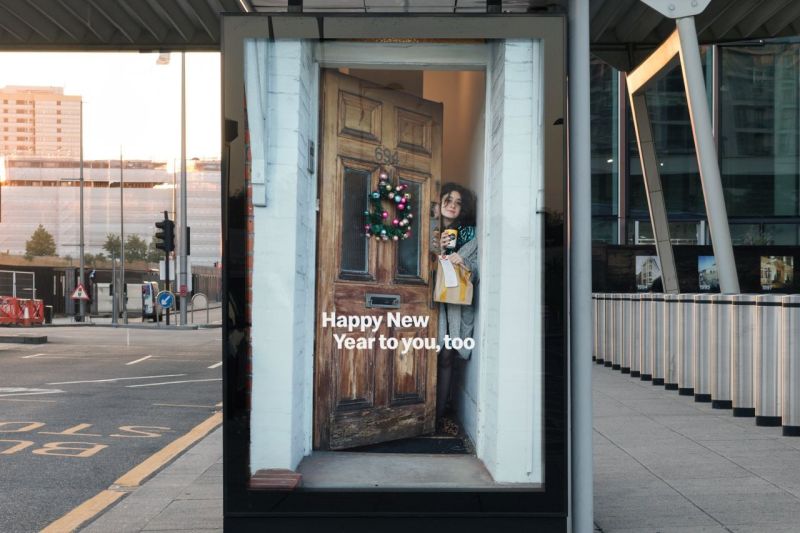
Quick take: McDonald’s and Leo Burnett UK built a McDelivery campaign around real New Year’s Day doorstep photos—capturing the “morning after” mood as it actually looks, and letting authenticity do the creative heavy lifting.
New Year’s Day has a universal texture. The celebration is over. The energy is low. The body is negotiating with the decisions of last night. And in that fragile moment—when people want comfort without effort—delivery becomes less of a convenience and more of a lifeline.
McDonald’s leaned into that exact truth for its latest McDelivery work in the UK. Instead of polished food glamour or hyper-staged lifestyle scenes, the campaign uses documentary-style doorstep portraits: real deliveries, real people, real light—captured in the “morning after” reality everyone recognizes.
Why the “morning after” idea works instantly
The concept doesn’t need explanation because it’s not an advertising invention—it’s a cultural moment that already exists.
On New Year’s Day, delivery isn’t about indulgence. It’s about:
- relief
- comfort
- a reset
- the easiest possible decision
By photographing deliveries as they happen, the campaign taps into emotional territory that delivery brands can own better than anyone: small wins in low-energy moments.
“Happy New Year to you, too” — cultural timing as a creative device
The line “Happy New Year to you, too” is doing something subtle but powerful: it reframes McDelivery as a two-way ritual.
It’s not just “McDonald’s is delivering food.”
It’s “McDonald’s is showing up when you need it.”
That single line turns a transaction into an interaction—like the brand is responding to the customer’s reality with empathy, not marketing. And because it’s tied to one specific day, it feels contextual, not generic.
This is what great seasonal advertising does: one message, one moment, maximum recognition.
How the campaign was executed (and why the craft matters)
The work was concepted and produced by Leo Burnett UK and shot in a documentary portrait style by photographer Dan Burn-Forti (as provided in your brief). The images feature people receiving McDelivery at their doorsteps on New Year’s Day, with a visual language that signals authenticity:
- natural light
- minimal staging
- “observed” tone
- ordinary environments
- human-first framing
This is the opposite of food advertising that tries to look perfect. The campaign looks like real life—and that’s exactly why it cuts through.
You can also feel the strategy behind the distribution: OOH and press. These formats give documentary imagery more credibility than social alone, where staged content is expected.
Why OOH and press are the perfect channels for this realism
OOH rewards emotional clarity
In outdoor environments, you have seconds to land the message. Real faces and real moments do that fast. Your brain processes it instantly because it’s human and familiar—especially if you’ve lived that exact day.
OOH also gives the work scale without losing intimacy. Even on a large billboard, a simple doorstep portrait can feel personal.
Press adds quiet confidence
Print placements reinforce the tone: no heavy copy, no forced punchlines—just a calm, truthful execution that feels like it belongs in culture, not just media.
What this signals for delivery marketing in 2026
The delivery category is crowded, and most brands compete with the same messages: fast, hot, convenient, cheap. The differentiator is no longer features—it’s emotional ownership.
McDonald’s approach suggests a clear direction for 2026:
- prioritize context over generic claims
- replace polish with authenticity when the moment demands it
- use cultural timing as the creative engine
- let real life be the story
In a world overloaded with overly produced content, realism can scale better than perfection—because it’s immediately believable.
Plan your OOH campaign
Get recommendations for markets, formats and availability based on your campaign goals.
Request a media plan
Comments
Share your take. Keep it constructive and specific.