
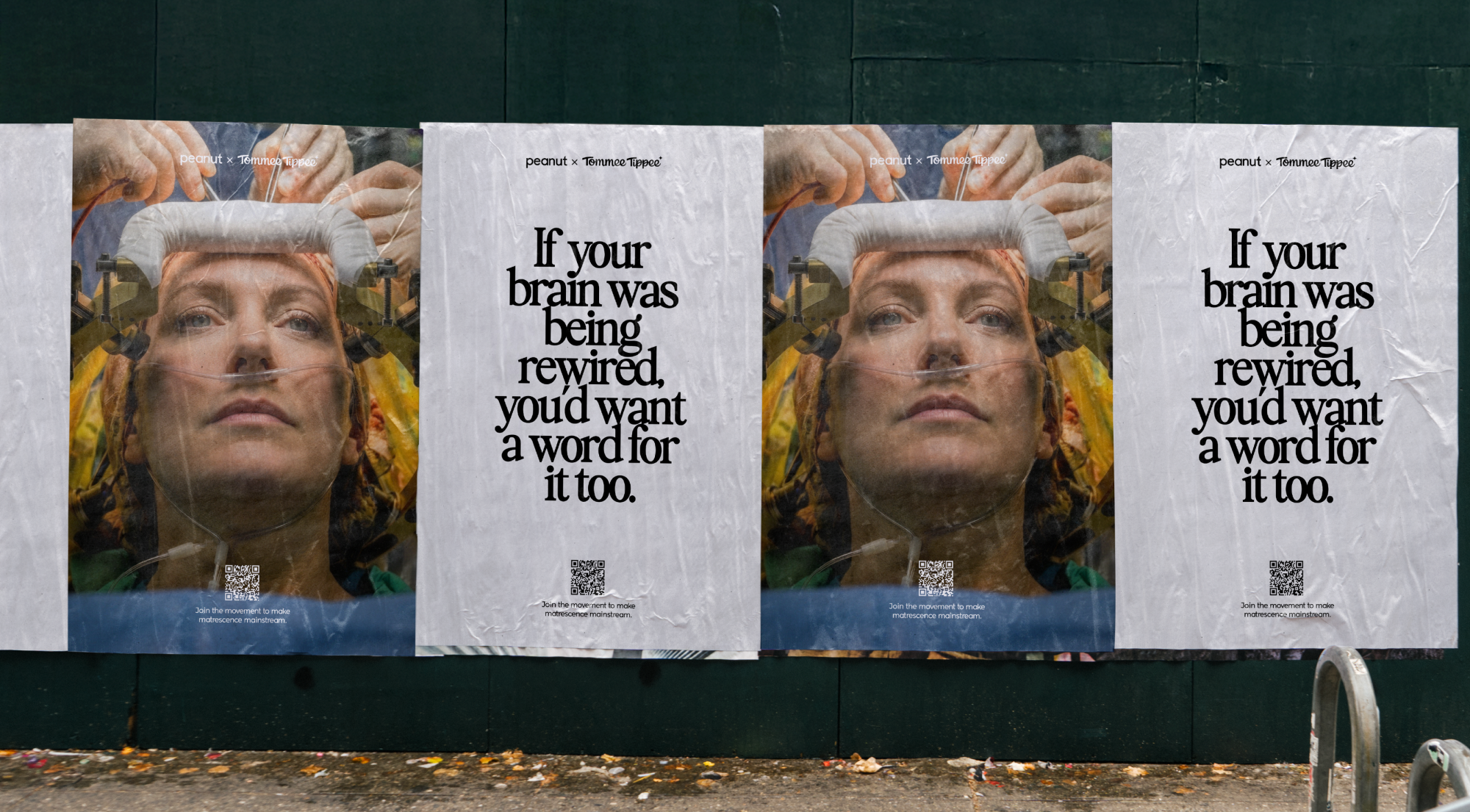
‘Matrescence’ Takes Centre Stage in The New York Times
Format: Full-Page Print Ad
Location: The New York Times
A striking full-page advertisement in The New York Times is drawing attention to a word many people have never heard — yet describes an experience shared by millions of women.
The campaign, launched by Peanut and Tommee Tippee, is pushing for the word “matrescence” to be officially recognised in major dictionaries.
Matrescence describes the profound physical, psychological, and emotional transition into motherhood — an identity shift comparable in scale to adolescence.
A Word That Has Existed for Decades
The term was originally coined in 1973 by anthropologist Dana Raphael, who used it to describe the developmental process women experience when becoming mothers.
Despite increasing cultural discussion around motherhood and mental health, the word still does not appear in many major dictionaries.
This gap is precisely what the campaign aims to address.
“IDGAF Is in the Dictionary. Matrescence Isn’t.”
The full-page ad uses a bold and provocative line: “IDGAF is in the dictionary. Matrescence isn’t.”
The message highlights the paradox that modern slang terms can be widely recognised while a word describing one of life’s most profound transitions remains largely invisible.
Readers are encouraged to scan a QR code that leads to a petition advocating for the word’s official inclusion in dictionaries.

Turning Language Into a Cultural Movement
For lexicographers, dictionary inclusion typically requires evidence that a word is widely used. The campaign aims to generate that evidence by collecting signatures, encouraging discussion, and increasing usage across media and social platforms.
The organisers also plan to engage major tech companies including Apple, Google, and Microsoft in order to update autocorrect systems that currently flag the word as incorrect.
More Than Just a Print Ad
According to Peanut president Michelle Battersby, the campaign is about far more than language.
While adolescence is widely understood and socially supported, she argues that mothers going through an equally transformative stage are rarely afforded the same recognition or patience.
By naming the experience, the campaign hopes to help women feel seen and understood.

The initiative builds on a five-year partnership between Peanut and Tommee Tippee and will extend beyond print advertising. Future activations include influencer collaborations, educational content with neuroscientists, and mock out-of-home executions shared across social channels.
Measuring Cultural Impact
Success will not only be measured by petition signatures but also by reach, shares, and social engagement.

The goal is simple but ambitious: bring visibility to a word that has existed for more than fifty years but remains largely unknown.
Plan your OOH campaign
Get recommendations for markets, formats and availability based on your campaign goals.
Request a media plan




Comments
Share your take. Keep it constructive and specific.