
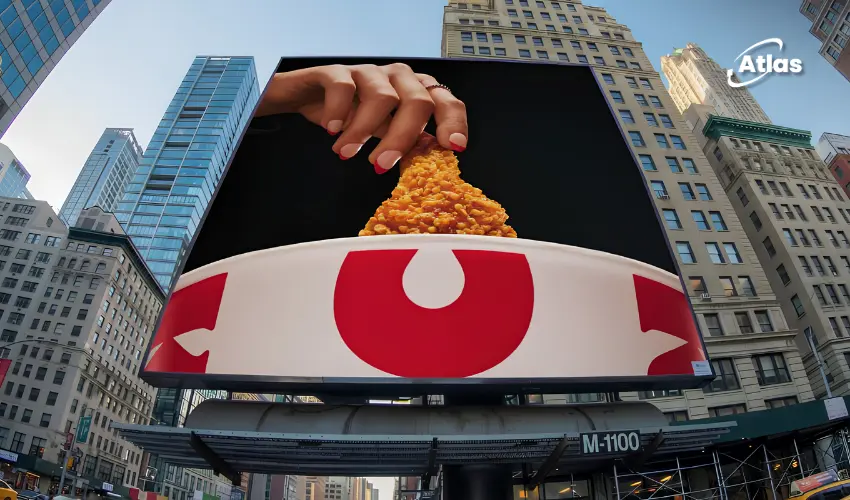
What KFC’s Rebrand Means for OOH in Brazil
KFC is entering a major visual transition.
The brand has announced one of the most significant evolutions of its recent identity, with changes spanning the logo, packaging, representation of Colonel Sanders and restaurant formats.
In Brazil, the implementation begins gradually in August.
For OOH, that makes the next phase particularly interesting.
A global rebrand may be designed centrally, but the street is where its execution becomes real.

A rebrand is not just a new logo file
When a major brand changes identity, it is tempting to think of the outdoor transition as a straightforward artwork replacement.
It rarely is.
Consider the number of surfaces that can carry the KFC identity across Brazil:
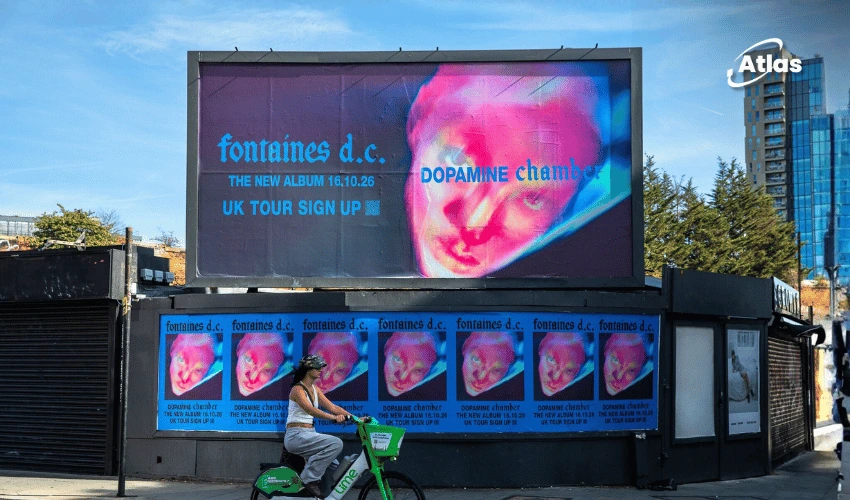
- Roadside billboards.
- Airport panels.
- Bus shelters and street furniture.
- Shopping-center DOOH.
- Transit environments.
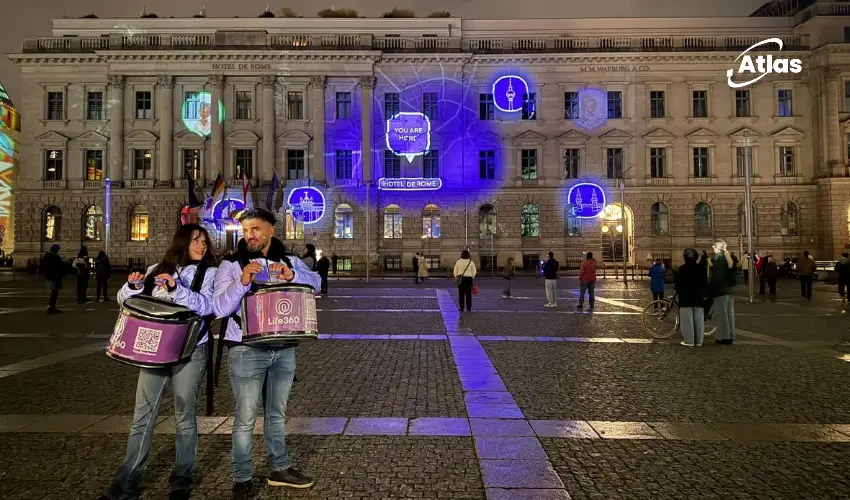
- Restaurant signage and proximity media.
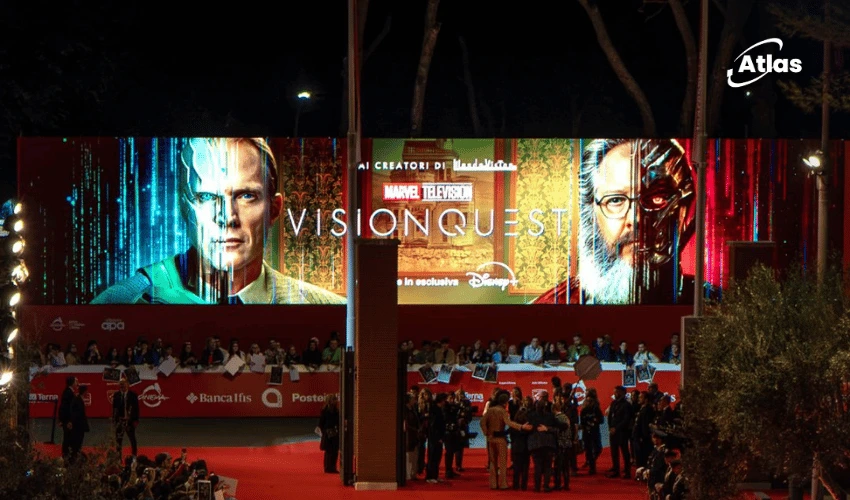
- Large digital landmarks.
Each format has a different production cycle, contract period, technical specification and replacement process.
Why OOH feels the transition differently
Digital advertising can often be changed almost instantly.
A banner can be replaced, paused or updated from one campaign cycle to the next.
Physical media behaves differently.
A printed billboard may remain installed for days or weeks. Street furniture may be managed on different schedules. Airport media can have separate production deadlines. Digital screens may be technically easier to update, but still depend on correct creative trafficking and local approvals.
This means old and new identities can easily coexist unless the migration is carefully planned.
The street is where inconsistency becomes visible
Consumers may never notice that different digital campaign assets were updated at slightly different times.
They will notice when one billboard uses a new logo while another nearby surface still carries the old visual system.
That inconsistency becomes especially obvious during a large rebrand because audiences begin learning the new identity through repetition.
Every outdated execution weakens that learning process.
Brazil turns global identity into local execution
International rebrands often launch with highly controlled hero assets produced for a small number of priority markets.
The more difficult phase comes afterward: translating that identity across local inventories, formats and media partners.
For KFC Brazil, this means adapting the global system without losing the communication platform already established in the market.
The brand’s “Você Merece Mais” concept will continue to guide communication.
The challenge is making that platform feel naturally connected to the new identity rather than appearing like old messaging placed inside a new design system.

Creative adaptation needs to happen format by format
A new master visual does not automatically work everywhere.
Large roadside formats need distance legibility.
Bus shelters allow closer viewing.
Shopping-center screens can use motion.
Airport placements may support more premium or detailed messaging.
Restaurant proximity media needs to connect quickly with product and location.
A disciplined rollout should therefore create a hierarchy of adaptations rather than force one layout across every surface.
- Protect the new distinctive assets.
- Define minimum logo and character visibility.
- Adjust copy according to viewing time.
- Use motion where DOOH adds value.
- Preserve consistency across every execution.
Colonel Sanders becomes a major OOH asset
Any change to the representation of Colonel Sanders matters significantly in outdoor media.
Characters and faces are powerful recognition devices because audiences can process them faster than long copy.
If the new representation differs meaningfully from the previous one, OOH can help accelerate familiarity.
Large formats provide enough scale for the updated character to become one of the most visible components of the rebrand.
DOOH can help manage the transition
Digital OOH offers one important advantage during identity migrations: flexibility.
Creative can be updated centrally and replaced more quickly than printed media, allowing DOOH networks to become some of the first environments where the new identity appears consistently.
This can help establish the visual system while static inventory catches up.
But digital flexibility does not remove the need for coordination.
Files still need correct specifications, trafficking, approval and scheduled activation across different media owners.
The media owner becomes part of the brand rollout
Rebranding at scale requires close coordination between multiple parties.
- The brand defines the identity.
- The agency translates the identity into campaigns.
- The media agency plans timing and coverage.
- Media owners manage physical and digital inventory.
- Production partners deliver the final materials.
If any part of this chain operates on a different timeline, inconsistency appears.
The outdoor company therefore becomes more than a distribution channel. It becomes part of the implementation infrastructure of the rebrand.
OOH can validate the new identity
There is another reason outdoor media matters during a rebrand.
Scale gives the new identity legitimacy.
Seeing the redesigned brand across a large airport wall, urban digital screen or roadside billboard tells audiences that the change is established and intentional.
The new identity moves from a design announcement into everyday life.
This is one of OOH’s strongest roles in brand transformation.
The street validates the brand.
But the brand also needs to respect the street
The relationship works in both directions.
A well-executed rebrand can improve the quality of the urban media environment by bringing stronger design, clearer typography and more confident visual systems into public space.
A poorly adapted rebrand can do the opposite.
If typography becomes unreadable, logos become too small or detailed layouts are forced onto unsuitable formats, the visual identity may look strong in a brand guideline but weak on the street.

The rollout itself can become a campaign moment
KFC also has an opportunity to make the transition visible rather than treating it purely as behind-the-scenes maintenance.
A coordinated sequence of high-impact OOH placements could introduce the new identity as a public event.
For example:
- Premium DOOH could reveal the new Colonel Sanders.
- Special builds could exaggerate new packaging.
- Transit networks could create high-frequency recognition.
- Restaurant proximity media could connect the new identity directly with purchase.
The rebrand then becomes more than a visual update.
It becomes fresh campaign material.
The challenge of gradual implementation
A gradual rollout is often operationally necessary, especially for a brand with a large physical footprint.
It also increases the risk of mixed identities.
That makes prioritization important.
High-visibility locations should generally migrate first because they influence how quickly consumers learn the new system.
Less visible inventory can follow according to practical production schedules.
The objective is not necessarily to change every surface on the same day.
It is to make the transition feel intentional.
Plan your OOH campaign
Get recommendations for markets, formats and availability based on your campaign goals.
Request a media plan
Comments
Share your take. Keep it constructive and specific.