
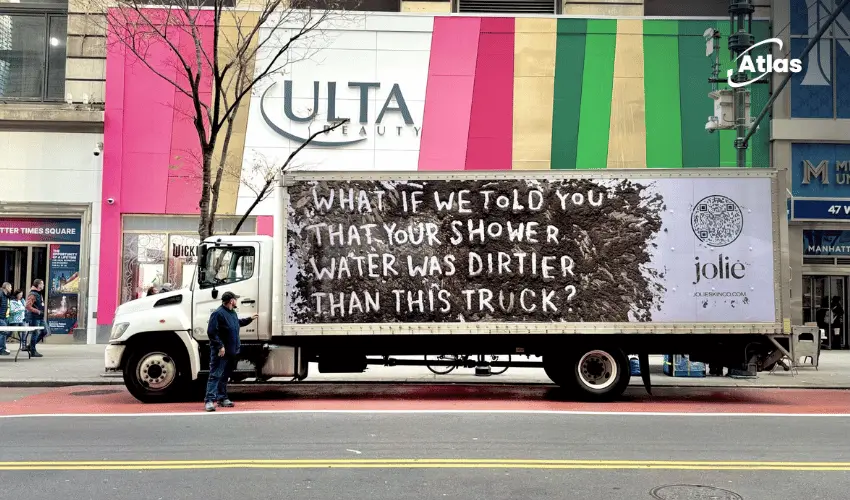
Jolie Case Study: How Always-On Mobile OOH Built Multi-Market Reach
Outdoor advertising is often planned in flights.
A campaign launches, runs for several weeks and disappears.
Jolie took a very different approach.
Its truck program is a useful case study in what happens when a strong OOH idea is allowed to stay in market long enough to become part of the environment.
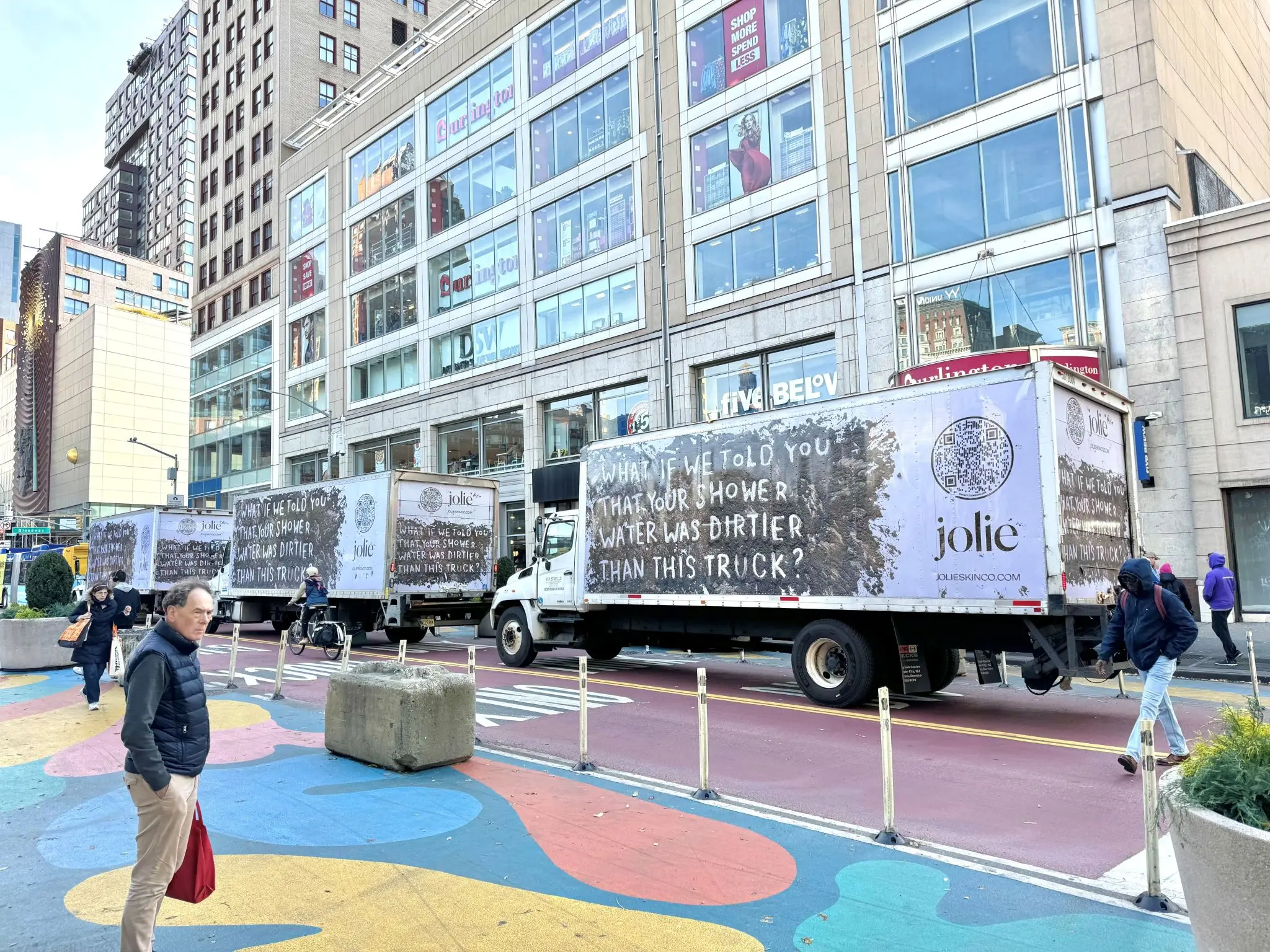
How 5 mobile billboards scaled into a multi-market fleet
According to the campaign partner's account, the program began with five trucks in New York City. Those original vehicles are reported to still be operating 1,237 days later, while the network expanded by another 60 trucks across New York City, Miami, Austin, Los Angeles and Chicago.
That expansion matters, but the more interesting part is what did not change: the core creative stayed consistent.
Bring Your Brand Into the Real World With Atlas OOH
Jolie’s long-running truck campaign is a strong reminder that OOH can do more than generate a short burst of awareness — it can build familiarity, recognition and real-world presence over time. If your brand is exploring mobile billboards, multi-market rollouts or an always-on outdoor strategy, Atlas OOH can help turn the idea into a campaign that lives in the streets, reaches the right audiences and becomes more recognizable with every impression.
The truck itself completes the creative idea
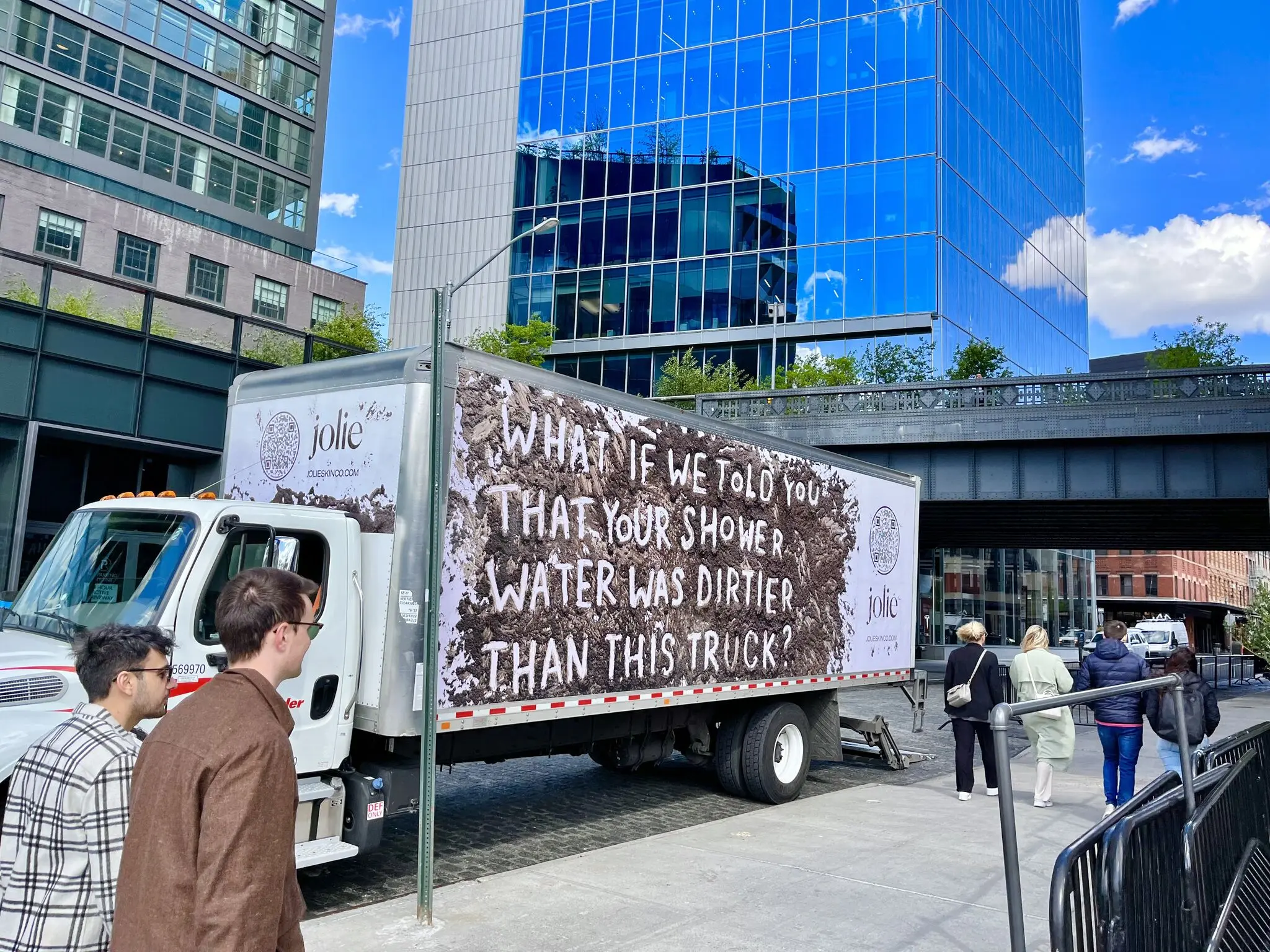
The message is simple: “What if we told you that your shower water was dirtier than this truck?”
The trucks are wrapped to look filthy, which means the media vehicle is not just carrying the ad. It is part of the argument.
Three and a half years with the same copy is the point
Modern marketing culture puts enormous pressure on creative velocity, but Jolie provides a useful counterexample.
When one message is distinctive enough, repeating it can create more value than replacing it prematurely. The campaign partner reports that the same core copy has remained on the road for approximately 3.5 years.
Consistency compounds
Each impression does not start from zero. A person sees the truck once and learns the idea. They see it again and recognize it. After repeated encounters, the message can start to feel familiar before it is consciously reread.
The trucks became fixtures rather than temporary ads
Over time, the vehicles reportedly became familiar parts of the streets where they operated. A temporary campaign interrupts the city. An always-on campaign can eventually become associated with the city.
One idea can scale across markets without becoming generic
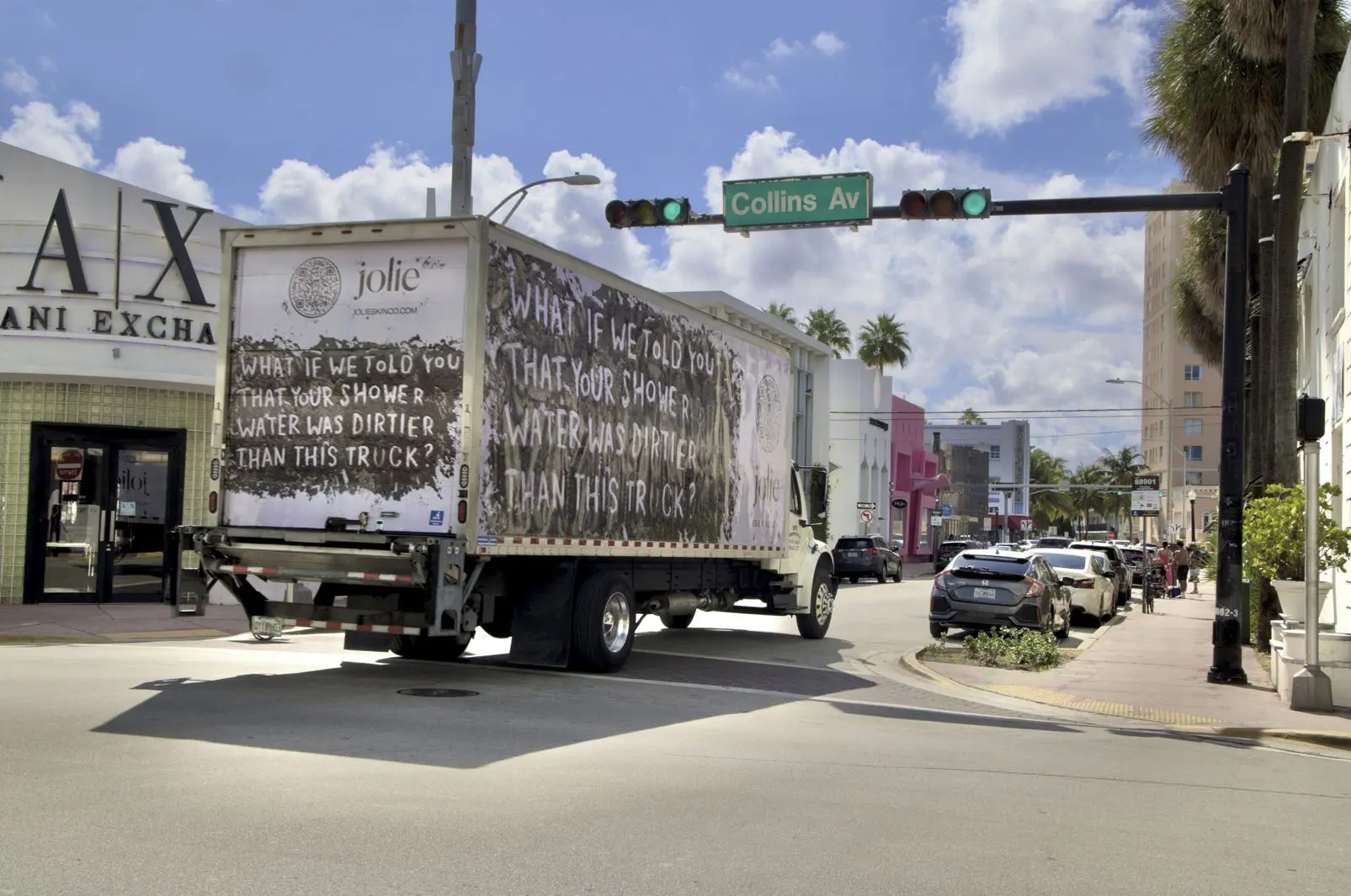
Miami does not look like Manhattan. Austin does not move like Chicago. Los Angeles creates a very different media environment from New York.
Yet the same truck, same line and same dirty visual treatment can remain recognizable everywhere.
The campaign turns dirt into a distinctive visual asset
Most beauty and wellness advertising tries to look clean. Jolie deliberately surrounds its message with mud and grime.
That contrast gives the campaign an unusually recognizable visual territory and reinforces the product tension: if this truck looks dirty, what might be in the water you use every day?
How always-on mobile billboards redefine campaign ROI
A long-running program should not be judged only by the response generated in one week. Its value can also include accumulated brand recognition, familiarity across neighborhoods, repeated product education and trust created by sustained market presence.
Atlas OOH can help brands build this kind of long-term presence
Not every brand needs to keep one exact message running for years, but Jolie demonstrates the value of identifying a strong creative platform and giving it enough exposure to actually become familiar.
Atlas OOH can help brands plan mobile billboard programs, multi-market rollouts and always-on OOH strategies that balance route coverage, repetition and creative consistency instead of treating every activation as an isolated campaign.
The program also became proof for the media operator
The campaign partner describes the Jolie launch as a pivotal moment for CROSSWALK MEDIA itself. By the end of 2023, inbound interest and referrals reportedly began referencing the Jolie trucks directly.
Reported business growth gives the case another layer
CROSSWALK MEDIA reports that its annual revenue grew by 16x since April 2023. That growth should not be attributed solely to one advertiser without additional evidence, but the operator itself identifies Jolie as an important early validation point in its development.
Key OOH takeaways for modern brands
- Do not abandon strong creative simply because it is no longer new internally.
- Use repetition to build consumer memory.
- Let the media format participate in the idea.
- Expand routes and markets without abandoning recognizable brand assets.
- Judge always-on OOH on cumulative impact, not only short-term response.
Bottom line
Jolie's mobile billboard program is a strong argument for patience in outdoor advertising.
The original five trucks became a larger reported fleet of 65, the campaign expanded from New York into Miami, Austin, Los Angeles and Chicago, and the underlying creative stayed recognizable.
When an OOH idea is strong enough, the smartest optimization may not be changing it. It may be giving more people more chances to see it.
If your brand needs a mobile OOH campaign that can grow from a local test into a sustained multi-market presence, Atlas OOH helps turn the strategy into real routes, real inventory and real-world visibility — with the goal of making your campaign not just noticeable for a week, but recognizable over time.
Frequently asked questions
How long has Jolie kept the same truck advertising creative in market?
According to the campaign partner's account, the same core copy has remained in use for roughly 3.5 years, with 1,237 days cited from the referenced initial rollout.
How large did the Jolie truck program become?
The program reportedly began with five trucks in New York City and later added another 60 trucks across New York, Miami, Austin, Los Angeles and Chicago.
Why is the campaign a strong example of always-on OOH?
Instead of constantly replacing the message, Jolie repeated one distinctive piece of creative over a long period, allowing recognition and familiarity to accumulate through exposure.
What is the central creative idea?
The trucks ask, What if we told you that your shower water was dirtier than this truck? The intentionally dirty visual treatment makes the media vehicle itself part of the product argument.
Plan your OOH campaign
Get recommendations for markets, formats and availability based on your campaign goals.
Request a media plan
Comments
Share your take. Keep it constructive and specific.