
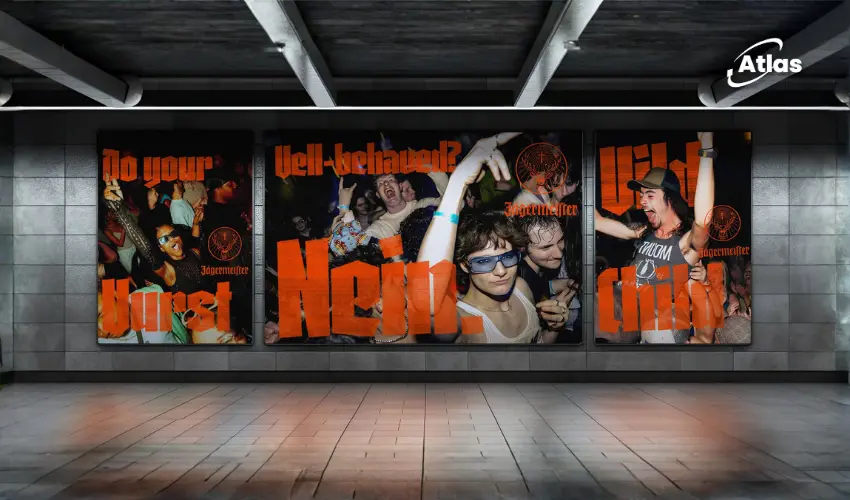
Jägermeister Turns a German Accent Into the Creative Device
Some brands spend years searching for a distinctive voice.
Jägermeister already has one built into its name.
The German herbal liqueur turns that heritage into a playful advertising device by asking audiences to do something extremely simple:
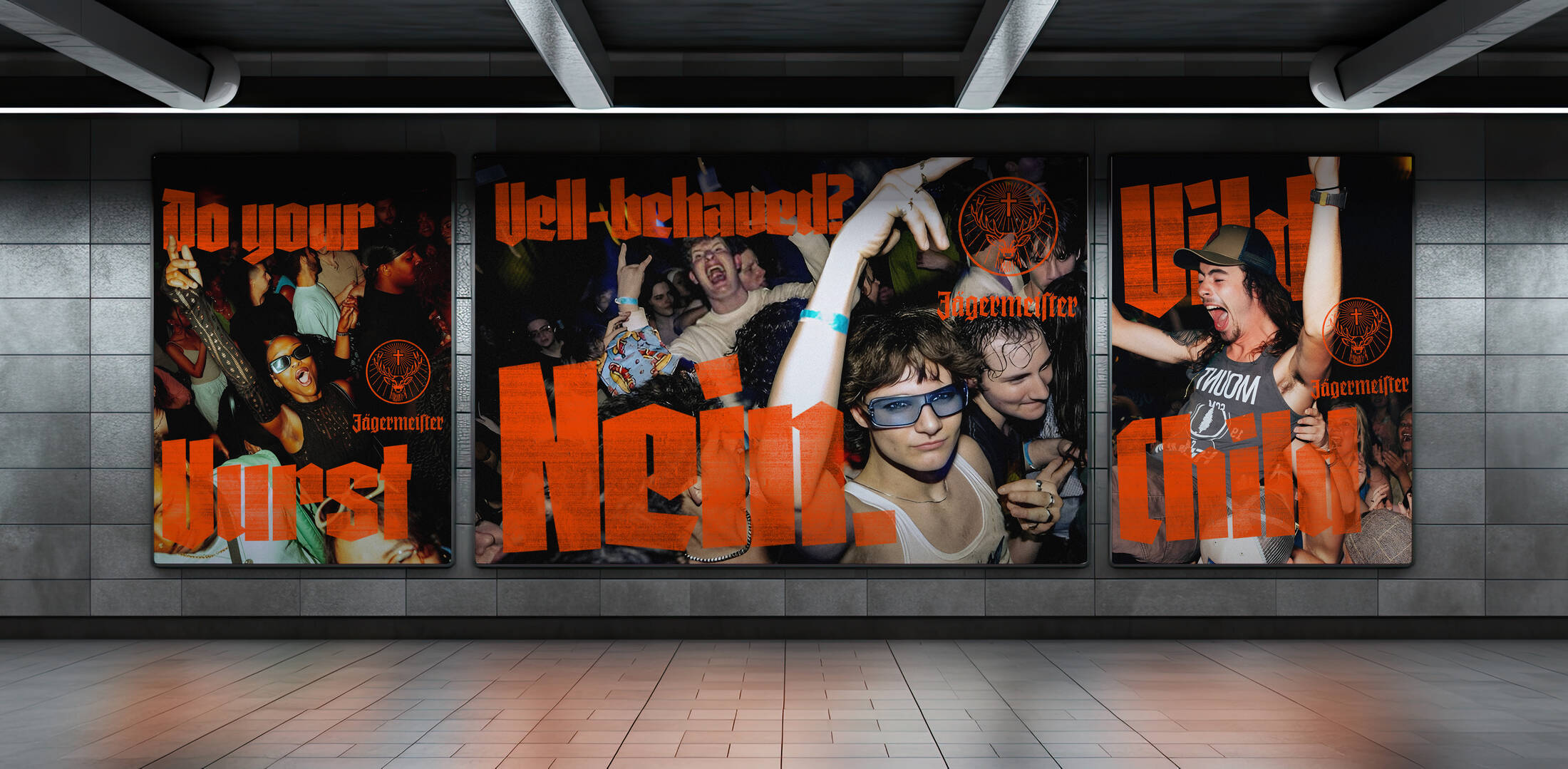
Read the headlines with a German accent.
Once you do, the copy changes.
The words gain rhythm, personality and a tone that feels unmistakably connected to the brand.

The audience completes the ad
One of the most interesting parts of the concept is that the creative does not fully exist until the viewer participates.
On the surface, the headline is simply text.
But the instruction to hear it in a German accent adds another layer.
The audience effectively performs the campaign inside their own head.
Turning heritage into behavior
Jägermeister’s German origin is not treated as background information.
It becomes something the audience actively uses.
That is strategically stronger than simply placing a German flag, location reference or heritage statement beside the bottle.
The campaign makes the brand’s origin part of how the advertisement is experienced.
Instead of saying:
“We are German.”
The creative makes people hear German-ness in the message itself.

Why this is more ownable than a generic joke
Humorous advertising can attract attention but still suffer from weak brand attribution.
People remember the joke and forget who told it.
This concept reduces that risk because the mechanism depends on Jägermeister’s identity.
The German accent is not an arbitrary comedy device added after the fact.
It comes directly from the product’s heritage.
Copy does most of the work
The execution is a reminder that outdoor advertising does not always need complex imagery or large-scale fabrication to create engagement.
A strong headline can be enough.
For this kind of campaign, the visual system only needs to support the copy and make the brand recognizable.
- The headline creates the interaction.
- The accent creates the humor.
- The branding creates attribution.
- The bottle or visual identity completes recognition.
This is particularly useful in OOH, where simplicity often performs better than over-explanation.
Why people naturally hear accents in their head
Written language is rarely completely silent.
Readers often assign tone, pacing and voice while processing text.
The campaign deliberately takes advantage of that behavior.
By suggesting a German accent before the headline is read, Jägermeister influences how the audience experiences every word that follows.
The media never produces a sound.
But the audience does.
Static OOH can still create audio
This makes the idea especially interesting from an outdoor perspective.
A billboard cannot literally speak unless sound technology is added.
Yet the creative can still generate an imagined voice.
The technique effectively adds an audio dimension to static media through copy alone.
A familiar name helps the mechanic
Jägermeister itself already has a pronunciation that signals its German origin to many audiences.
That gives the brand a natural foundation for accent-based communication.
The device would be less effective for a brand with no obvious relationship to German language or culture.
Here, the accent feels like an extension of something consumers already know.
Short headlines are essential
The concept works best when the copy remains concise.
If audiences need to read an entire paragraph in an exaggerated accent, the joke becomes work.
Outdoor media requires the opposite.
The viewer should:
- Notice the headline.
- Understand the accent cue.
- Read it again mentally.
- Get the joke.
- Connect it with Jägermeister.
All of that needs to happen quickly.
The second read creates extra attention
The instruction to read the line with a German accent may also encourage audiences to process the headline twice.
The first reading establishes the words.
The second changes the voice.
That repeated mental engagement creates more dwell time than a straightforward headline might receive.
It is a small behavioral effect, but outdoor advertising often wins through exactly these small interruptions.
Personality without a long brand manifesto
The campaign also communicates personality efficiently.
Jägermeister does not need to explain that it is bold, irreverent or comfortable having fun with its heritage.
The execution demonstrates those qualities.
This is more effective than describing a brand personality through promotional language.
Audiences experience the tone rather than being told what the tone is.
Plan your OOH campaign
Get recommendations for markets, formats and availability based on your campaign goals.
Request a media plan
Comments
Share your take. Keep it constructive and specific.