
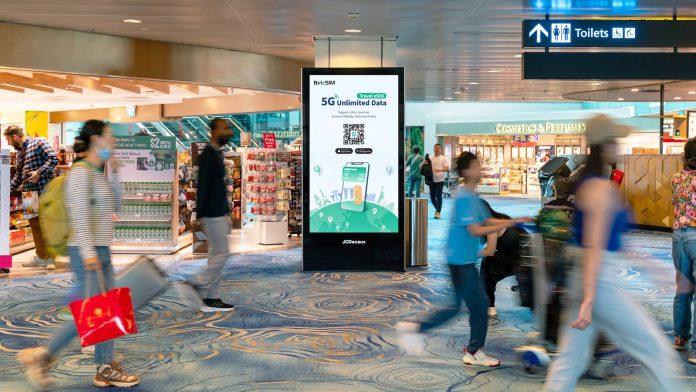
Hyperlocal is the new “premium.”
The most effective city campaigns don’t talk to “everyone.” They talk to a place—and a moment. That’s why neighborhood-level DOOH is winning: it feels native, relevant, and precise without losing scale.
A U.S.-focused DOOH trends roundup in late 2025 highlighted the continued shift toward smarter, more targeted strategies. And the broader 2026 pDOOH narrative is all about scaling multi-market execution—meaning hyperlocal no longer has to be small; it can be systematic.
What hyperlocal really means in OOH (beyond buzzwords)
Hyperlocal OOH is a planning discipline:
- Neighborhood-by-neighborhood media layers (not just DMA reach)
- Context-aligned creative (local landmarks, slang, routines)
- Retail/store cluster logic (catchments, commuting patterns)
- Dynamic swaps (dayparts, events, weather—when relevant)
The creative rules that make hyperlocal work
- Name the place (neighborhood > city)
- Reflect the routine (commute, lunch break, nightlife)
- Keep it simple (one idea, one action)
- Local proof (availability, location cues, community tone)
Quick creative template (per neighborhood):
- Core message: one promise
- Supporting offer/CTA: one action
- Local twist line: one neighborhood-native cue
A practical hyperlocal framework for NYC, LA, Chicago, Miami
1) Build neighborhood clusters (not 1 plan per city)
Start with 4–8 neighborhood clusters per city. That’s enough to capture real micro-market differences without exploding operational complexity.
2) Assign each cluster a simple messaging stack
- one core message
- one supporting offer/CTA
- one local twist line
3) Use DOOH to rotate by daypart
Run a simple daily rhythm:
- AM: commuter message
- Midday: decision message
- PM / weekend: social message
Comments
Which city do you plan hyperlocal DOOH in most—and what’s your best neighborhood “cluster” tip?