
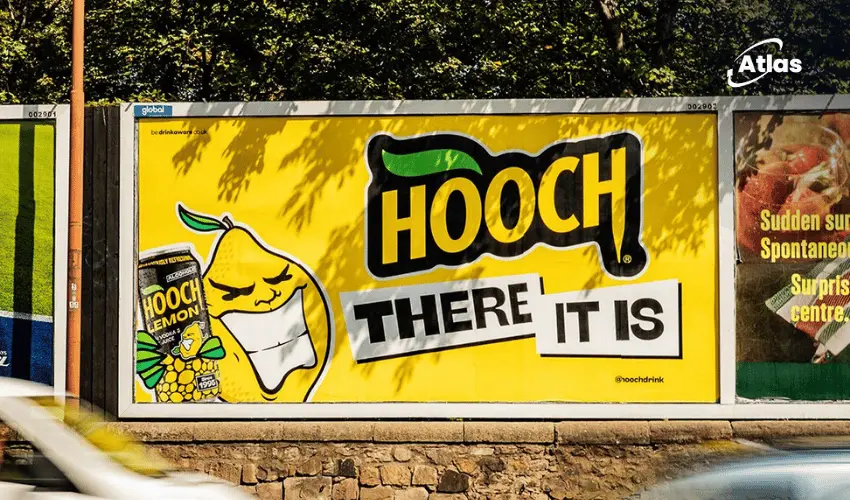
Hooch Turns 30 With a Nostalgia-Fuelled UK OOH Comeback
Anniversary campaigns often look backward.
Hooch is using the past to make itself visible again in the present.
The alcoholic lemonade brand is marking 30 years with a major omnichannel push—recalling the famous Hooch 1995 campaign—designed to revive the cultural relevance it enjoyed during its peak.
At the center of the campaign is one of Hooch's most recognizable historic assets:
The lemon head is back.
Thirty years is a reason to revisit distinctive assets
Hooch's original advertising helped establish a loud, irreverent visual personality.
The lemon head became one of the strongest symbols of that era.
Bringing it back gives the anniversary immediate recognition among consumers who remember the original work while introducing the asset to younger audiences through a new cultural context.

Nostalgia OOH advertising doing strategic work
The campaign is explicitly described as nostalgia-fuelled.
But nostalgia here is more than decoration.
It gives Hooch a way to reconnect with the time when the brand was at its most culturally visible.
The 1990s remain highly reusable territory across fashion, music, design and entertainment.
That means Hooch can revive its original codes without the campaign necessarily feeling trapped in the past.
OOH makes the comeback public
The creative is designed to appear across cities throughout the UK.
That nationwide outdoor presence matters because a comeback needs scale.
Social posts can remind existing fans that the brand is still around.
OOH makes the return feel public.
The lemon head is built for outdoor recognition
Characters work particularly well in OOH when they can be recognized quickly.
Hooch's lemon head has exactly that advantage.
The visual is unusual, simple and directly connected to the product.
That makes it easier to scale across:
- Large-format billboards.
- Street-level media.
- Murals.
- Digital screens.
- Bar and pub environments.
The same character can anchor the entire campaign without needing a new visual idea for every format.
Hooch Manchester mural adds a second layer of nostalgia
One of the campaign's standout executions is a giant mural in Manchester city centre.
The creative pays homage to Oasis, connecting Hooch's own 1990s roots with renewed cultural excitement around the band's reunion.
That is a smart contextual move.
The campaign is not simply saying:
Remember the 90s?
It is connecting its heritage with a 1990s cultural reference that has become newly relevant again.
Why Manchester is the right city for the Oasis reference
The location gives the idea authenticity.
Oasis is deeply connected with Manchester.
Placing the homage there makes the reference feel rooted in place rather than borrowed for generic nostalgia.
The mural becomes culturally specific.
That makes the site itself part of the creative.
A mural gives the brand permanence and texture
Murals create a different type of impact from standard poster media.
They often feel more embedded in the city.
The physical scale, painted texture and relationship with architecture can make the campaign feel closer to street culture than conventional advertising.
For a brand trying to recover irreverence and cultural presence, that can be especially useful.
Why the campaign needs more than nostalgia
There is always a risk that heritage work becomes too dependent on recognition from older consumers.
The campaign needs to offer something for people who were not there the first time.
The answer is to make the old asset behave like a current one.
The lemon head needs to feel bold and strange even to someone who has never seen the original advertising.
Seven figures signals more than a commemorative campaign
The scale of investment is also important.
This is not a small anniversary tribute.
Hooch is using the milestone as an opportunity to rebuild awareness and put the brand back into consideration at national scale.
That turns the anniversary into a growth strategy.
OOH and venue activity work together
The campaign does not stop on the street.
Hooch is also partnering with more than 1,400 pubs and bars across the UK.
Those venues will host retro-themed experiences designed to extend the nostalgic world closer to purchase and consumption.
This creates a useful sequence:
- OOH creates public awareness.
- Social reinforces memory and conversation.
- PR creates cultural context.
- Pubs and bars turn nostalgia into physical experience.
- Product purchase completes the journey.
The venue becomes part of the anniversary
Alcohol brands have a particular advantage with experiential marketing because the product already has a natural social environment.
Pubs and bars are places where people gather, talk, listen to music and create memories.
A retro Hooch experience can therefore feel more authentic there than in an isolated promotional event.
Why retro works especially well for drinks brands
Drinks are often connected with memory through occasions.
People remember what they drank at festivals, parties, clubs or nights out.
That gives Hooch an emotional archive beyond its advertising.
The anniversary can activate those memories while creating new ones for younger drinkers.
From word-of-mouth memory to public visibility
Some consumers will already associate Hooch with the 1990s.
But memory alone does not guarantee current relevance.
OOH helps move the brand back into active public visibility.
The campaign effectively says:
Yes, you remember us. And yes, we're still here.
Frequently asked questions
What is Hooch celebrating?
Hooch is celebrating its 30th anniversary with a seven-figure omnichannel campaign running across the UK.
What nostalgic asset is returning?
The campaign brings back Hooch's classic lemon head character, which was a prominent part of the brand's advertising in the mid-to-late 1990s.
What is special about the Manchester OOH execution?
A giant mural in Manchester city centre pays homage to Oasis, connecting Hooch's 1990s heritage with renewed cultural interest around the band's reunion.
How is the campaign extending beyond OOH?
Hooch is also partnering with more than 1,400 pubs and bars across the UK to create immersive retro-themed in-venue experiences.
Sources
- 30th Anniversary – Keeping Plans Zesty for 30 Years - Hooch / Global Brands
Plan your OOH campaign
Get recommendations for markets, formats and availability based on your campaign goals.
Request a media plan
Comments
Share your take. Keep it constructive and specific.