
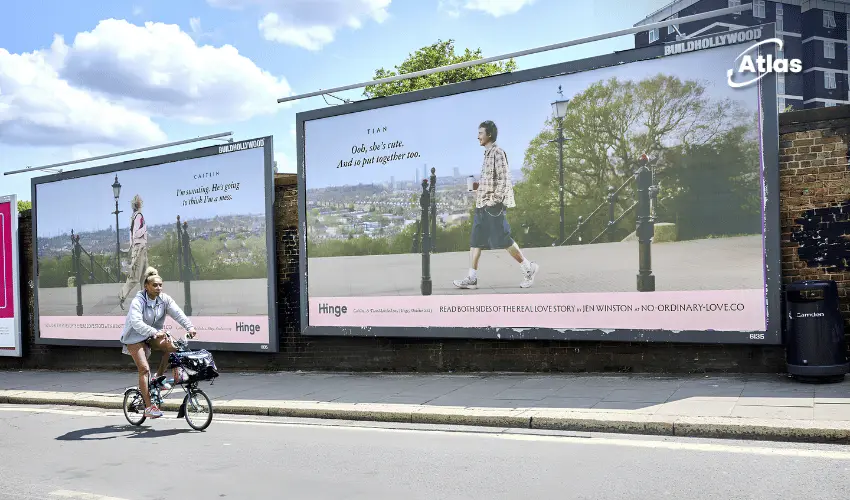
Hinge Brings Real Love Stories to London With No Ordinary Love
Dating advertising often presents love as polished, predictable and perfectly timed.
Hinge takes the opposite approach.
The second chapter of “No Ordinary Love” focuses on the surprises, imperfections and emotional turns that make real relationships feel real.
Built around stories from people who connected through the app, the campaign continues Hinge’s wider “Designed to Be Deleted” philosophy by showing what happens when a dating platform succeeds at helping people leave it.
Real stories instead of idealized romance
The campaign’s strength comes from its source material.
Rather than inventing fictional couples to illustrate a brand promise, Hinge uses stories based on genuine connections.
That gives the work a level of unpredictability that conventional dating advertising often lacks.
Love does not unfold in perfectly scripted steps.
Dates go wrong.
Unexpected details become meaningful.
People misunderstand one another.
And sometimes those imperfections become the parts couples remember most.
No Ordinary Love lives up to the name
The campaign title creates a useful creative framework.
These are not generic stories of two people meeting and immediately falling in love.
They are specific, personal and sometimes strange.
That specificity is what makes them relatable.
Audiences may not have experienced the exact same date, but they recognize the uncertainty, humor and vulnerability behind it.
Romance-novel visuals bring the stories to life
The visual approach gives the campaign another layer of charm.
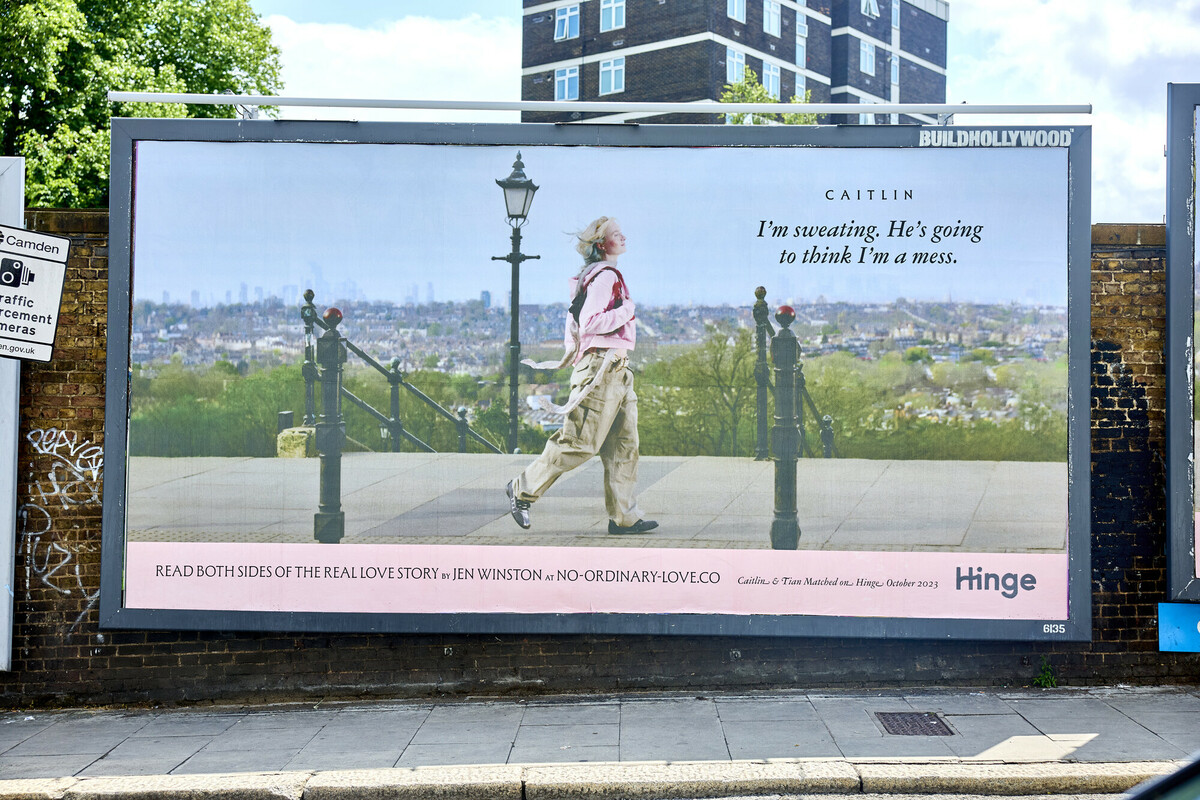
The imagery resembles scenes pulled from romance novels, elevating everyday relationship moments into something cinematic.
This creates an interesting contrast.
The stories themselves are unfiltered and imperfect, while the visuals give them the scale and emotional framing of classic romance.
That tension makes the work feel warm without becoming overly sentimental.
Showing both sides of the date
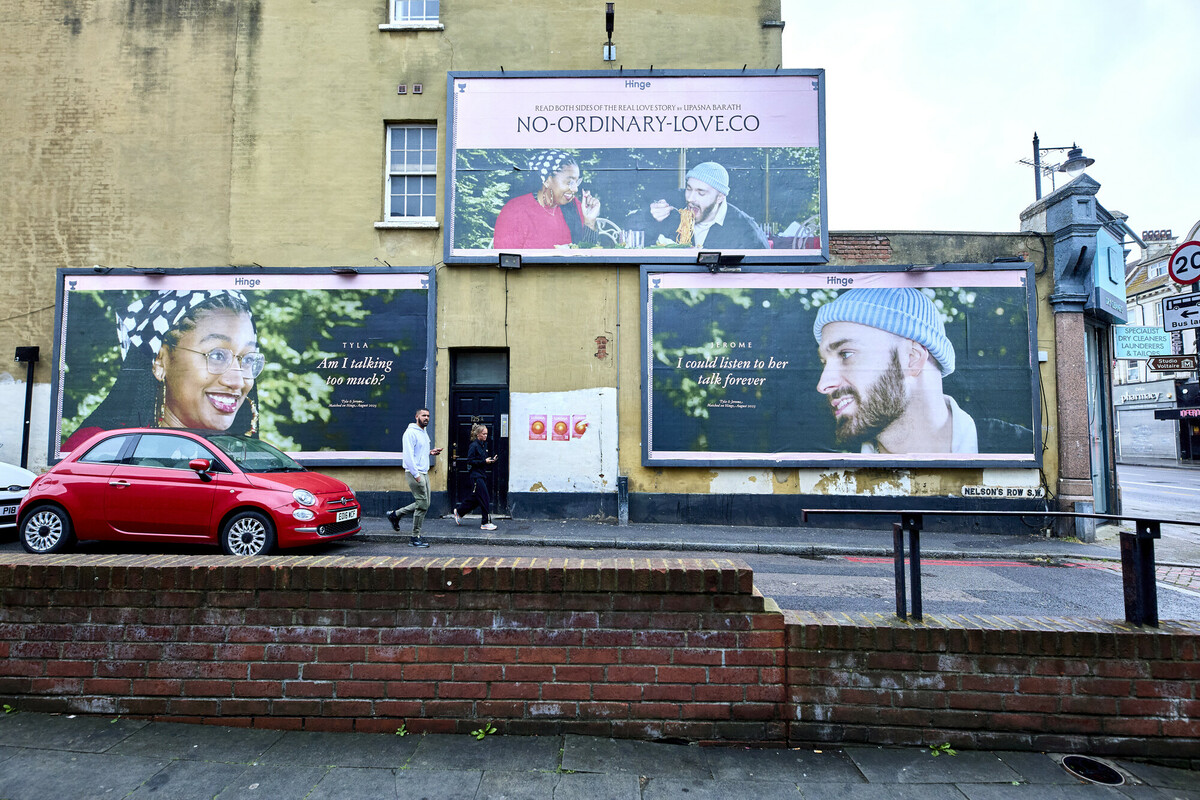
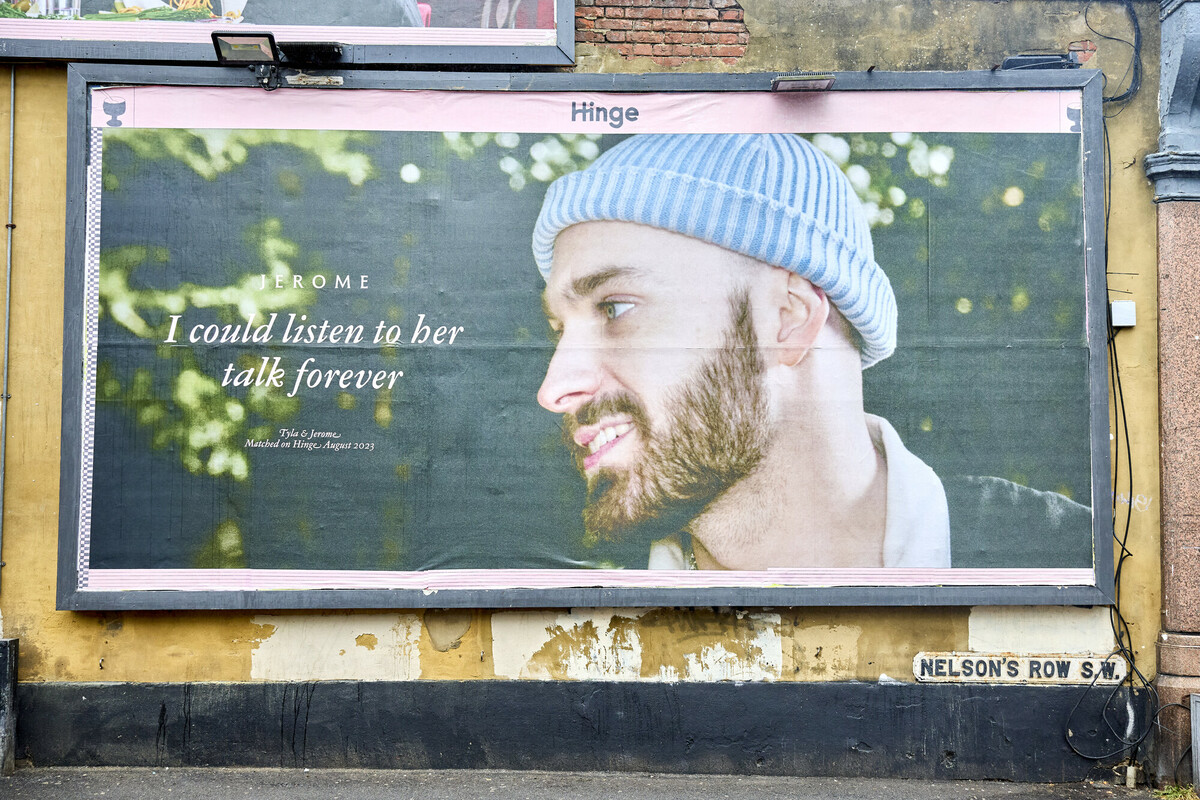
The campaign brings memorable dating moments to life from both perspectives.
That matters because every relationship contains at least two versions of the same story.
One person remembers the nerves.
The other remembers the joke that broke the tension.
One recalls a moment as awkward.
The other remembers it as the reason they wanted a second date.
That dual perspective gives the campaign more emotional depth and reinforces the idea that connection is rarely straightforward.
Why the idea works in OOH
Outdoor media gives these intimate stories an interesting new context.
A dating experience that may have originally involved only two people suddenly becomes visible to thousands of strangers.
That shift from private memory to public storytelling creates an immediate point of tension.
- The scale makes personal stories feel culturally important.
- The emotional imagery stands apart from functional dating-app advertising.
- Short excerpts can create curiosity without revealing the whole story.
- Different executions allow many relationships to coexist within one platform.
London becomes a collection of love stories
Working with JACK and Squadron Venture Media, Hinge brought the campaign into the streets of London.
The city becomes more than a distribution market.
It becomes a backdrop for the stories themselves.
Passersby encounter fragments of relationships while moving through their own daily routines, dates and journeys.
That context gives the campaign a natural relevance.
OOH slows down a fast category
Dating apps are built around fast digital behavior.
Profiles appear.
People swipe, match and message.
Outdoor media offers the opposite rhythm.
A poster or street-level execution gives audiences a chance to pause on one story rather than move quickly to the next profile.
This slower format supports Hinge’s positioning around meaningful connection rather than endless app engagement.
Designed to Be Deleted becomes visible
Hinge’s long-running “Designed to Be Deleted” positioning is unusual because the brand effectively celebrates customers no longer needing the product.
No Ordinary Love provides evidence of that promise.
The campaign is not focused primarily on app functionality.
It focuses on what happened after the match.
This moves the communication from product features to outcomes.
The app becomes the beginning of the story rather than the story itself.
The hardcover book extends the idea
The campaign also moves beyond advertising through a limited-edition hardcover anthology.
Turning the stories into a physical book changes their status.
They are no longer temporary campaign assets.
They become something preserved, collected and revisited.
This is particularly fitting for a campaign visually inspired by romance literature.
The advertising does not merely borrow the aesthetics of books.
It ultimately becomes one.
From billboard to bookshelf
The connection between OOH and print creates a useful content system.
A passerby may encounter one short fragment of a story outside.
The anthology can then provide the full narrative.
This creates layers of engagement:
- OOH introduces the emotional hook.
- Social extends the conversation.
- The book preserves the full stories.
- Each format reinforces the same campaign idea.
Plan your OOH campaign
Get recommendations for markets, formats and availability based on your campaign goals.
Request a media plan
Comments
Share your take. Keep it constructive and specific.