
Club 4X4 Introduces Bob the Bobblehead to Make Insurance More Distinctive
Insurance advertising is full of functional claims.
Price.
Coverage.
Peace of mind.
Claims service.
That makes recognition difficult, especially for a challenger brand competing against companies with much larger budgets.
Club 4X4 Insurance is approaching that problem through distinctiveness rather than simply more media weight.
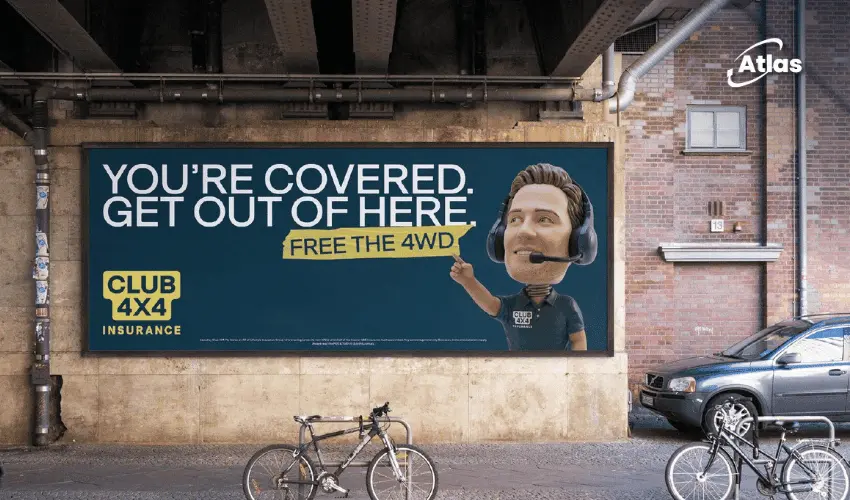
Its answer is Bob the Bobblehead.
Building on Free the 4WD
The new campaign follows the success of last year's Free the 4WD platform.
That work helped Club 4X4 grow awareness and new policy uptake while giving the brand a clearer cultural position inside the 4WD community.
The latest campaign does not replace that platform.
It gives it a character.
Why a mascot matters in insurance
Insurance is one of the most competitive advertising categories.
Many brands communicate similar rational benefits and often compete through large media budgets.
For a smaller player, that creates a structural disadvantage.
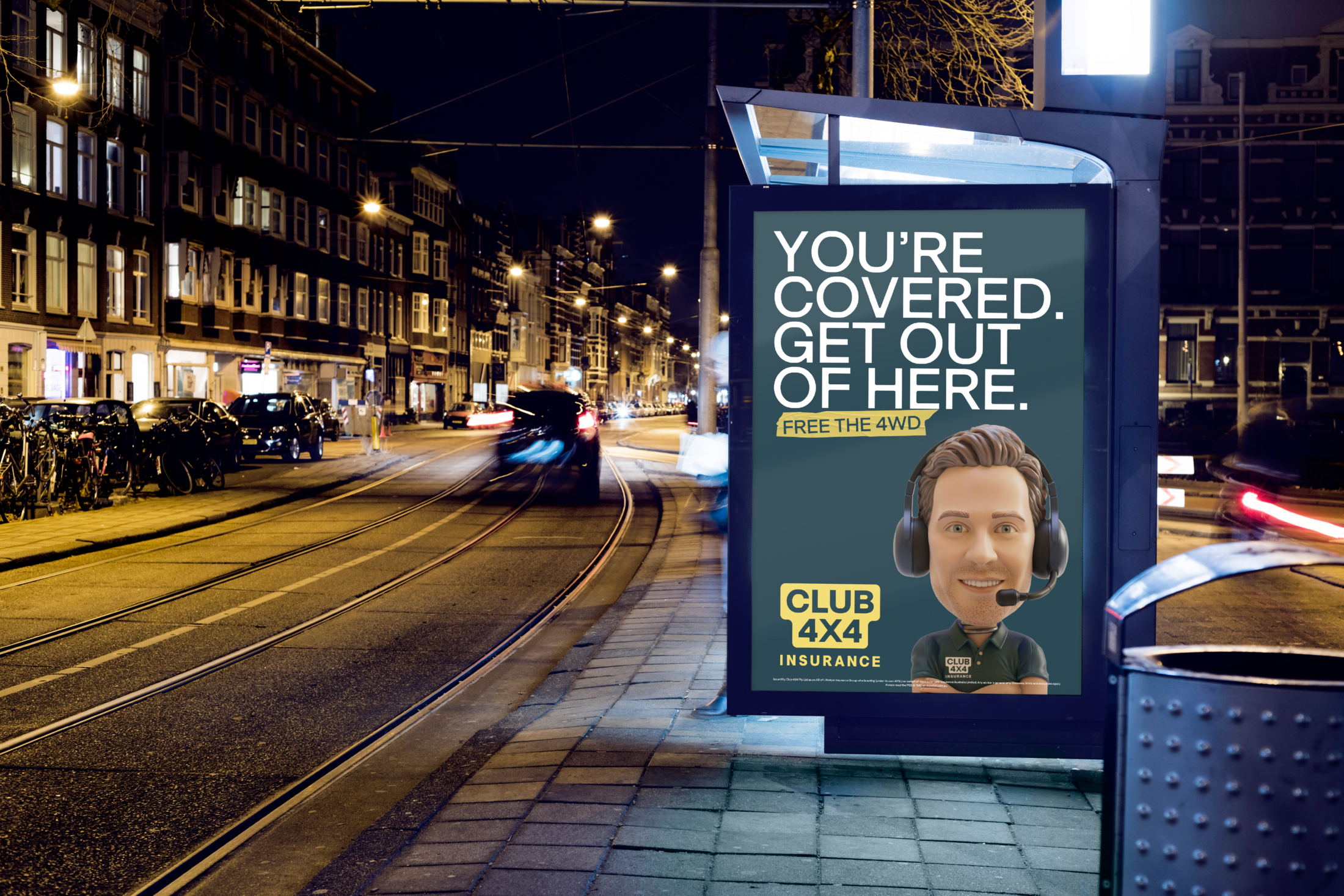
A distinctive mascot can help compensate for lower share of voice by improving recognition each time the brand appears.
The audience may not remember every policy detail.
But they can remember Bob.
The nodding head carries the idea
Bob is not only a decorative character.
His most important feature is the bobblehead itself.
The constant nod becomes a metaphor for Club 4X4's role in customers' lives.
The brand wants to say yes.
Yes to modifications.
Yes to adventure.
Yes to going off-road where it is legal to drive.
Yes to using the vehicle the way 4WD enthusiasts actually want to use it.
From blocker to enabler
That positioning is important in insurance.
Consumers often experience insurers as institutions that impose conditions, exclusions and restrictions.
Club 4X4 wants to occupy the opposite role.
Its offer is specifically designed around enthusiast behavior.
Coverage includes legal off-road driving across Australia, separate agreed value cover for modifications and built-in vehicle recovery.
Bob's nodding head translates that proposition into a simple emotional idea:
We're here to help you do more, not stop you from doing it.
Why humor matters
The brand also does not want to take itself too seriously.
That gives Bob an important tonal role.
Insurance can easily become dry, technical or fear-based.
A playful mascot creates room for humor without weakening the product credibility underneath.
The key is balance.
The rational offer still matters.
Bob simply gives audiences a more enjoyable way to remember it.
The boring video-call moment creates contrast
The campaign brings the idea to life through a familiar piece of modern work culture: the dull video call.
That everyday frustration becomes the thing audiences want to escape.
The 4WD lifestyle represents the opposite.
Freedom.
Open space.
Adventure.
Movement.
Bob sits directly between those two worlds.
Why this can work especially well in OOH
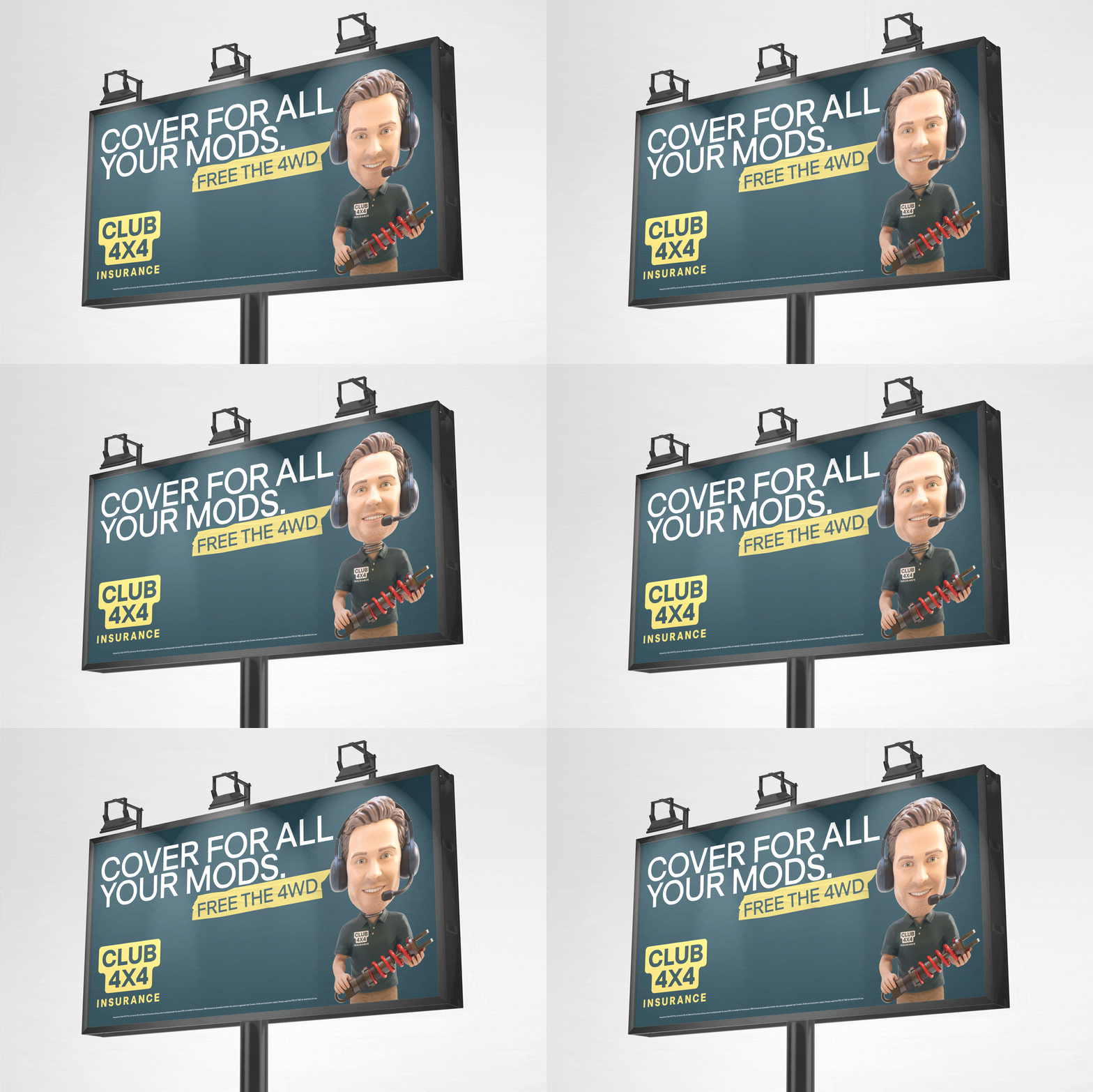
Bob has strong potential as an outdoor asset because the character is simple and immediately readable.
A bobblehead silhouette can work at a distance.
The nodding mechanic can translate naturally into DOOH motion.
And the mascot can appear repeatedly across different environments without requiring a completely new idea every time.
- Static OOH can build recognition through the character.
- DOOH can exaggerate the nodding movement.
- Roadside media can connect directly with 4WD culture.
- Contextual placements can contrast office routine with outdoor escape.
Roadside is especially relevant
For an automotive insurance brand, roadside media has obvious contextual value.
The audience is already in or around vehicles when they see the campaign.
That reduces the distance between category and environment.
For Club 4X4, roadside placements can go one step further by speaking to the lifestyle rather than only the vehicle.
The message can focus on where the car could take you next.
Distinctive assets reduce the need to reintroduce the brand
One of the biggest advantages of a mascot is cumulative recognition.
The more often Bob appears, the less work each new campaign needs to do.
The audience begins to connect:
Bob → Club 4X4 → freedom → 4WD lifestyle.
That memory structure can become more valuable over time than any one tactical headline.
Plan your OOH campaign
Get recommendations for markets, formats and availability based on your campaign goals.
Request a media plan
Comments
Share your take. Keep it constructive and specific.