Categories: DOOH • Retail Media • Partnerships Quick take: A major partnership is building indoor DOOH in malls plus OOH/DOOH along access routes—packaging the retail journey into a unified media product.
(Source: JCDecaux)
Retail media is expanding into the physical shopper journey
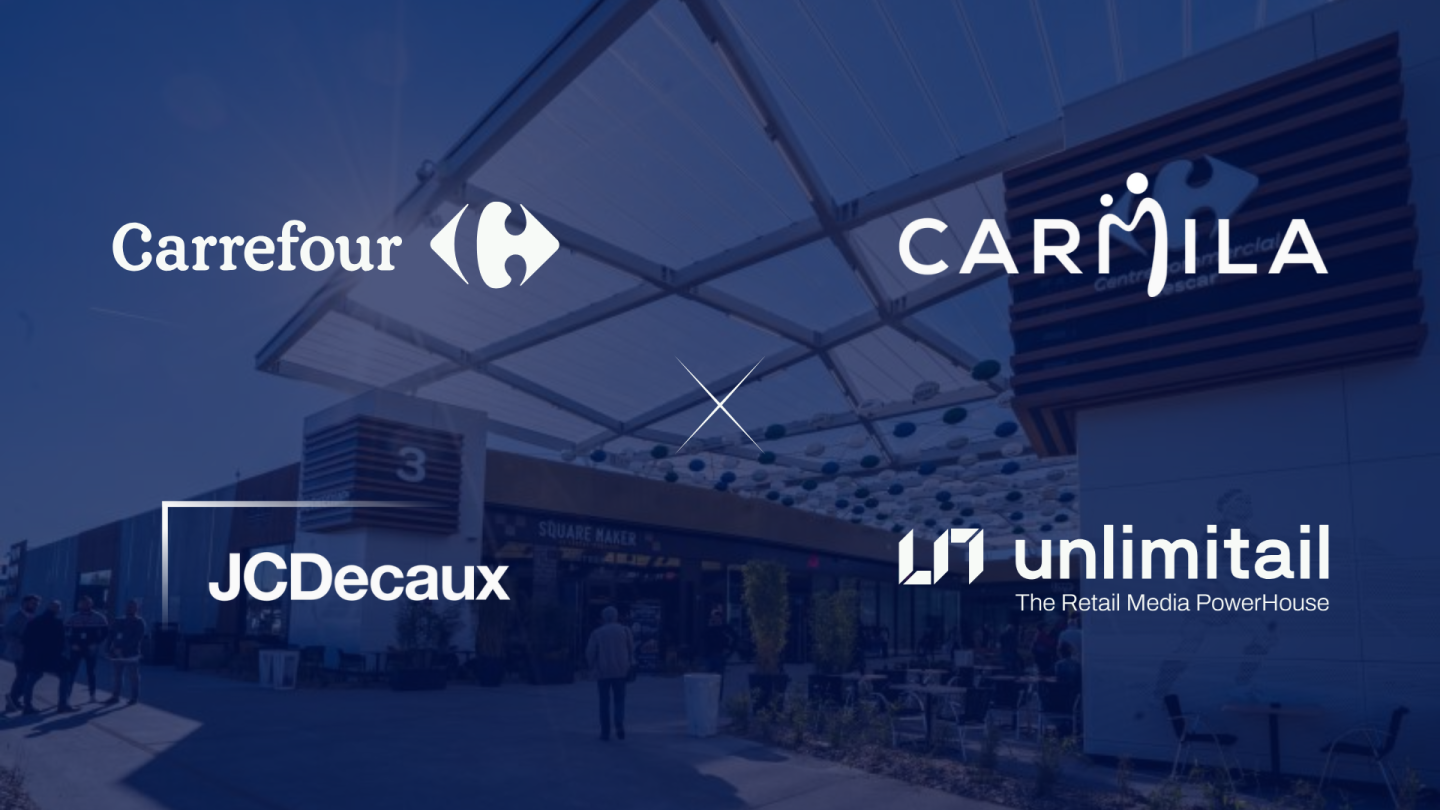
JCDecaux announced a strategic partnership with Carrefour, Carmila, and Unlimitail to develop a
retail media offer that combines:
Indoor DOOH within shopping centers
Outdoor OOH + DOOH across access areas leading to malls and Carrefour hypermarkets
This isn’t just a signage upgrade—it’s a commercial model designed to make physical retail environments
buyable, scalable, and measurable in ways digital buyers recognize.
Why it matters for DOOH planning
What this partnership really creates is a full-path retail funnel:
Pre-arrival influence (routes and approaches)
On-site reinforcement (inside the mall)
Potential measurement tie-ins through retail media ecosystem structures
In other words, DOOH isn’t only “a screen.” It’s now being productized as a retail media layer that can sit next to
on-site and off-site retail media buys—while adding real-world proximity.
The strategic signal for 2026
If this model continues to scale, planners should expect more:
“Retail catchment” packaging (clusters around major retail destinations)
Access-area dominance (owning the final approach to the store)
Stronger demand for unified reporting standards
Planning takeaway: Start treating retail destinations like a connected media product.
If your goal is store lift, build the journey: approach → arrival → in-venue reinforcement, then define measurement from day one.
A combined retail media offer that includes indoor DOOH inside shopping centers plus outdoor OOH/DOOH across access areas leading to malls and Carrefour hypermarkets—so the full trip is buyable as one journey.
Because the final approach to a store or mall is a high-intent window. Screens and OOH along access routes influence timing, store choice, and offer recall right before arrival.
It shifts planning from isolated placements to a path-based funnel: pre-arrival influence (routes), on-site reinforcement (inside the mall), and potentially measurement tie-ins through retail media structures.
No. The signal is a commercial model: packaging physical environments into inventory that is scalable, standardized, and measurable in a way digital buyers recognize.
More retail catchment packaging (clusters around destinations), stronger access-area dominance strategies, and greater demand for unified reporting standards across the journey.
Comments
Share your take. Keep it constructive and specific.
No comments yet. Be the first to share your perspective.
Want to plan retail catchment DOOH like a funnel?
Atlas OOH can help you structure approach → arrival → in-mall journeys and define inventory + measurement requirements that scale.
Let’s talk
Tell us about your next campaign.
Share your objectives and target markets, and our team will respond with a tailored OOH media plan.
Request a U.S. OOH media plan
Fill out the form and our team will get back to you with formats, pricing and availability.
Why Partner With Atlas OOH?
Planning an outdoor advertising campaign can be complex, especially when coordinating multiple markets, vendors, and formats across the United States. Atlas OOH simplifies this process by serving as your single point of contact. From hyper-local billboard placements in specific towns to nationwide transit domination strategies, our team brings data-driven insights and deep industry relationships to the table.
When you submit your campaign brief, our media planners immediately begin analyzing market availability, target audience movement, and historical pricing to build a custom OOH strategy tailored to your budget and KPIs. We leverage advanced reporting and transparent pricing so you always know exactly what you are paying for. Reach out today to start planning your next high-impact outdoor marketing initiative.
Comments
Share your take. Keep it constructive and specific.