
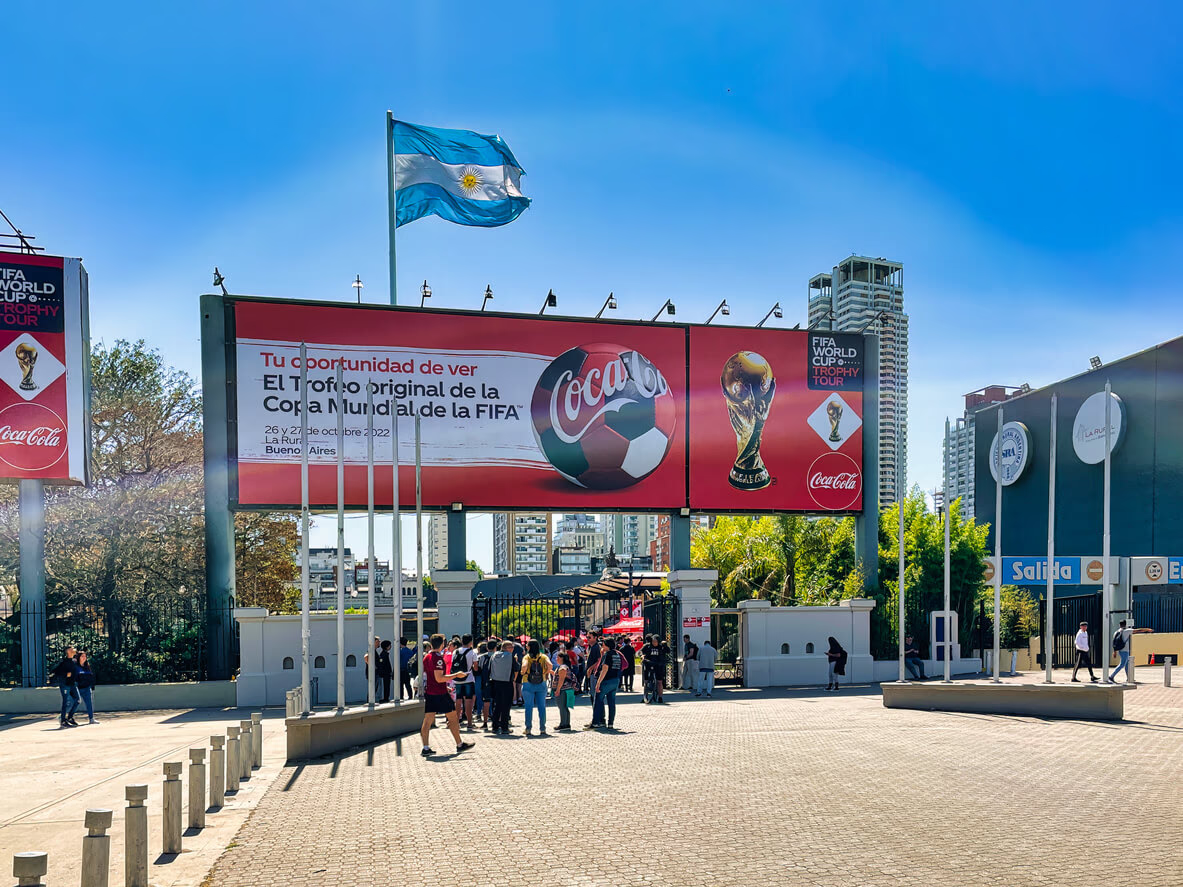
Quick answer: The 2026 World Cup is a city ownership opportunity. Brands win with OOH/DOOH by planning around movement, building modular creative systems, timing DOOH to match-day rhythms, and connecting OOH exposure to digital capture + measurement.
Why the 2026 World Cup is different for media planning
The World Cup isn’t only a broadcast event—it’s a geographic attention event. Fans move across cities, venues, airports, entertainment districts, and transit corridors. OOH is one of the few channels that can physically “claim the city” when attention peaks in public spaces.
Why OOH is built for World Cup attention
The World Cup compresses attention into short windows
Cultural moments create spikes: kickoff builds, halftime chatter, post-win celebration, and late-night hospitality waves. OOH shines because it’s present across the physical journey—the route to the stadium, the transit platform, the rideshare pickup zone, the main arterial, the downtown screen cluster.
DOOH adds real-time agility—if the creative is built for it
DOOH can “pulse” creative by daypart, location cluster, or event timing. That means your campaign shouldn’t be static. It should be a system: the same brand platform expressed differently across cities and match rhythms.
- Pre-game: countdown, anticipation, directions, “meet here” energy
- Kickoff/halftime: real-time brand moments, short copy, high recognition
- Post-game: celebration, offers, next-step capture (search/social/maps)
How to build a World Cup OOH plan (step-by-step)
1) Plan by movement, not just placement
Start with a simple fan flow map: airports, stadium approaches, downtown hospitality zones, key transit nodes, and the arterial routes that connect them. Use OOH to lock presence across the physical journey, not just a single “hero” placement.
- Airports: arrivals + departures = peak intent and travel documentation (photos, posts)
- Stadium approach corridors: unavoidable commuter density and anticipation
- Hospitality districts: watch parties, bars, restaurants, and nightlife spikes
- Transit + rideshare zones: dwell time + repeated exposure
2) Build modular creative that scales
Your core message must be instantly readable at speed. Then build modular variants that can rotate without rebuilding the campaign from scratch—city name, match day, countdown, celebratory copy, or contextual hooks.
3) Pair OOH with digital capture (optional, not forced)
Treat OOH as the trigger and digital as the capture layer: search lift, mobile retargeting, maps/listings, and selective QR moments designed to be optional. The goal is to turn public attention into measurable behavior without making OOH feel like a banner ad.
- Search: monitor brand search lift by city and match windows
- Mobile retargeting: reinforce the message after exposure
- Maps/listings: align OOH corridors with location extensions and store/venue results
- QR/NFC: use sparingly—only when the context supports action
Key takeaways
- The World Cup is a “city ownership” moment: OOH wins by being unavoidable in public life.
- DOOH performs best as a system: timing agility only works when creative is modular and pre-approved.
- Early planners win premium inventory: the strongest corridors and screen clusters get locked first.
Plan your OOH campaign
Get recommendations for markets, formats and availability based on your campaign goals.
Request a media plan
Comments
Share your take. Keep it constructive and specific.