
OOH is the broader category.
Out-of-home advertising reaches people in public environments. The category can include many physical formats and settings, from travel to retail and street-level experiences.
Media planning guide
Understand the planning difference between digital out-of-home and traditional out-of-home advertising.
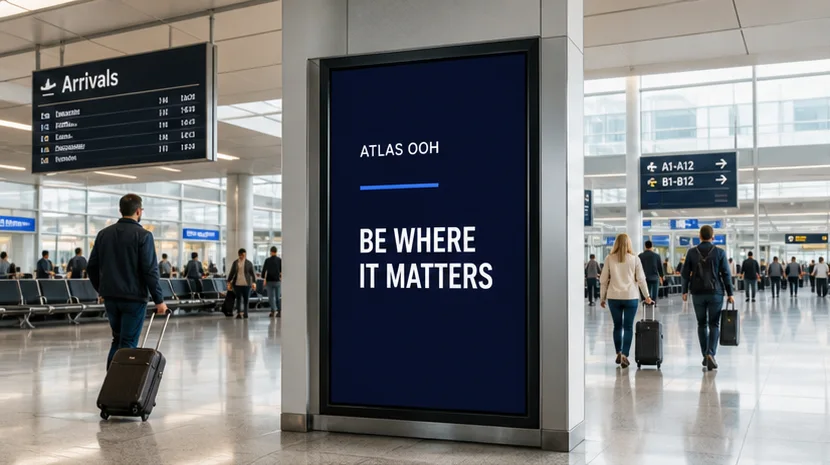
Out-of-home advertising reaches people in public environments. The category can include many physical formats and settings, from travel to retail and street-level experiences.
Digital out-of-home uses digital displays, which can support planning around timing, creative variations and the pace of a particular real-world moment. It does not remove the need for a clear media strategy.
The right approach depends on the campaign objective, geography, timing, creative needs and audience moment—not on a format label alone.
Put it into practice
Atlas reviews programmatic DOOH, airport advertising and travel media around the moment the campaign needs to earn.
Common questions
DOOH refers to digital out-of-home media; OOH is the wider out-of-home category.
No. Programmatic is a planning and buying approach; DOOH describes the digital medium.
Potentially. The mix should follow the campaign objective and the role each real-world context needs to play.
Atlas starts with the decision a campaign needs to influence, then reviews the right travel, arrival or dwell context before recommending an approach.
No. Atlas does not operate a public inventory marketplace. Specific media, timing and availability are confirmed after campaign review.
Share the objective, dates, geography, budget range, audience moment and the action the message should support.